Winter Training & At-Home Development
Every year, as the fields freeze and the sun disappears by dinnertime, the same worry shows up in soccer households everywhere:
“We live somewhere with real winters, and my child doesn’t get to spend hours on the ball or play outdoors this time of year. How do we keep improving through the winter?”
Here’s the encouraging truth: handled right, winter isn’t a setback at all. It’s one of the best technical-development windows of the entire year.
That’s because the skills that separate good players from great ones are built in small spaces, not big fields. Below are 10 proven ways to keep your player sharp all winter — plus the free tools to make them stick.
⛄ The 10 Ways — jump to any section
1. Play futsal
If there’s a futsal program or league near you, it’s one of the best winter investments you can make. Played on a hard court with a smaller, low-bounce ball, futsal forces constant touches, tight control, and fast decisions in small spaces.
It’s no accident that so many of the world’s most technical players grew up on it — futsal is, in many ways, the evolution of a soccer player.
2. Turn any indoor space into a training ground
The key mindset shift: you don’t need a field, you need a floor. The options are almost endless once you start looking — club indoor facilities and turf, YMCAs and rec centers with open gym time, church gyms and rentable public-school gyms (grab a few families, run a weekly drop-in, split the cost), or simply a basement, garage, hallway, or living room with a mat or a strip of turf.
Here’s the part parents underestimate: training indoors — even on a basketball court — actually forces a young player to sharpen their technical and ball skills. The small space isn’t a compromise. It’s the whole point.
Our free Must-Have Guide to In-Home Training shows you how to set up and use whatever space you’ve got.
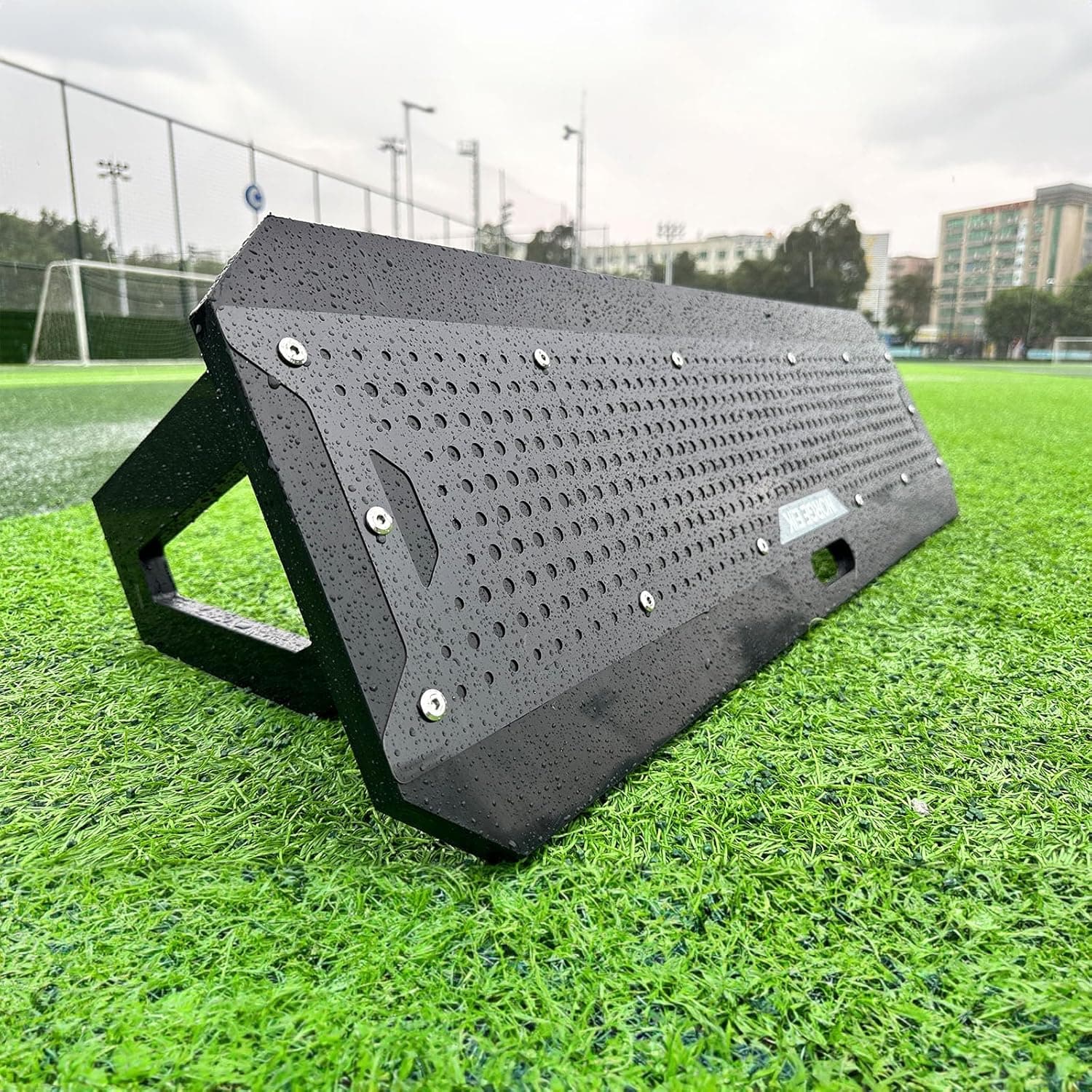
3. Get a wall and a soft ball
Never underestimate the humblest setup of all: a wall and a soft ball. A foam ball, a futsal ball, or a smaller size-1 ball is perfect indoors — forgiving on furniture, and ideal for building a first touch that holds up under pressure.
A rebound wall doubles as an always-available passing and receiving partner. (Fair warning: an “indoor ball” has been known to claim the occasional ceiling tile or houseplant.)
4. Chase a daily touch count
The magic word in player development is touches. Give your child a simple daily target — a number to hit before screens or after homework — and watch how fast a habit forms.
Winter is exactly when the players who care quietly build the gap on everyone who put the ball away in November.
1,000+
focused touches a day is realistic in a space smaller than a parking spot — and it’s the number that quietly builds elite technique.
Want to know whether the reps are adding up? Our free Soccer Training Survey generates a personalized PDF showing how your child’s training compares to elite academy players.
5. Train with follow-along videos
The most effective winter routine isn’t “go practice” — it’s guided, follow-along video training a child can do in any small space. Structured technical work like this reliably produces real gains: sharper touch, quicker feet, more confidence on the ball.
The catch is engagement. A generic drill video works… right up until a kid gets bored and wanders off.
Structured technical training absolutely works. The hard part is making a kid want to keep showing up for it.
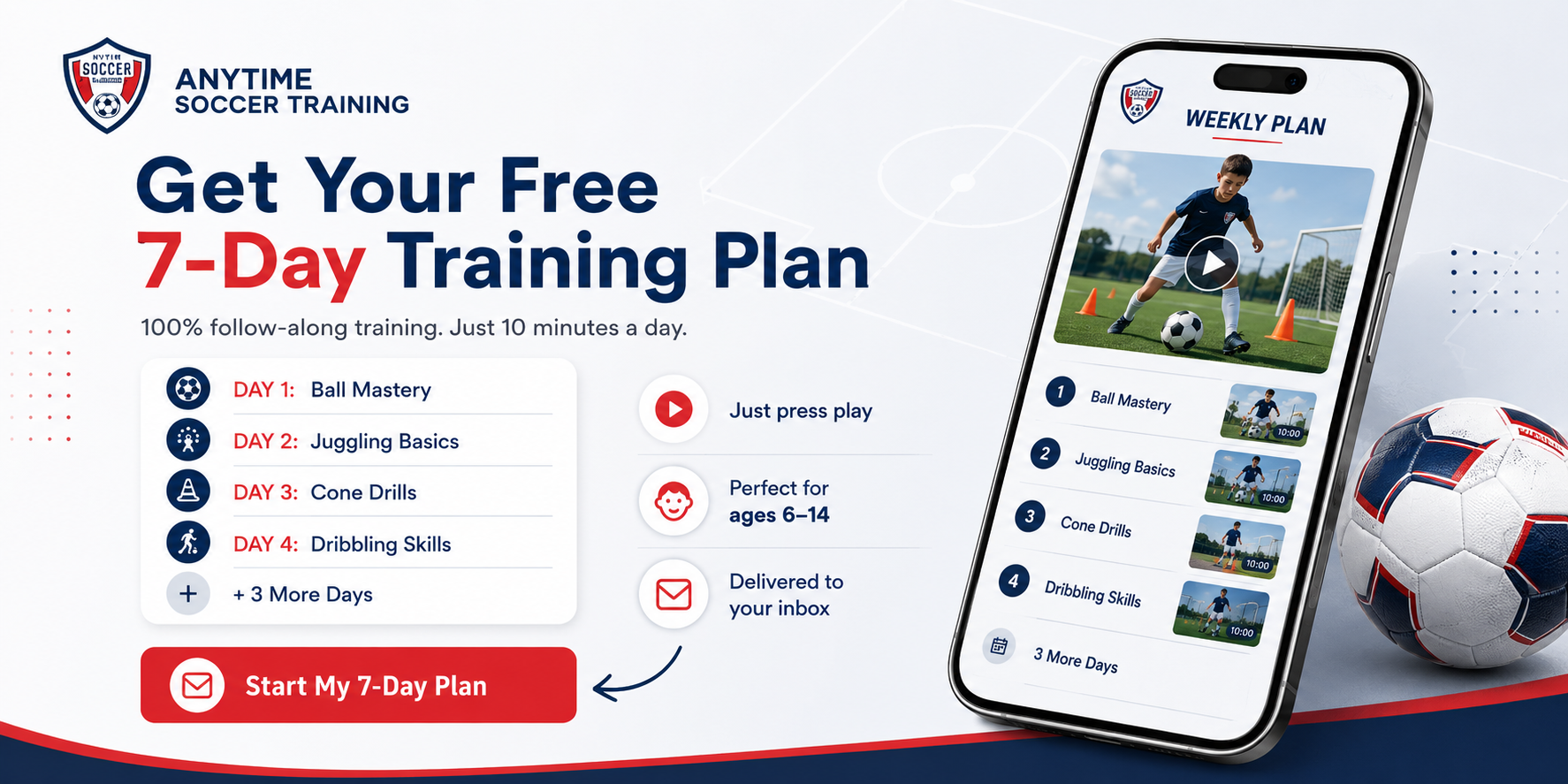
Want the easiest possible start? Take the Free 7-Day Skills Challenge — just 10 minutes a day for a week. It’s the perfect way to build the habit, feel the momentum, and let your child see the difference for themselves before you commit to anything more.
⚡ Start the 7-Day Challenge tonight
10 minutes a day. One week. A noticeably better touch by the weekend.
Take the Free 7-Day Challenge →6. Make technique the winter priority
Here’s the reframe that changes everything: the skills that make a player special — first touch, close control, both-footed comfort, quick 1v1 moves — are almost never developed in an 11v11 game. They’re built through thousands of focused reps in tight spaces.
Games need a field. Technique needs a square meter and a ball. Winter takes away the field and hands you an uninterrupted block of time to build the foundation summer soccer never has room for — so lean into ball mastery, juggling, and dribbling, not just scrimmages.
7. Put them on a structured plan
The single biggest difference between a kid who improves over winter and one who fizzles out by January is a plan — a clear “here’s what to do today.” That’s exactly what Anytime Soccer Training was built for:
- 🎥 Real follow-along sessions for tiny spaces. A coach on the screen demonstrates the move, then trains alongside your child, rep for rep. Garage, basement, or living-room corner — press play and go.
- 🗓️ Weekly Plans & 30-Day Plans. Your child gets a smart daily mix of ball mastery, dribbling, juggling, and 1v1 moves that builds all winter — no more standing around wondering what to practice.
- 🎯 Daily and weekly goals. A simple target turns winter training into a routine instead of a fight. Consistency through the cold months is what separates players by spring.
- 🔥 Actually engaging. Fresh challenges and skill areas that scale from a first-ever pull-push to 50 core 1v1 moves — so a kid never plateaus and never checks out.
8. Track progress so they can see the gains
Nothing fuels a young player like visible progress. When your child can see their touches, minutes, and completed sessions stacking up through the winter, motivation takes care of itself.
Anytime Soccer Training tracks every skill area — Ball Mastery, Juggling, Dribbling & Turns, 1v1 Moves, Passing & Receiving, Finishing — so you both watch the improvement pile up while it’s snowing outside. (Coaches can assign custom winter plans and homework, too, and see exactly who’s putting in the work.)
9. Keep it social and fun
Winter training doesn’t have to be solo. Organize a weekly indoor drop-in with a few other families, play small-sided futsal with friends, or turn practice into a challenge — a juggling personal best, a new move mastered 10 times in a row.
A little friendly competition keeps kids coming back when it’s dark and freezing outside, and the reps add up without it ever feeling like a chore.
10. Start tonight with free resources
You don’t have to spend a dime to get going. Grab these free tools from our Free Resource Hub:




Notice the thread running through all 10: it was never really about the weather. Every family that makes winter count has the same two things in common — a small space they commit to using, and a plan that keeps their kid showing up.
The cold isn’t the obstacle. No plan is the obstacle — and that’s a very solvable problem.
Turn the coldest months of the year into your child’s biggest leap forward.
The players who win the winter win the spring. ⚽❄️
Start a Free Winter Training Plan →