Home Training & Habit Building
📋 In This Post
Let me tell you about the version of myself I'm not proud of.
It was a Tuesday evening, maybe six months into training my son Adam at home. I had a whole plan — cones set up in the backyard, a YouTube playlist queued up, a notebook with drills I'd researched. Adam came outside, took one look at the setup, and said he was tired.
I pushed. He resisted. We argued. He cried. I felt terrible. Nothing got done.
That night I sat on the back porch and asked myself a hard question: Why is this so difficult?
The answer, when I finally found it, had nothing to do with drills, equipment, or even Adam's attitude. It had everything to do with the way I was thinking about training.
The Motivation Trap
Most parents approach home training the same way I did in the beginning: with a burst of motivation.
You watch a game, you see your child get passed up for the ball three times in a row, and something clicks. We need to do more. So you set up a big session. You block out an hour on Saturday. You find a bunch of drills. You're fired up.
And it works — for about two weeks. Then life gets in the way. Saturday's session gets pushed to Sunday, then doesn't happen at all. The motivation fades. The cones sit in the garage. And your child picks up the unconscious message that home training is something you do when you feel like it, which means it's something that doesn't really matter.
The goal isn't to train when you're motivated. The goal is to build a system that runs whether you're motivated or not.
Quick Tip
Stop chasing motivation. Start chasing consistency. This week, pick just one day to do a 5-minute training session. Just one. Protect it like an appointment. Start there — not with a full schedule.
Related Reading
How to Motivate Your Child to Practice Soccer at Home
The why behind motivation — what it actually is, why kids resist, and how to build the environment where they choose to train. The deeper companion to this post.
Why 10 Minutes Is the Magic Number
When I tell parents that 10 minutes a day is enough to build elite-level ball skills, they usually look at me like I'm underselling it.
They're thinking about what they see at club practice: 90-minute sessions, dozens of kids, cones everywhere, coaches running drills. Surely more time equals more development?
Here's the thing most people don't know: in a typical 90-minute club practice, your child gets somewhere between 50 and 100 touches on the ball. The rest of the time is spent waiting in line, listening to instructions, doing team shape work, and scrimmaging — all valuable, but not high-repetition skill development.
That's the math. And it compounds every single day. A child who does 10 minutes of focused home training daily accumulates more quality touches in a single week than most players get in a month of club practice alone. Over a full season, that gap becomes a skill chasm that coaches notice — and that parents can't explain any other way.
But here's the catch: those 10 minutes have to actually happen. Consistently. Not when you feel like it. Not when there's nothing else going on. Almost every day.
Here's something most people don't understand about real skill development: maximum effort every session is not the goal. Sustainable repetition over time is. A child who trains at 60% intensity almost every day for a year will run circles around one who trains at 100% twice a month and burns out.
Yes, some sessions will be high-intensity. But a healthy training rhythm looks more like this:
⚠️ The Biggest Mistake I See Parents Make
Remember: your child already has a coach pushing them hard. This home training is supplemental — extra work that compounds quietly over time and makes them better. It is not a second practice.
The families who burn out fastest are the ones who make every home session 100% intense — and never stop coaching. Too much instruction, too much correction, too much pressure turns a 10-minute habit into something a kid dreads. Back off. Let them play. Let them feel good about it. That feeling is what makes them want to come back tomorrow.
That 60% in the middle — high tempo, repeatable, sustainable — is where the skill compounds. It doesn't look like much from the outside. But over months and years, it's what separates the kids who plateau from the ones who quietly keep climbing.
Quick Tip
Count your child's actual ball touches at their next practice. You'll stop thinking 90 minutes is enough. Then count their touches in a 10-minute ball mastery session at home. The numbers don't lie — and once you see them, it changes how you think about home training forever.
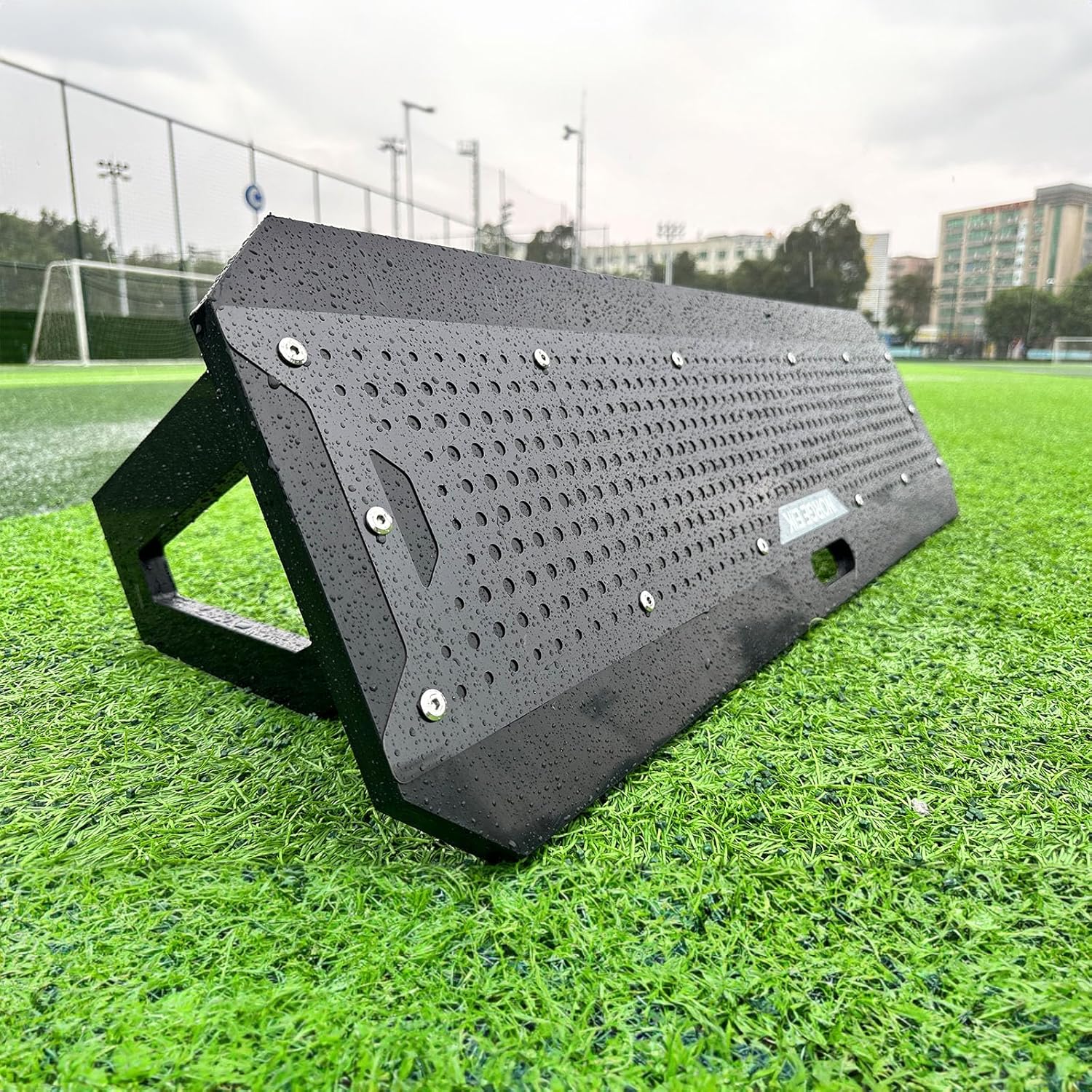
Recommended Gear
Size 1 Soccer Ball
The best tool for ball mastery. Smaller ball = more control = faster skill development.
The Science of Habit Formation (In Plain English)
You don't need to read a book on behavioral psychology to understand how habits work. The basics are simple.
Habits form when a behavior gets attached to a cue — something that reliably signals it's time to do the thing. The cue triggers the behavior. The behavior produces a reward. Over time, the brain automates the sequence.
The problem with most home training attempts is that there's no reliable cue. "We'll train after dinner" is not a cue — it's an intention. Intentions require willpower. Willpower is finite. At the end of a school day, after homework and dinner, there's not much willpower left in a 10-year-old.
A cue is specific, automatic, and already part of your existing routine. The most powerful cues for home training are ones that stack onto something you already do every day without thinking.
Quick Tip
Tonight, identify one existing habit your child does automatically every day — tying shoes before school, grabbing their backpack, eating breakfast. That's your cue. You don't create the habit from scratch. You attach the new behavior to the old one.
The 4-Step System That Actually Works
Here's exactly what worked for us, and what I've seen work for hundreds of families in the Anytime Soccer Training community.
Step 1 — Pick One Anchor
An anchor is the existing routine you'll attach training to. It should happen at the same time every day, require no decision-making, and already be fully automatic.
The best anchors:
- Before school — Day hasn't started, no one is tired, and there's a natural time limit. Adam trained this way for three years.
- Right after school, before anything else — Key word: before. Before screens, snacks, or sitting down. Once a kid sits, momentum is gone.
- Before club practice — Your child arrives already warm, already sharp, already having touched the ball 500 times. Coaches notice.
Quick Tip: Step 1
Right now, text yourself one word: "before school," "after school," or "before practice." That's your anchor. Don't decide later. Decide now while it's on your mind — the act of choosing is step one.
Step 2 — Make It Impossibly Easy to Start
The biggest enemy of habit formation is friction. Remove every obstacle in advance:
- Ball stays in the same spot, always — by the back door, in the garage
- No setup required — ball mastery needs nothing but a ball and a small patch of ground
- The session is already chosen — press play and follow along
The goal for the first 30 days: lower the bar so far that saying no feels harder than saying yes.
Quick Tip: Step 2
Physically move the ball right now. Put it by the back door, or wherever training will happen. This one act eliminates the #1 reason kids skip — "I couldn't find the ball." No friction means no excuses.
Step 3 — Start With Less Than You Think You Need
Counterintuitive but critical: start with less. Not an hour. Not 30 minutes. Ten minutes. Maybe even five for the first week.
The goal in the beginning is not fitness or skill — it's the identity of being someone who trains almost every day. That identity is built through repetition, not duration. A 5-minute session that happens almost every day for 30 days does more for habit formation than a 45-minute session that happens twice.
Quick Tip: Step 3
Tell your child: "We're only doing 5 minutes today." Watch what happens — most kids keep going past 5 minutes once they're out there. But even if they stop at 5, that's a win. You protected the streak. That's the whole game in month one.
Step 4 — Make the Win Visible
Kids are motivated by progress they can see:
- A simple calendar on the fridge. Every day they train, they put an X. The chain of X's becomes its own motivation — no one wants to break the streak.
- Video checkpoints. Every two weeks, record a short clip of the same skill. The improvement is often dramatic and kids love seeing it.
- Connect the dots at practice. When a coach comments on first touch or ball control, say: "That's from all those sessions before school." Make the connection explicit.
Quick Tip: Step 4
Print a blank monthly calendar — right now. Hang it on the fridge. Hand your child a marker. Tell them their only job this month is to put an X on every day they train. That visual chain will do more motivational heavy lifting than any pep talk you could give.
Free Resource
Don't Want to Figure Out What to Train?
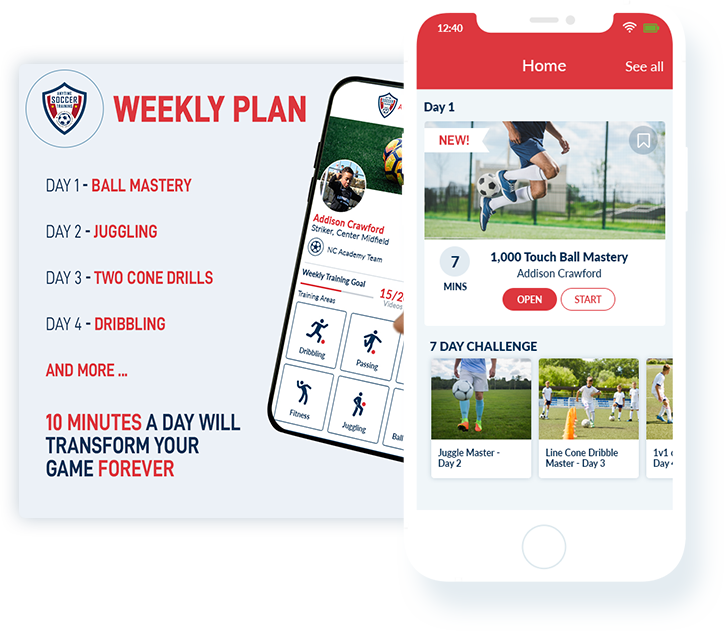
Our free 7-Day Training Plan removes every friction point — seven follow-along sessions your child can start today, no coaching experience required. Structured. Engaging. Under 10 minutes each.
Get the Free 7-Day Plan →The Parent's Role: Show Up, Don't Coach
This might be the most important section in this entire post, and it's the one I got wrong the longest.
When I started training Adam at home, I thought my job was to teach. I'd research drills, explain technique, offer corrections. I had no soccer background, but I compensated by over-preparing.
The result? Adam started dreading our sessions. The backyard became a place where Dad criticized him, not a place where he got to play with a ball.
Stop Doing
- Correcting technique during the session
- Comparing your child to other players
- Expressing frustration when unfocused
- Extending sessions because you think they need more
Start Doing
- Being present without hovering
- Asking "how did that feel?" — not "what did you work on?"
- Celebrating consistency over performance
- Letting them feel ownership over the training
Quick Tip
Try "phone in pocket" for one week. No notes, no filming, no corrections. Just sit nearby and watch. After the session, say exactly one thing: "Good session." That's it. Watch how different the energy is.
The Readiness Scale — A Tip That Changed Everything
When Adam was young, he didn't have the language to tell me how he was feeling on any given day. He couldn't articulate nuance. So I borrowed a page from the pain chart they use in hospitals — a simple number, no explanation required — and I gave it to him.
Before each session, I'd just ask: "What's your number today?"
The goal wasn't compliance — it was honesty. I wanted Adam to feel empowered to tell me the truth without any fear of disappointing me. A kid who can say "4" without bracing for a reaction is a kid who trusts the process. And a kid who trusts the process is a kid who keeps showing up.
I used the same system later with my younger son Matthew — a completely different personality, completely different energy — and it worked just as well. Because the scale isn't about the number. It's about giving your child a voice in their own development.
Free Ebook
The Parent Trainer's Playbook
20 unconventional tips for raising a competitive soccer player — from a soccer dad who's lived it.
Download Free →Free Ebook
Must-Have Guide to In-Home Training
Everything you need to know to start training at home effectively — setup, structure, and mindset.
Download Free →What 30, 60, and 90 Days Looks Like
Here's a realistic picture of the timeline so you're not measuring against the wrong benchmarks.
Quick Tip
Set a 90-day goal, not a season goal. Tell your child: "Let's see who you are as a player in 90 days." That's short enough to feel real and long enough to see genuine change. Take a 30-second skill video today as your Day 1 baseline. You'll want it at Day 90.
Free Resource
Build a Personalized 30-Day Training Plan
Pick your skill areas, set your schedule, and get a custom PDF plan in under 60 seconds. No coaching experience required — just show up and press play.
A Note on Setbacks (Because They Will Happen)
Seasons end. School gets busy. Kids get sick. Travel happens. Streaks break.
When they do — and they will — the single most important thing you can do is not make it a bigger deal than it is.
The mistake most parents make is treating a broken streak as a failure that requires recommitting, re-motivating, and restarting from scratch. That framing makes coming back feel heavy. The harder the fall, the harder the climb.
Instead, treat missed days like weather. It rained. The weather changed. You pick up the ball and do a session today. No drama, no lecture, no big speech about commitment.
The anchor is still there. The habit is more durable than a few missed days. Just return to it.
Quick Tip
"Never miss twice" is the only rule you need. You'll miss a day — everyone does. Your only job when that happens is to make sure you don't miss the next one. One missed day is an accident. Two in a row is the start of a new (bad) habit.
The Bottom Line
The families I've seen produce the most developed players have one thing in common: they made home training boring.
Not in a bad way. Boring in the best sense — routine, expected, unremarkable. A thing that just happens, like brushing teeth or eating breakfast. Not a special event, not a punishment, not something that requires a conversation.
Ten minutes. Same time almost every day. Ball already out. Video already chosen. Parent present but quiet.
It doesn't look like much from the outside. But over months and years, it produces players who move differently — players whose first touch is automatic, whose close control is instinctive, whose confidence with the ball under pressure comes from thousands of hours of quiet repetition nobody else knows about.
That's what Adam had. That's what Matthew had. And it started with 10 minutes before school and a parent who was willing to show up without a whistle.
Ready to Build the Habit?
Everything You Need — Free
Training plans, ebooks, guides, community groups, and 5,000+ follow-along videos. Start with any of these free resources today.
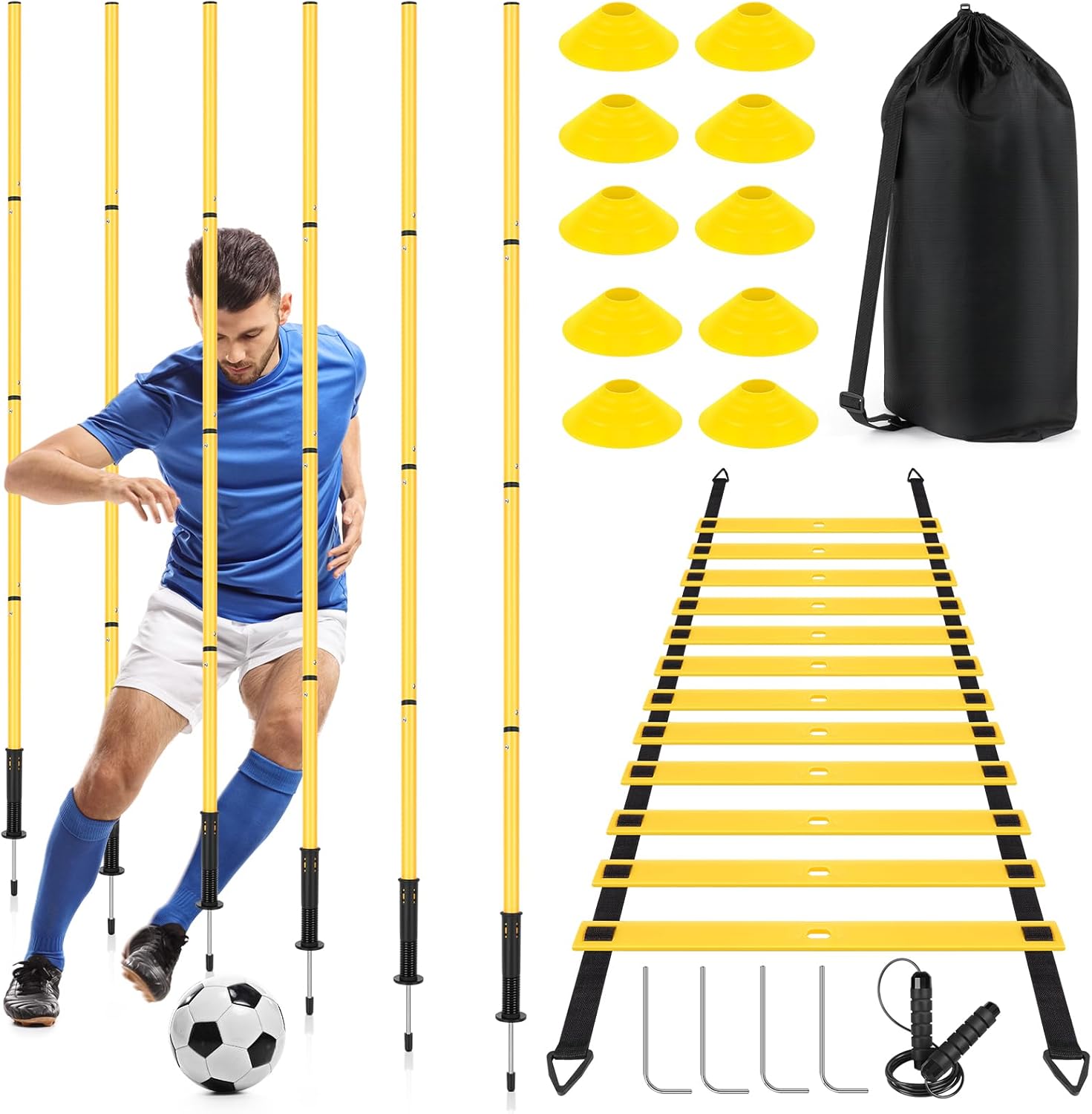
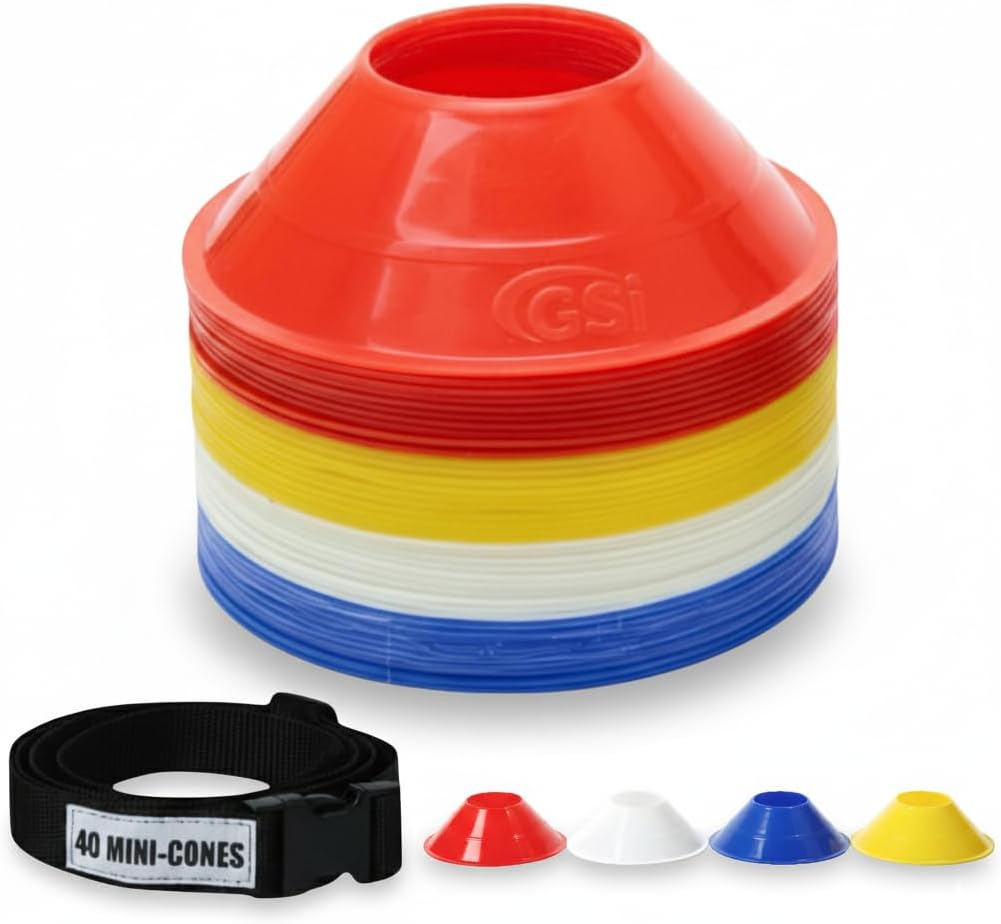
🎯 Gear That Makes the 10-Minute Habit Easier