
Coaching • Pay to Play
There is a line that comes up in every coaching conversation I have ever been part of. On the sideline, in Facebook groups, in the comments under anything I post.
“If you can’t do it, you can’t teach it.” And its cousin: “If you never played, you can’t teach it.”
I want to take that apart properly. Not wave it away, not say “well, I disagree” and move on. I want to go through it piece by piece, because I think when you break it down it falls over quickly. And I think this belief is quietly doing real damage to youth soccer in this country.
Where I am coming from
I never played soccer. I grew up on basketball, football and baseball. I trained both of my sons myself, and they could juggle a ball thousands of times before either of them turned eleven. I was their only trainer.
So I have skin in this argument, and you should read everything below knowing that.

The short version, if you only read one box
- •“Never played” is not the same as “novice.” The whole argument depends on quietly swapping those two.
- •Teaching is four things, and personally executing the skill is not one of them.
- •Most good coaches did play — but that is a fact about who takes a low-paying job, not about what teaching requires.
- •Playing helps. An advantage is not a requirement, and that swap is where the claim dies.
- •It costs families money. A smaller pool of “qualified” adults is a more expensive sport.
From the Podcast — The Inside Scoop
Do You Have to Play It to Teach It?
The full conversation this article came from. Neil takes the claim apart level by level.
1. The mix-up that starts most of these arguments
Somebody hears “this coach never played at a high level” and their brain fills in “so this coach is a novice” or “so this is just rec-level stuff.”
Those are three different claims. Collapsing them into one is where the bad reasoning starts.
Three claims people treat as one
- 1This coach never played the game. A fact about their past.
- 2This coach is a novice. A claim about their experience.
- 3This is rec-level coaching. A claim about the quality of the work.
Someone can be true on the first and false on the other two. That happens constantly.
Key point
Playing experience and teaching competence are two separate variables. This debate keeps welding them together.
There is a second blind spot underneath it. People making this argument tend not to count any experience that isn’t playing experience:
- ✓A background in education.
- ✓Ten years coaching a different sport.
- ✓A career spent teaching children something else entirely.
- ✓Study of how kids actually develop.
- ✓Thousands of hours working directly with players.
None of it counts unless it came from playing. That is a narrow and, honestly, arbitrary way to decide what qualifies as relevant.
“Playing experience and teaching competence are two separate variables. This debate keeps welding them together.”
— Neil Crawford
2. The correlation everyone mistakes for a cause
Here is the strongest version of the other side’s case, and it deserves a fair hearing: most high-level coaches did play at a decent level. That is true. I am not going to pretend otherwise.
But look at why it is true. Coaching, especially early on, pays badly. The people willing to do it anyway are the ones who love the game enough to stay near it. A lot of those people are former players, because former players are disproportionately the ones who love it that much.
Key point
That is a story about who is willing to take a low-paying job out of love for the sport. It is not evidence that playing is required to teach well.
3. What teaching actually requires
If we are going to argue about whether someone can teach, we should agree on what teaching is. I would break it into four things.
- 1Content knowledge. You understand the skill deeply. What it is, what it is for, what good and bad versions look like, and why.
- 2Experience. You have worked with it, practised it, watched it done and taught. Not necessarily at an elite competitive level.
- 3Communication. You can get what is in your head into someone else’s, in a form they can use.
- 4Pedagogy. The method itself: breaking a skill into parts, sequencing them, slowing them down, designing the environment, giving feedback, knowing what to say next.
Key point
Read that list again and notice what is missing: having personally executed the skill at an elite level. Not one of the four pillars requires it.
A test I would like someone to fail
Name one soccer skill where an adult can watch another adult teach it to a child, but that first adult could never learn to teach it themselves, given proper training.
I cannot think of one. And if there isn’t one, teaching is transferable: if a technique can be handed from an adult to a child, the method of teaching it can be handed from one adult to another.
4. Game speed is the wrong place to start
A lot of the “you have to be able to do it” argument quietly assumes the demonstration must happen at full speed. I cannot think of a single case where a technique had to be performed at game speed for a player to understand it.
If anything the opposite is true. Slowing a skill down is the standard method for teaching almost any physical movement, in any sport, at any level:
- ✓Break it into parts.
- ✓Slow it right down.
- ✓Rebuild it with repetition.
- ✓Add pressure last, not first.
Key point
Demanding game-speed execution as proof of coaching ability has the process backwards. It skips to the hardest version instead of building the ladder that gets a player there.
5. The honest gap: my son can do things I never could
Let me use my own family, because it makes the point better than a hypothetical.
My son Adam is extremely technical. He can do things with a ball I will never do. And I will still say this plainly:
You would rather I trained your kid than Adam did. Not because I am better at soccer. I am obviously not.
Four reasons:
- ✓I want to teach. The desire matters more than people credit. It is the difference between someone who prepares a session and someone who turns up.
- ✓I have reps at teaching. Not at playing. At instruction, which is its own craft with its own thousands of hours.
- ✓I have transferable experience from outside soccer that I draw on constantly.
- ✓I have had to overcompensate. Not having played forced me to build breakdowns and methods a former player might never have needed — and those tools are now the job.
The flip side is just as true, which is what makes it fair. If Adam wants to train kids, he absolutely can. He would just need to go and get the things on that list. Playing ability does not hand them to you.
A concession, because the other side is not wrong about everything
Playing experience does help. It gives you a direct, physical form of content knowledge that is hard to get another way. It can help you motivate a player, because “I have been where you are” lands differently coming from someone who has.
But notice what kind of claim that is. It is a claim about an advantage, not a requirement. A genuine benefit is not the same thing as a hard gate.
This argument only works if you quietly swap one for the other.
“A genuine benefit is not the same thing as a hard gate. This argument only works if you quietly swap one for the other.”
— Neil Crawford
6. Most learning does not come from the coach anyway
The overwhelming majority of what a child learns does not arrive through direct instruction. It comes from:
- ✓Repetition, on their own.
- ✓Self-guided messing about with a ball.
- ✓The environment they train in.
- ✓Copying other kids.
Key point
Before we argue about whether the coach’s demonstration is good enough, notice that we are already overrating the coach’s share of the work.
And on what is actually being taught: at youth level, close to all of practice is fundamentals. Not obscure freestyle tricks. Fundamentals are exactly the kind of thing that does not require an elite playing background to teach well.
The kit that does some of the teaching for you
If most learning comes from repetition and environment rather than instruction, then what is in the garden matters more than whether you can demonstrate the move. These are the things we actually use.
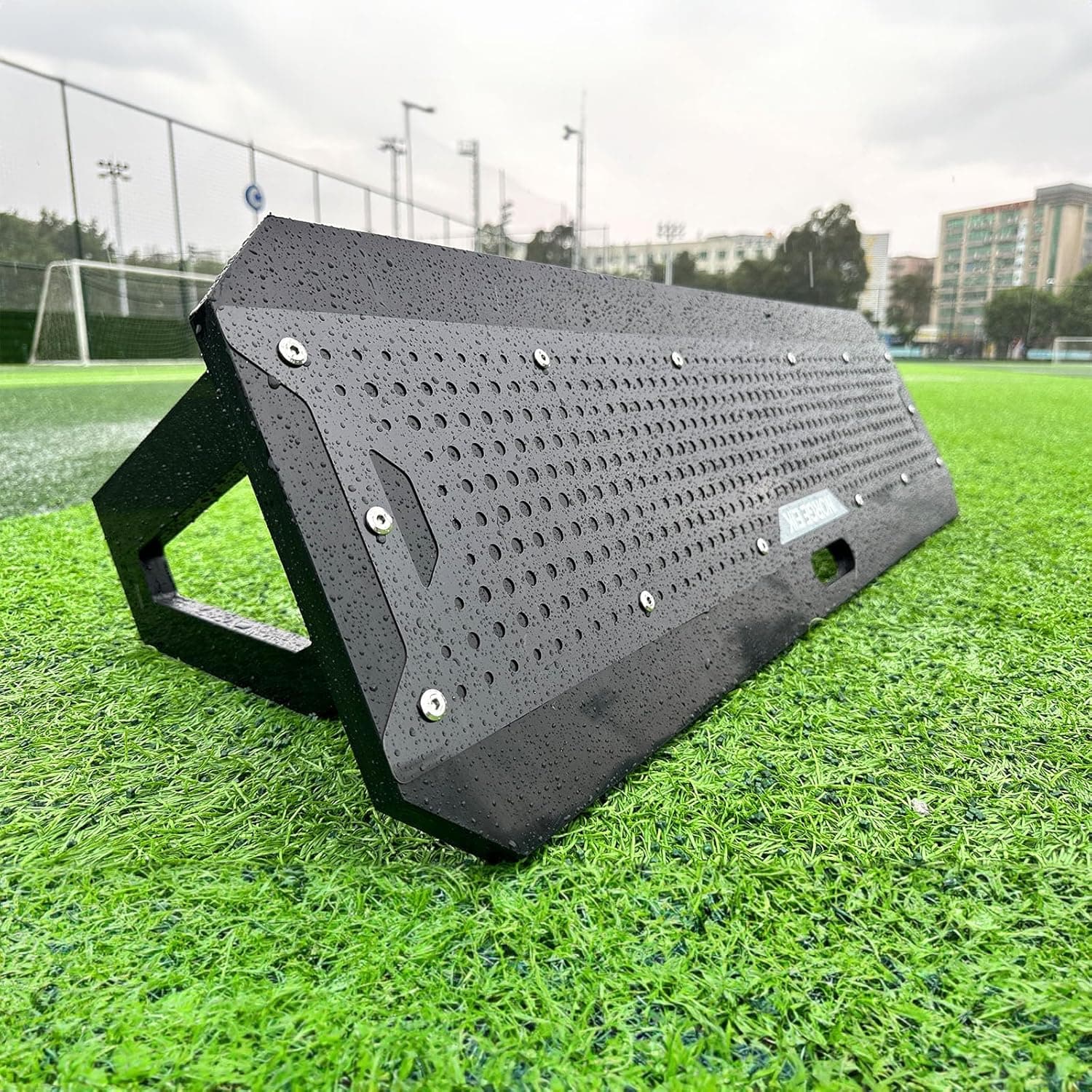
- Soccer rebounder — turns wall passing and first touch into something a child can do alone
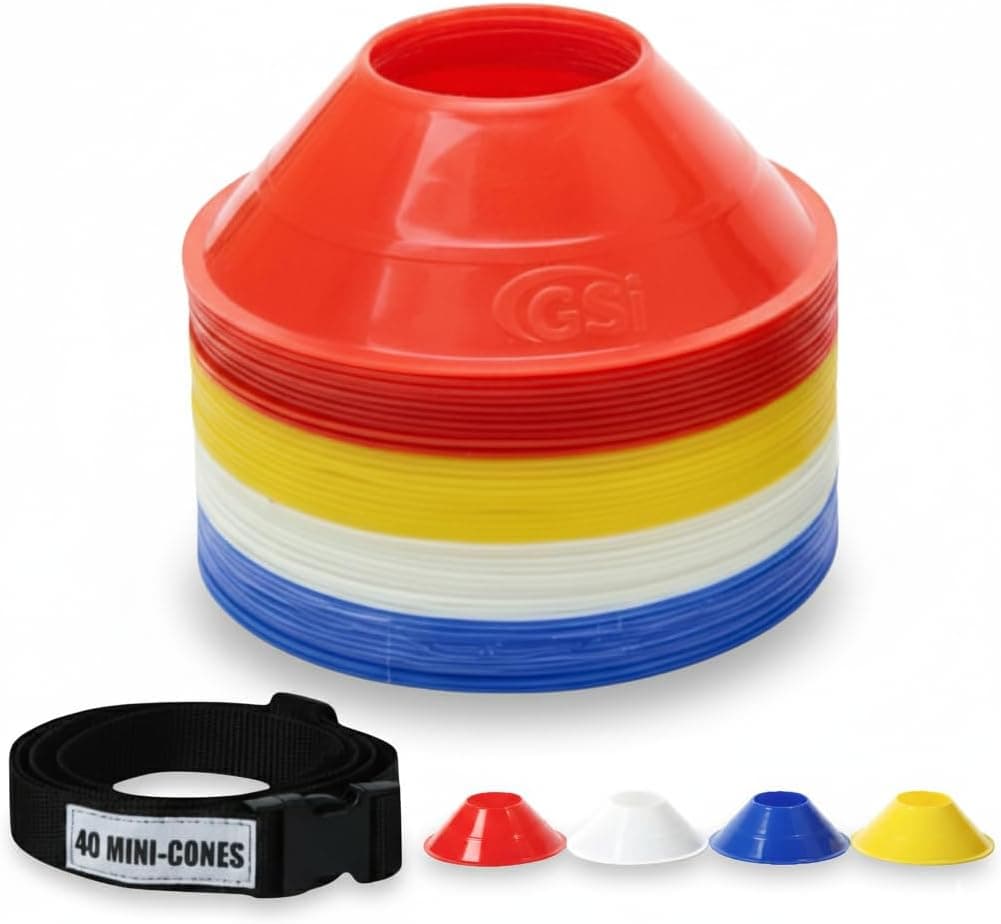
- Disc training cones, set of 40 — the cheapest way to build a session that has a shape
- Size one ball — more touches in less space, which is the whole game at this age
- Pop-up goals and agility ladder — targets and footwork, so reps have a point
- See all our picks — what we recommend and, more usefully, why
7. People do things nobody trained them to do
Step back. Human beings have a long record of achieving things with no precedent and no blueprint. The men who cut the Erie Canal, hundreds of miles of it, largely by hand, had no formal engineering training. The job demanded it and they worked it out.
The best-known example in sport is not from soccer at all. Richard Williams coached Venus and Serena to the top of tennis without an elite playing background of his own. Content knowledge, obsession and a teaching process beat a playing pedigree, and it is on the record.
Two caveats, so this does not read as self-serving
- •I do not know everything, and I do not know what I don’t know. But that is true of every coach who ever lived, whatever they played. “Nobody knows everything” is a different claim from “you have a ceiling because you never played.”
- •My own playing background proves the point against me. I played basketball, football and baseball, and I still could not teach any of the three better than someone who never played them but has coached them for ten years.
8. The objections that deserve a real answer
“Would you let someone who cannot swim teach swimming?”
No. And this is a good objection, because it identifies something different in kind rather than in degree. Swimming has a safety floor built into the activity: if the instructor cannot get in the water and physically reach a child, a child can drown.
Soccer has no equivalent. The swimming case does not contradict the argument, it marks the edge of a different category, where physical capability is a safety requirement rather than a teaching one.
“You would not want an untrained person teaching surgery.”
Correct — and look closely at why. I would not need the dexterity to perform surgery in order to teach it. I would need thousands of hours around the teaching of it: observing procedures, studying outcomes, reading the research, breaking technique down alongside people who operate.
Key point
The requirement there is teaching experience and content mastery, not personal execution. That is my argument, not a refutation of it.
“Coaches without a background are often underqualified.”
They often are. And plenty of coaches with a playing background are wildly overconfident. That cuts both ways, which is rather the point. A playing pedigree does not inoculate anyone against being a poor teacher. Sometimes it supplies a false sense of already being qualified.
“If it mattered, it would be in the coaching license.”
This is the one I would put to anybody making the original claim.
No coaching license anywhere requires you to demonstrate that you can personally perform every skill at a competitive level. If playing ability were a prerequisite for teaching, that is exactly what licensing bodies would test.
9. Why this matters more than an internet argument
If we insist that only people with elite playing résumés are qualified to teach children, we shrink the coaching pool on purpose. A smaller pool of qualified adults means higher prices. That is a direct contribution to the pay-to-play system pricing families out of this sport.
Turn it around:
- ✓The parent who wants to help can learn to help.
- ✓The rec coach who cares can get properly good.
- ✓The volunteer who has never kicked a ball can run a session worth running.
Key point
Every parent we turn into a competent teacher is one more child getting good coaching without their family paying for it.
Free resources to start with
Everything here is free and needs no playing background to use. Pick one and start this week.
- Free 7-Day Training Plan — seven follow-along sessions, no setup
- Free 30-Day Training Plan — the next step once the week is done
- The Parent Trainer's Playbook — written for exactly the parent this article is about
- Become a Rec Coach SuperHero — for the volunteer who wants to run a session worth running
- The Most Important Skill Never Taught — the fundamental most sessions skip
- 100+ Free Video Library — drills by age group, on YouTube
- The whole Free Resource Hub — guides, calculators and community groups
If you are the parent in this story
You do not need to have played. You need a plan, a sequence, and something to put in front of your child that has already been broken down properly.
That is what Anytime Soccer Training is: over 5,000 follow-along sessions your player can do at home, built so the adult in the room does not have to be the expert. Start with the free 7-day plan and see what your kid does with it.
“Every parent we turn into a competent teacher is one more child getting good coaching without their family paying for it.”
— Neil Crawford
So next time it comes up
When somebody tells you that you cannot teach what you cannot do, ask them three questions.
- 1What do you mean by “teach”? Which of the four pillars am I missing?
- 2Name the skill. One specific technique a trained adult could never learn to teach.
- 3If it is genuinely essential, why is it not in the coaching license?
Take the claim apart philosophically, practically, pedagogically and personally, answer the honest objections rather than the weak ones, and it does not survive.
If we want more access, more affordable development and more good coaching in this sport, we have to stop gatekeeping it behind a playing résumé.
What skill do you think genuinely cannot be taught by someone who never played it? Tell me, because I would like to hear the best version of the argument.
From the Podcast — The Inside Scoop
Should I Talk to My Kid’s Coach About Moving Him to a Different Position?
Another one for parents working out where the line is between advocating for your child and getting in the way.