
Winter Indoor Soccer Drills to Keep Your Child Moving
January 23, 2026

Winter Indoor Soccer Drills to Keep Your Child Moving
Winter is the silent killer of soccer development. Just when your child has built momentum from the fall season — skills sharpening, confidence growing, habits forming — the cold weather arrives and threatens to undo months of progress. Fields freeze over, outdoor practice gets cancelled, and the temptation to hibernate on the couch with a controller in hand becomes overwhelming. I've watched it happen with my own kids and with their teammates: a three-month winter break that sends skills backward and requires weeks of catch-up when spring arrives.
But it doesn't have to be this way. With a little creativity and the right approach, winter can actually be one of the most productive periods for soccer development. Indoor training forces you to focus on close-quarter skills — ball mastery, tight dribbling, quick feet — that are harder to prioritize when you have a full field to run on. Some of the best technical players in the world developed their skills in cramped indoor spaces. Brazilian futsal, Dutch street soccer, and English back-alley football all share a common thread: small spaces breed great technicians.
Here's your complete guide to indoor winter training, with specific drills you can do in a living room, garage, basement, or hallway.
Setting Up Your Indoor Training Space
Before we get to the drills, let's talk about space. You don't need much:
- Minimum space: About 6 feet by 10 feet — roughly the size of a large rug or a section of your garage.
- Ideal space: A garage, basement, or large room with 15-20 feet of length.
- Floor surface: Hard floors are ideal (hardwood, concrete, tile). Carpet works for stationary ball work but adds friction that changes how the ball moves.
- Ball: Use a size-appropriate ball for outdoor drills adapted indoors. For true indoor work, consider a futsal ball (low-bounce, slightly smaller) or even a tennis ball for advanced foot-eye coordination. Some families use a soft foam ball to protect furniture and reduce noise — this is fine for many drills.
- Protection: Move breakable items. Put a blanket over the TV if it's in the training space. Accept that minor scuffs and bumps are part of the deal — a few marks on the wall are a small price for your child's development.
Category 1: Stationary Ball Mastery
These drills require almost no space and can be done standing in one spot. They're perfect for building the foot-ball connection that underpins all technical skills.
Toe Taps (5 minutes)
Stand over the ball and alternate tapping the top with the sole of each foot. Start slow, build speed. Focus on rhythm and consistency rather than raw speed. Challenge your child to maintain the rhythm for 30 seconds, then 45, then 60.
Progression: Add a clap between each tap. Tap-clap-tap-clap. This develops coordination and makes it more engaging.
Sole Rolls (5 minutes)
Roll the ball forward and backward under the sole of one foot. Switch feet after 30 seconds. Then roll the ball side to side across the body. Focus on keeping the ball under control with gentle pressure — not stepping on it, not letting it escape.
Progression: Roll the ball in a circle around both feet. This requires adjusting body position and develops spatial awareness.
Inside-Outside Touches (5 minutes)
Tap the ball from the inside of the right foot to the outside of the right foot and back. Then switch to the left foot. Then alternate feet. This develops the ability to control the ball with different surfaces of the foot, which is the foundation of close-control dribbling.
Progression: Add a body movement — every time you tap with the outside, shift your weight as if you're going to move in that direction. This simulates the weight shift used in game-speed dribbling moves.
The Box (5 minutes)
Using the sole and inside of both feet, move the ball in a square pattern: pull back with the right sole, push left with the right inside, push forward with the left sole, push right with the left inside. It creates a box pattern. Start slow, build speed, maintain the box shape.
Progression: Make the box bigger, then smaller. Alternate between clockwise and counterclockwise. Add a speed burst every fourth repetition.
Category 2: Close-Control Dribbling
These drills require a bit more space — ideally 10-15 feet of length — and develop the ability to maneuver the ball in tight spaces.
Hallway Dribbling (5 minutes)
Use a hallway as a natural lane. Dribble from one end to the other using only inside touches, then only outside touches, then alternating. The narrow width of the hallway forces close control — if the ball hits the wall, you've lost control.
Progression: Add a time challenge. How fast can you go from one end to the other without the ball hitting the wall? Use a phone timer and track improvement over weeks.
Cone Weave in Tight Space (5 minutes)
Set up 4-5 cones (or water bottles, shoes, or any household objects) in a line about 2 feet apart. Dribble through them using inside and outside touches. In a tight indoor space, you're forced to use soft, precise touches — which is exactly the skill you want to develop.
Progression: Go through forward, then backward. Use only the left foot, then only the right. Add a turn at the end (pull-back, Cruyff turn, or step-over turn) before dribbling back.
Figure 8 Dribbling (5 minutes)
Place two cones (or objects) about 4 feet apart. Dribble in a figure-8 pattern around them. This develops the ability to change direction smoothly while maintaining close control. Focus on keeping the ball within arm's reach at all times.
Progression: Decrease the distance between the cones to make the turns tighter. Add a speed burst on the straight sections between cones.
Category 3: First Touch and Receiving
A wall is your best friend for first touch development. If you have a garage or basement wall, these drills are gold.
Wall Passes — Inside of Foot (10 minutes)
Stand 4-6 feet from the wall. Pass with the right foot, receive with the left. Pass with the left, receive with the right. Focus on a clean, cushioned first touch that sets the ball exactly where you want it. Count consecutive clean touches — try to beat your record each session.
Progression: Move farther from the wall. Receive on the half-turn (at a 45-degree angle to the wall). Add a one-touch constraint — pass and receive with no extra touches.
Wall Passes — Thigh and Chest (5 minutes)
Stand 3-4 feet from the wall. Toss the ball against the wall at different heights and practice receiving with the thigh (letting the ball drop to the foot) and chest (cushioning and letting it drop). This develops the aerial receiving that becomes increasingly important as players get older and passes get more varied.
Progression: Receive and immediately pass back to the wall in one fluid motion. This simulates receiving a ball in a game and playing a quick one-two.
Category 4: Moves and Turns
Indoor spaces are ideal for practicing individual moves because the limited space forces you to execute tightly — just like you'd need to in a real game when a defender is close.
The Pull-Back (5 minutes)
Dribble forward two or three steps, then use the sole of the foot to pull the ball backward, turn 180 degrees, and dribble back. Practice with both feet. This is one of the most useful moves in soccer and is used constantly in tight spaces.
The Cruyff Turn (5 minutes)
Named after Johan Cruyff, this move involves faking a pass or shot, then cutting the ball behind the standing leg and turning away. It's devastatingly effective when executed well. Practice the motion slowly at first, then build speed.
Inside Cut and Outside Cut (5 minutes each)
Dribble toward a cone, then cut the ball sharply with the inside of the foot (inside cut) or the outside of the foot (outside cut) and accelerate in the new direction. In an indoor space, the acceleration is just a quick burst of two or three steps, but the cut itself is the skill you're developing.
Step-Over (5 minutes)
Approach a cone, step over the ball with one foot (circling over and around it), then push the ball in the opposite direction with the other foot. This is a classic feint that tricks defenders by faking movement in one direction before going the other way. Indoor practice is perfect for developing the rhythm and coordination of this move.
Category 5: Juggling
Juggling is the ultimate indoor soccer activity. It requires virtually no space, develops touch, coordination, and concentration, and provides a built-in challenge system (can you beat your record?).
- Beginners: Start with the "catch and juggle" method. Drop the ball from your hands, kick it back up, catch it. Repeat. When you can do this consistently, try two touches before catching, then three, and so on.
- Intermediate: Juggle continuously using feet only. Count your record and try to beat it each session. Set targets — 10, then 25, then 50, then 100.
- Advanced: Add thighs, head, and shoulders. Try patterns: left foot, right foot, left thigh, right thigh, head, repeat. Or challenge yourself to juggle using only your weaker foot.
Juggling is also a great activity for commercial breaks during TV time. Keep a ball near the couch and juggle during breaks. It's a painless way to accumulate hundreds of extra touches per day.
Using Anytime Soccer Training for Indoor Sessions
All of the drills above are effective on their own, but they're even more powerful when integrated into a structured training program. Anytime Soccer Training offers indoor-friendly sessions that are designed for limited space. Your child can follow along with video-guided workouts that incorporate ball mastery, dribbling, moves, and foot skills — all adaptable to indoor environments.
The advantage of using a structured platform during winter is consistency. When the weather is cold and dark, motivation dips. Having a ready-made session to follow — just press play and go — removes the friction of figuring out what to do. Your child doesn't need to think or plan. They just follow along, and the development happens.
Sample Winter Weekly Schedule
Here's a sample weekly schedule for indoor winter training:
- Monday: 15-minute ball mastery session (stationary drills + close-control dribbling)
- Tuesday: 15-minute Anytime Soccer Training guided session
- Wednesday: Rest day or light juggling during TV time
- Thursday: 15-minute first touch and wall passing session
- Friday: 15-minute moves and turns practice
- Saturday: 20-30 minute extended session combining multiple categories, or indoor futsal game if available
- Sunday: Rest day
This schedule totals about 80-100 minutes of training per week — modest by any standard, but enough to maintain and even improve skills through the winter months. When spring arrives and your child steps back onto the field, they'll be ahead of the players who spent the winter on the couch. And the daily ball-touching habit they've built will carry them through the rest of the year.
Winter doesn't have to be an enemy of soccer development. With the right approach, it can be a secret weapon. Embrace the indoor training, focus on the close-quarter skills that make great technicians, and come out of winter sharper than you went in.
Gear we use for this
The kit our own players train with at home.
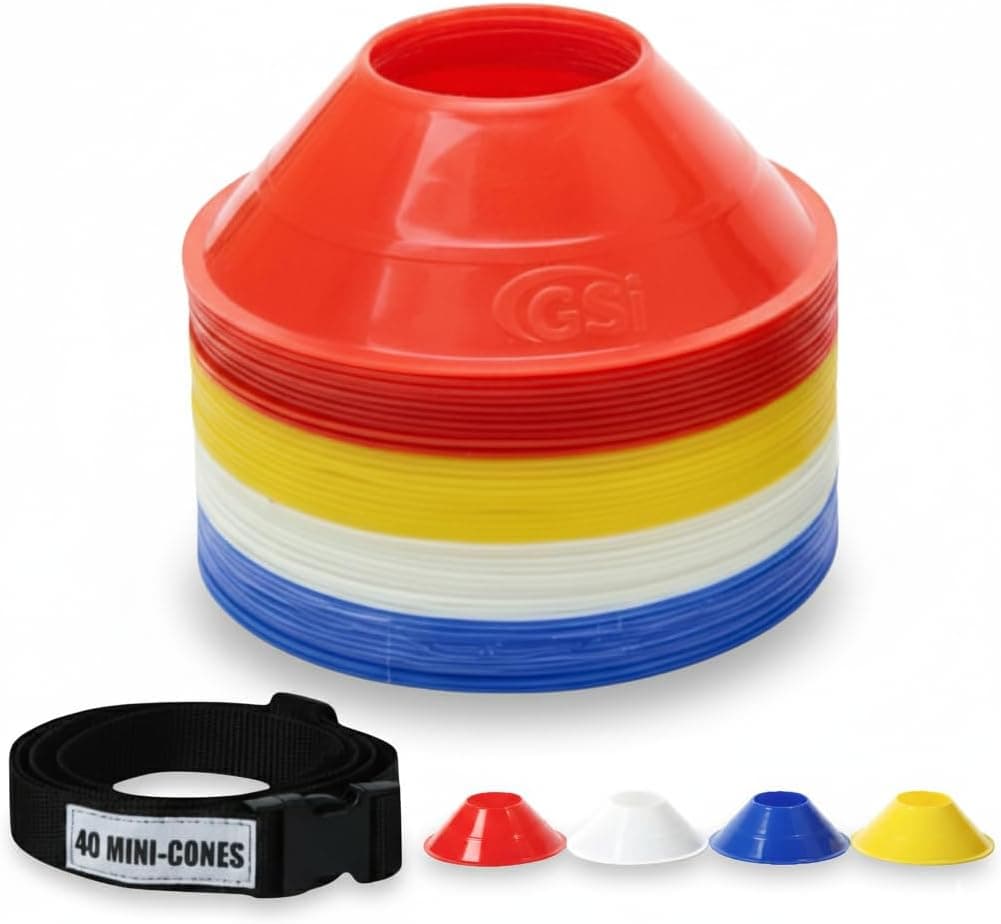
Disc Training Cones (Set of 40)
View on Amazon →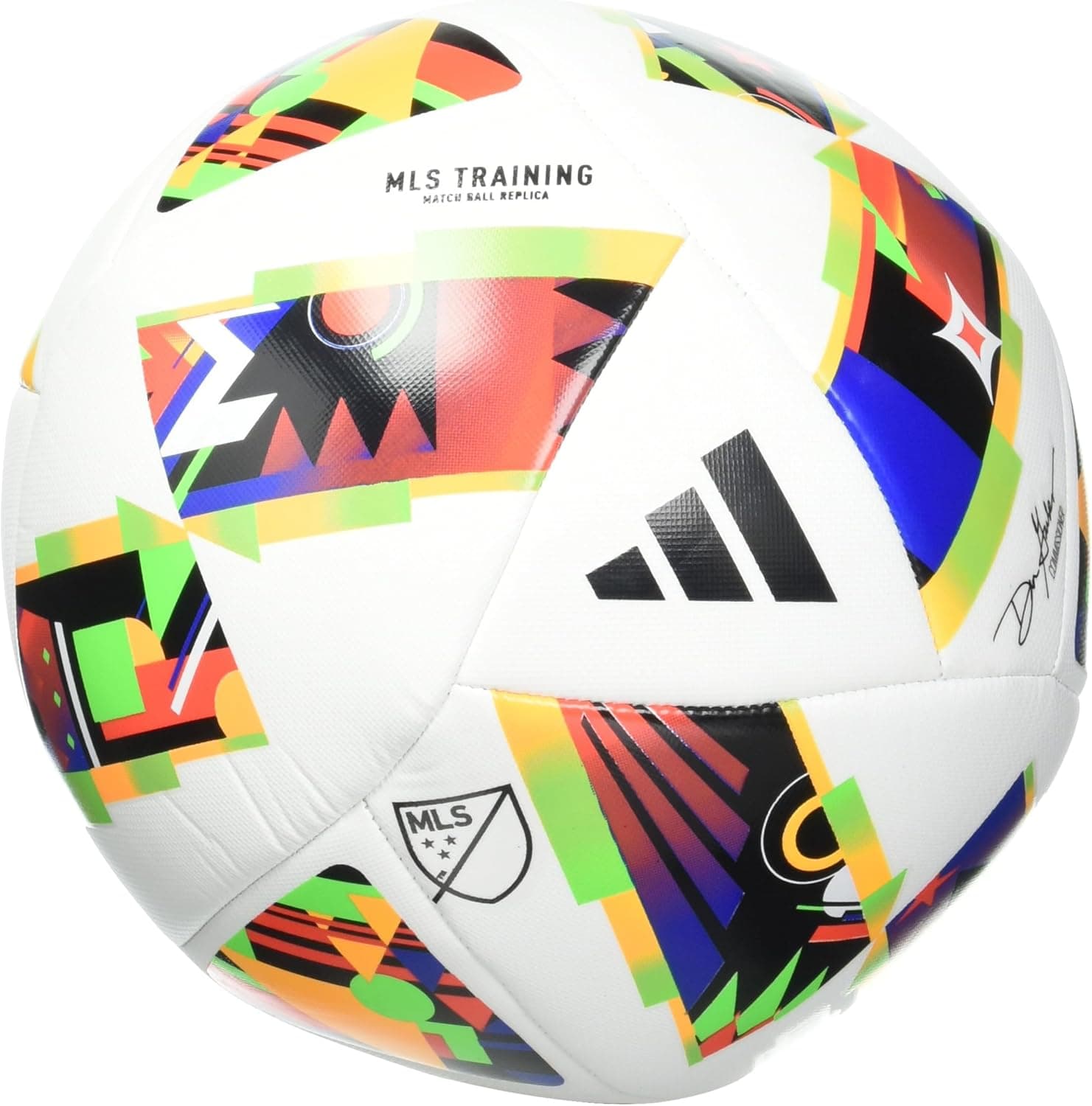
Adidas MLS Training Soccer Ball
View on Amazon →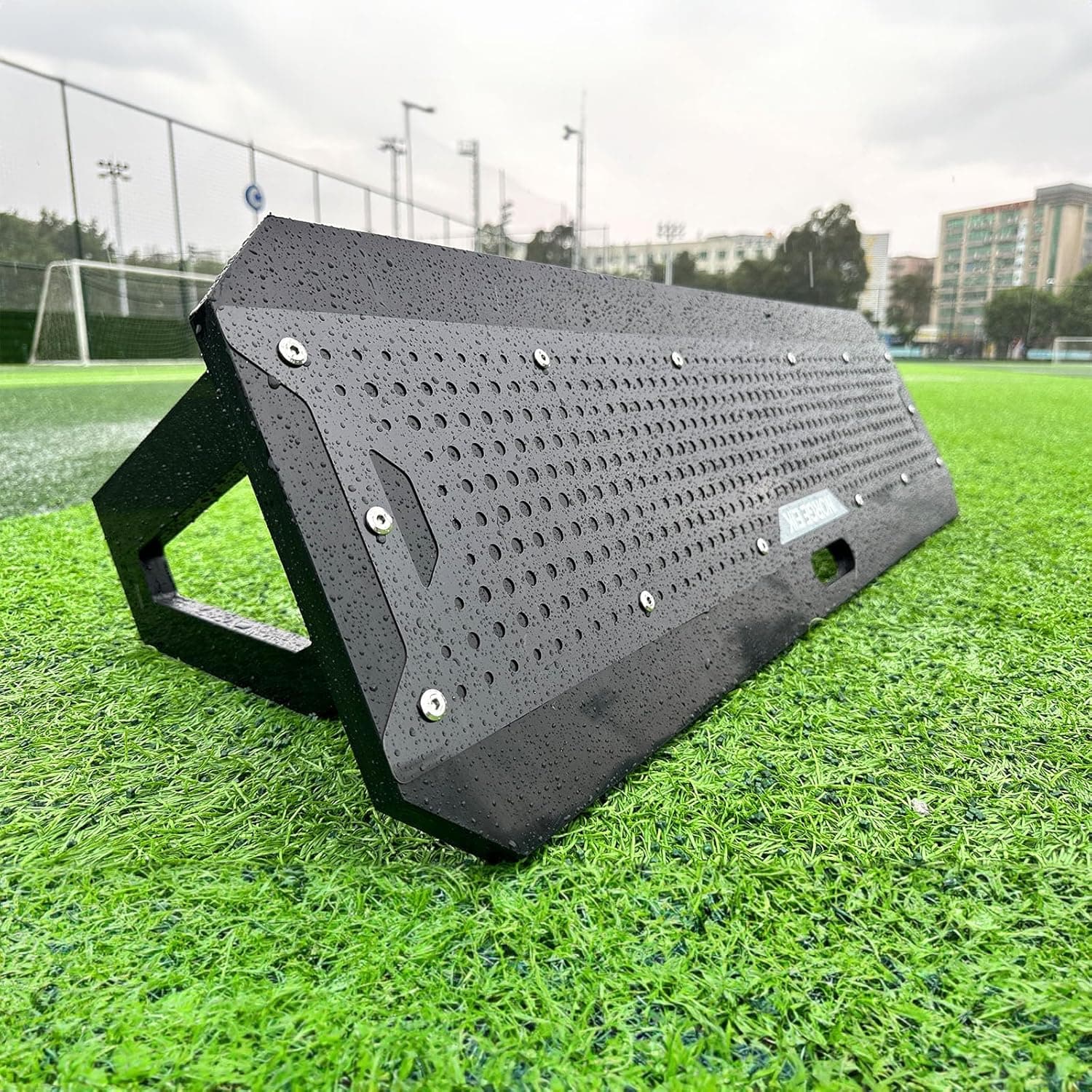
Soccer Rebounder
View on Amazon →As an Amazon Associate we earn from qualifying purchases, at no extra cost to you.