
Why I Wish I'd Started First Touch Training Earlier
February 26, 2026
Why I Wish I'd Started First Touch Training Earlier
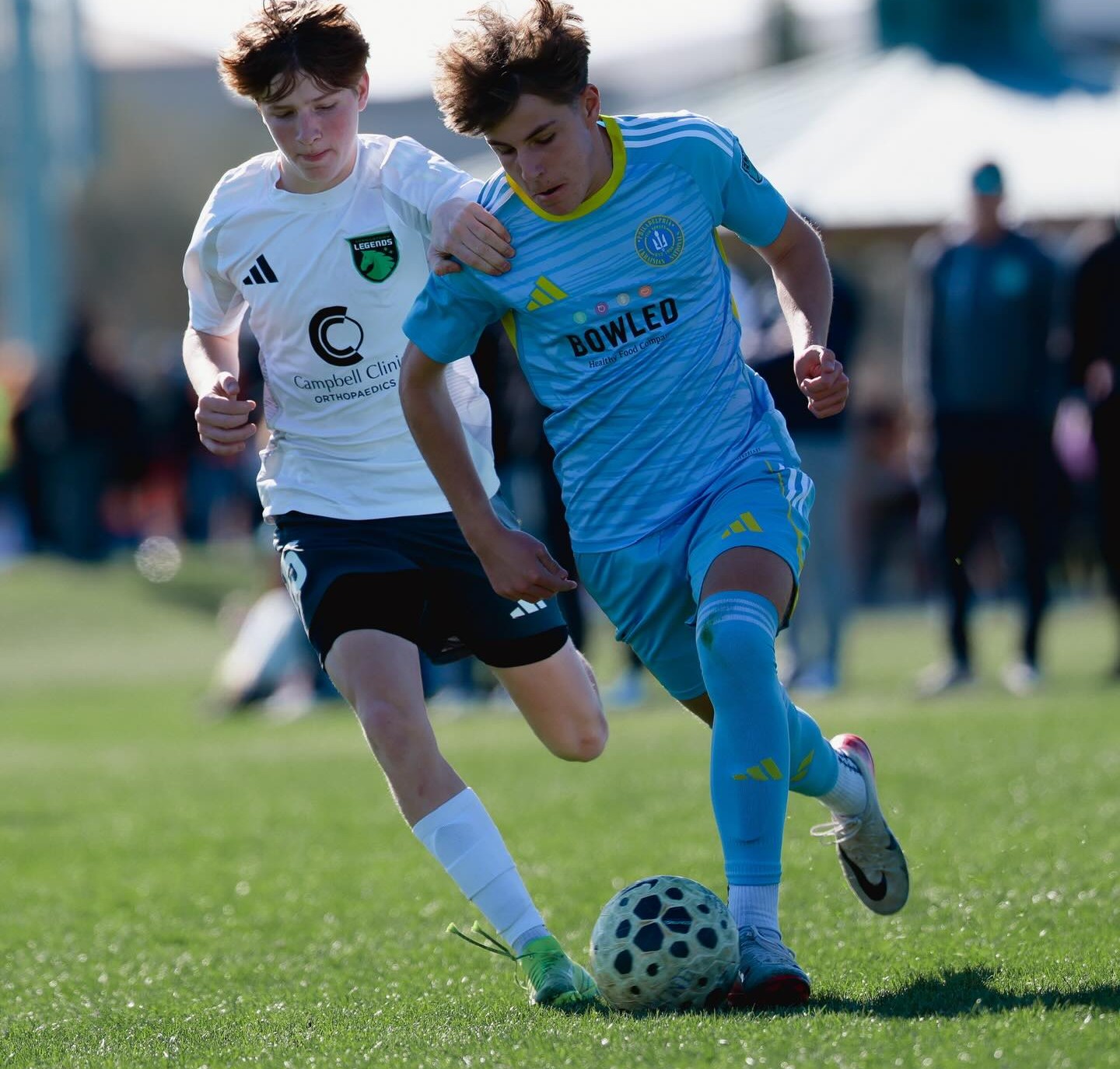
If I could give one piece of advice to every soccer parent of a child under ten, it would be this: start working on first touch now. Not dribbling. Not shooting. Not fancy moves. First touch. The ability to receive a ball and control it cleanly with one contact. It's the most important and most underrated skill in soccer, and the earlier you develop it, the bigger the advantage your child will carry for the rest of their playing career.
I learned this lesson too late with my first child and corrected course with my second. The difference in their development has been stark — and it's almost entirely attributable to first touch training.
What First Touch Actually Is
First touch is the initial contact a player makes with the ball when receiving a pass. A good first touch does three things:
- Controls the ball: The ball stops moving unpredictably and comes under the player's command.
- Sets direction: The first touch moves the ball into the space the player wants to go next — toward goal, away from a defender, into a passing lane.
- Maintains pace of play: A clean first touch allows the player to make their next decision quickly — pass, dribble, shoot — without needing extra touches to get the ball under control.
A poor first touch does the opposite: the ball bounces away, goes in the wrong direction, or requires additional touches to control. Every extra touch gives defenders time to close down, takes away passing options, and slows the entire team's play.
Why First Touch Matters More Than Any Other Skill
I've heard coaches at every level say the same thing: "First touch is the great separator." At the youth level, it's often the single biggest differentiator between the player who looks composed and the player who looks panicked.
Here's why it matters so much:
- Every other skill depends on it. You can't dribble effectively if your first touch sends the ball too far from your feet. You can't pass accurately if your first touch doesn't set the ball in a passable position. You can't shoot with conviction if your first touch requires a second and third touch before you're ready. First touch is the prerequisite for everything else.
- It determines playing speed. The fastest players aren't necessarily the ones who run the fastest — they're the ones who process the ball the fastest. A player with a clean first touch can receive, assess, and execute in two touches. A player with a poor first touch needs four or five touches to do the same thing. The first player plays at game speed; the second player is always a step behind.
- It's noticeable at every level. Watch any professional game and pay attention to how the best players receive the ball. Their first touch is almost always perfect — the ball seems to stick to their foot and land exactly where they want it. Then watch a lower-level game and notice how many extra touches players need just to get the ball under control. The gap in first touch quality is the most visible difference between levels of play.
My Two-Child Experiment
My older son, Nathan, never did specific first touch training at home. He trained with his club team, played games, and occasionally kicked the ball around in the backyard. His first touch was average — fine in open space but shaky under pressure. By age thirteen, his inconsistent touch was his biggest limitation. He had good game sense and work rate, but when the ball came to him, there was a fifty-fifty chance it would bounce away. Against stronger opponents, that meant he looked overwhelmed even though his understanding of the game was solid.
My younger daughter, Ava, started first touch training at age seven. We did wall passing exercises almost every day — literally just passing the ball against the garage wall and receiving it cleanly. We used Anytime Soccer Training first touch modules that taught her to receive on the ground, out of the air, on the half-turn, and under pressure. The sessions were short — 10-15 minutes — but daily.
By age nine, Ava's first touch was dramatically better than Nathan's had been at the same age. She could receive a hard pass and cushion it to a dead stop. She could take a first touch that turned her toward goal instead of back to her own end. She could control a bouncing ball out of the air and have it at her feet in one motion. At nine years old.
The downstream effects were enormous. Because Ava's first touch was reliable, her passing improved (she could set the ball for a pass in one touch). Her dribbling improved (she could receive and immediately take on a defender). Her confidence improved (she didn't fear receiving the ball in tight spaces). Her decision-making improved (she had more time to assess options because she didn't waste time controlling the ball).
Nathan, now sixteen, is still working on his first touch. He's improved significantly, but the neural pathways that make first touch automatic are harder to establish at sixteen than they would have been at seven. He'll always have to think about his first touch a little more than Ava does, because Ava's touch was wired in during the golden age of motor learning.
How to Train First Touch at Home
The beautiful thing about first touch training is that it requires almost nothing: a ball and a wall. Here's a progression you can start today:
Level 1: Basic Wall Passing (Ages 6-8)
- Stand 4-6 feet from a wall. Pass with right foot, receive with left. Pass with left, receive with right.
- Focus on a soft, cushioned touch — the ball should stop within 6 inches of where you want it.
- Do 50 passes per foot per session (takes about 5 minutes).
Level 2: Directional First Touch (Ages 8-10)
- Same wall setup, but now receive the ball at a 45-degree angle to the wall instead of facing straight on. This mimics receiving a pass and turning in a game.
- Pass against the wall, then receive and set the ball to your left or right with one touch.
- Alternate receiving to the left and right. Practice opening your body to receive on the half-turn.
Level 3: Aerial Receiving (Ages 9-12)
- Toss the ball against the wall at different heights. Practice receiving with the thigh (cushion and let it drop to the foot), the chest (cushion and let it drop), and the foot out of the air.
- Work on controlling bouncing balls — the most difficult receiving situation in a game.
- Practice receiving and immediately playing a pass back to the wall in one fluid motion.
Level 4: Receiving Under Pressure (Ages 10+)
- Add a "defender" (parent or sibling). They apply light pressure as the player receives the ball from the wall. The receiver must control the ball and protect it or turn away from the defender in one motion.
- Reduce the space: practice receiving in a small area (5x5 yards) with a chaser. This forces quick, decisive first touches under realistic pressure.
Anytime Soccer Training offers structured first touch modules at every level that your child can follow independently. The platform breaks down receiving technique with visual demonstrations and progressive challenges that keep the training engaging. I used it extensively with Ava and credit it with much of her first touch development.
The Daily Minimum
If your child does nothing else for home training, have them do 5 minutes of wall passing every day. That's it. Five minutes. Pass, receive, pass, receive. Right foot, left foot. It's monotonous, it's unsexy, and it's the single most impactful thing they can do for their soccer development.
Five minutes a day, five days a week, for a year equals roughly 21 hours and thousands of receiving repetitions. That volume of first touch practice, accumulated during the developmental window when the brain most efficiently automates motor skills, creates a permanent technical advantage.
What I'd Tell Every Parent
Don't make the mistake I made with Nathan. Don't assume that team practice will develop your child's first touch. Don't wait until the coach identifies it as a weakness. Don't prioritize flashy dribbling moves over the fundamental skill that makes everything else possible.
Start first touch training early. Start it today. Get a ball and a wall. Five minutes per day. Use Anytime Soccer Training for structured progressions if you want more than basic wall work. And be patient — the results build slowly but compound dramatically over time.
Your child's first touch will determine more about their soccer future than almost any other single skill. Give it the attention it deserves, and give it early. You won't regret it. I wish I hadn't waited as long as I did.
Gear we use for this
The kit our own players train with at home.
Adidas MLS Training Soccer Ball
View on Amazon →
Size One Soccer Ball
View on Amazon →
Disc Training Cones (Set of 40)
View on Amazon →As an Amazon Associate we earn from qualifying purchases, at no extra cost to you.