
Why Every Soccer Kid Needs a Daily Training Habit
December 29, 2025

Why Every Soccer Kid Needs a Daily Training Habit
I am going to make a bold claim: the single most impactful thing you can do for your child's soccer development is help them build a daily training habit. Not sign them up for the best team. Not hire an expensive private coach. Not attend every showcase tournament. Just help them build the simple, powerful habit of touching a soccer ball every single day.
This is not my opinion based on anecdotal experience alone, though I have seen it work with my own kids and dozens of others. It is supported by research on skill acquisition, habit formation, and the development trajectories of elite athletes across all sports. The daily training habit is the common denominator among kids who go from average to exceptional.
The Math of Daily Ball Contact
Let me share some numbers that changed the way I think about youth soccer development.
A typical youth soccer player who only participates in team activities gets approximately 200-400 quality touches on the ball per week. That includes practice and games. Over a 40-week season, that is roughly 8,000 to 16,000 touches per year.
Now consider a player who adds just 10 minutes of daily ball work at home. In a focused 10-minute session, a player can easily accumulate 200-300 quality touches. Over a year, that adds approximately 73,000 to 110,000 additional touches.
Read that again. A daily 10-minute habit can increase a young player's annual ball contact by five to eight times.
It is mathematically impossible for that volume of additional practice not to produce dramatic improvement. The ball does not know whether those touches happened in an organized practice or in a backyard. Each touch builds the neural connections that create technical skill, and more touches equals faster, deeper skill development.
Why Daily Beats Everything Else
The Spacing Effect
Research in cognitive science has established a principle called the spacing effect: learning is more effective when practice is distributed over time rather than concentrated in a single session. A player who practices 10 minutes every day for a week will learn more than a player who does a single 70-minute session, even though the total time is identical.
This is because the brain processes and consolidates skills during the rest periods between sessions. Each night of sleep after a training session strengthens the neural pathways built during practice. Daily training takes maximum advantage of this consolidation process by providing seven sleep cycles per week for skill consolidation rather than one or two.
Habit Formation
Research from the European Journal of Social Psychology found that it takes an average of 66 days for a new behavior to become automatic. A daily training habit reaches this automation threshold in about two months. Once automated, the habit requires minimal willpower to maintain. Your child just does it, the way they brush their teeth or eat breakfast. It is no longer a decision to be made each day; it is simply part of who they are.
Compare this to a three-times-per-week habit, which takes significantly longer to automate because the intermittent schedule does not create the same daily trigger-response pattern. Daily habits are simply easier to form and easier to maintain than periodic ones.
Compound Growth
Albert Einstein reportedly called compound interest the eighth wonder of the world. The same principle applies to skill development. Small daily improvements compound over time into massive cumulative growth.
If your child improves by just one percent each week, and that improvement compounds, they will be 67 percent better after one year. That one percent weekly improvement is virtually invisible from one week to the next, but over months and years, it produces transformation that looks like a completely different player.
Daily training is the mechanism that enables this compound growth. Each day's practice builds on the previous day's neural adaptations. Skip a day, and you lose some of that compounding effect. Skip a week, and you lose more. The daily habit maximizes the compound growth rate of your child's abilities.
What a Daily Training Habit Actually Looks Like
When I say daily training habit, I am not talking about 30-minute structured sessions every day. That is too much for most kids and families and is a recipe for burnout. Here is what a sustainable daily habit actually looks like:
The Minimum Effective Dose: 10 Minutes
Ten minutes. That is all it takes to maintain the daily habit and accumulate meaningful ball contact. Some days the session might naturally extend to 20 or 30 minutes because your child is in the zone. Other days, 10 minutes is all they have or all they want to do. Both are fine. The key is that every day includes at least 10 minutes of intentional ball work.
A Sample Daily Routine
- Monday: 15-minute structured session from Anytime Soccer Training (ball mastery focus)
- Tuesday: 10-minute juggling session (personal record attempts)
- Wednesday: 20-minute structured session (passing and first touch with wall work)
- Thursday: 10 minutes of free play with the ball (whatever they want to do)
- Friday: 15-minute structured session (dribbling and 1v1 moves)
- Saturday: Game day. The game itself counts as the daily touch. If no game, 10 minutes of shooting practice.
- Sunday: 10 minutes of light juggling or ball mastery. Keep it relaxed and low-intensity.
Notice the variation. Not every day is a full structured session. Some days are short and easy. The variety prevents burnout while maintaining the daily ball contact that drives development. Anytime Soccer Training has sessions of varying lengths and intensities that fit perfectly into this kind of varied daily schedule.
How to Build the Daily Habit: Practical Steps
Step 1: Attach It to an Existing Routine
The most effective way to build a new habit is to attach it to an existing one. This is called habit stacking. For example: right after your child changes out of school clothes, they go outside for 10 minutes of ball work. Or right after dinner, before screen time. The existing routine serves as the trigger for the new habit.
Step 2: Make It Easy
Remove every barrier between your child and their daily training. Keep a ball by the back door. Keep Anytime Soccer Training bookmarked on their device. Have cones permanently set up in the yard. The easier you make it to start a session, the more likely it will happen.
Step 3: Track It Visually
Get a wall calendar and let your child mark each day they train with a big X or a sticker. The visual chain of consecutive training days becomes a powerful motivator. Nobody wants to break a streak. This simple technique is surprisingly effective for both kids and adults.
Step 4: Start Embarrassingly Small
If 10 minutes sounds like too much for your child right now, start with 5 minutes. Or even 2 minutes. The goal at the beginning is not to produce improvement. It is to establish the daily pattern. Once the habit is formed, the duration naturally increases because your child will want to keep going.
Step 5: Never Miss Two Days in a Row
You will miss days. That is life. The rule is simple: never miss two days in a row. One day off does not break a habit. Two days starts to erode it. Three days and you are essentially starting over. So if you miss Monday, Tuesday is non-negotiable, even if it is just 5 minutes.
The Identity Shift
The most powerful thing that happens when a child builds a daily training habit is an identity shift. They stop thinking of themselves as a kid who sometimes practices soccer and start thinking of themselves as a kid who trains every day. This identity shift is the point where the habit becomes self-sustaining.
A child whose identity includes daily training does not need to be motivated or reminded. They train because that is who they are. They train on good days and bad days, when they feel like it and when they do not, during the season and out of season. The habit is part of their self-concept, and maintaining it becomes as natural as any other daily routine.
This identity shift typically happens around the two to three month mark if the daily habit is maintained. Once it clicks, the ongoing effort from parents drops dramatically because the internal motivation has taken over.
What About Rest?
A fair concern about daily training is the need for rest. Growing bodies need recovery. The answer is built into the framework above: not every daily session is intense. Rest days from intense training still include light ball contact like juggling or gentle ball mastery. This maintains the habit and the ball connection without stressing the body. Think of it like the difference between a hard gym workout and a gentle walk. Both count as physical activity, but they serve very different purposes.
If your child is genuinely exhausted or ill, skip the training without guilt. Health always comes first. But the bar for what counts as daily training is so low, just 10 minutes of light ball work, that most days it is achievable even when motivation or energy is low.
The Long View
A child who builds a daily training habit at age eight and maintains it through their youth soccer career will accumulate an extraordinary advantage over peers who train only with their team. We are talking about hundreds of thousands of additional touches on the ball. Thousands of hours of focused practice. The kind of technical foundation that produces players who look like they were born with the ball at their feet.
They were not born with it. They earned it, ten minutes at a time, one day at a time.
Help your child build this habit. Start today. Keep it short. Keep it fun. Keep it daily. And years from now, when people marvel at your child's ability and call it talent, you will smile knowing the truth: it was consistency. Pure, simple, powerful consistency.
That is the gift of the daily training habit. And it is available to every child who is willing to pick up a ball and spend ten minutes with it today, and tomorrow, and the day after that.
Gear we use for this
The kit our own players train with at home.

Adidas MLS Training Soccer Ball
View on Amazon →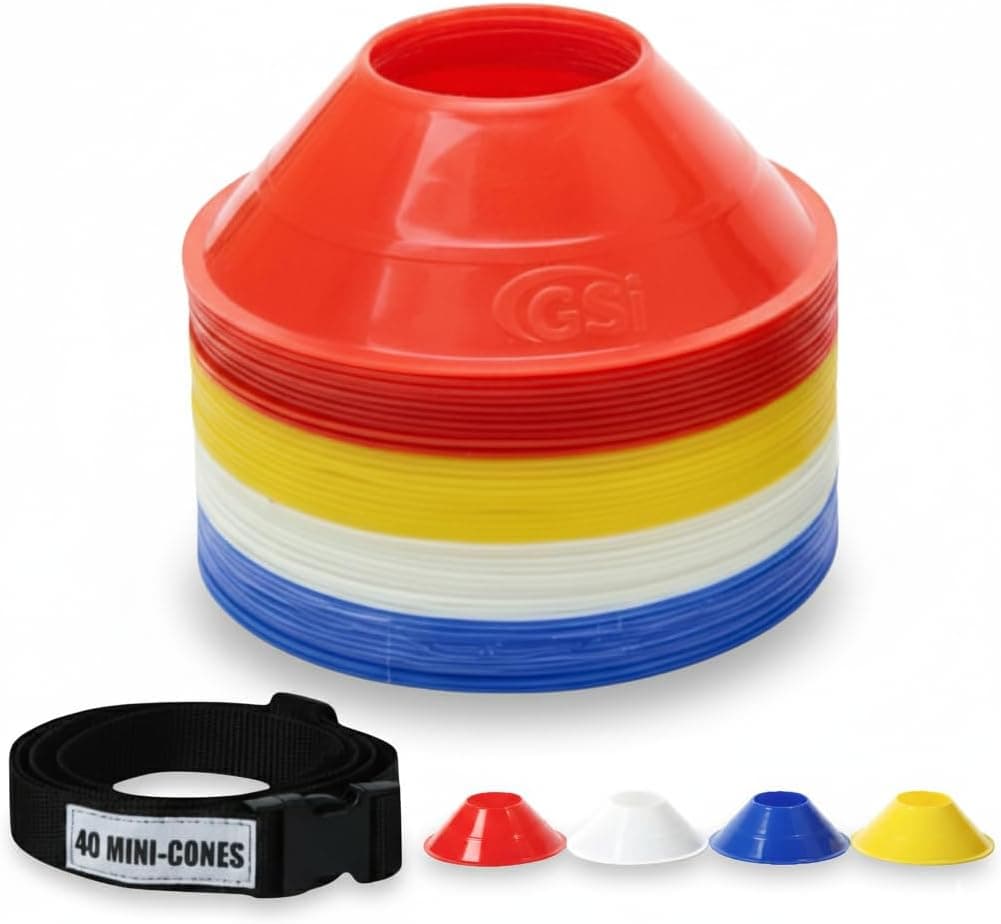
Disc Training Cones (Set of 40)
View on Amazon →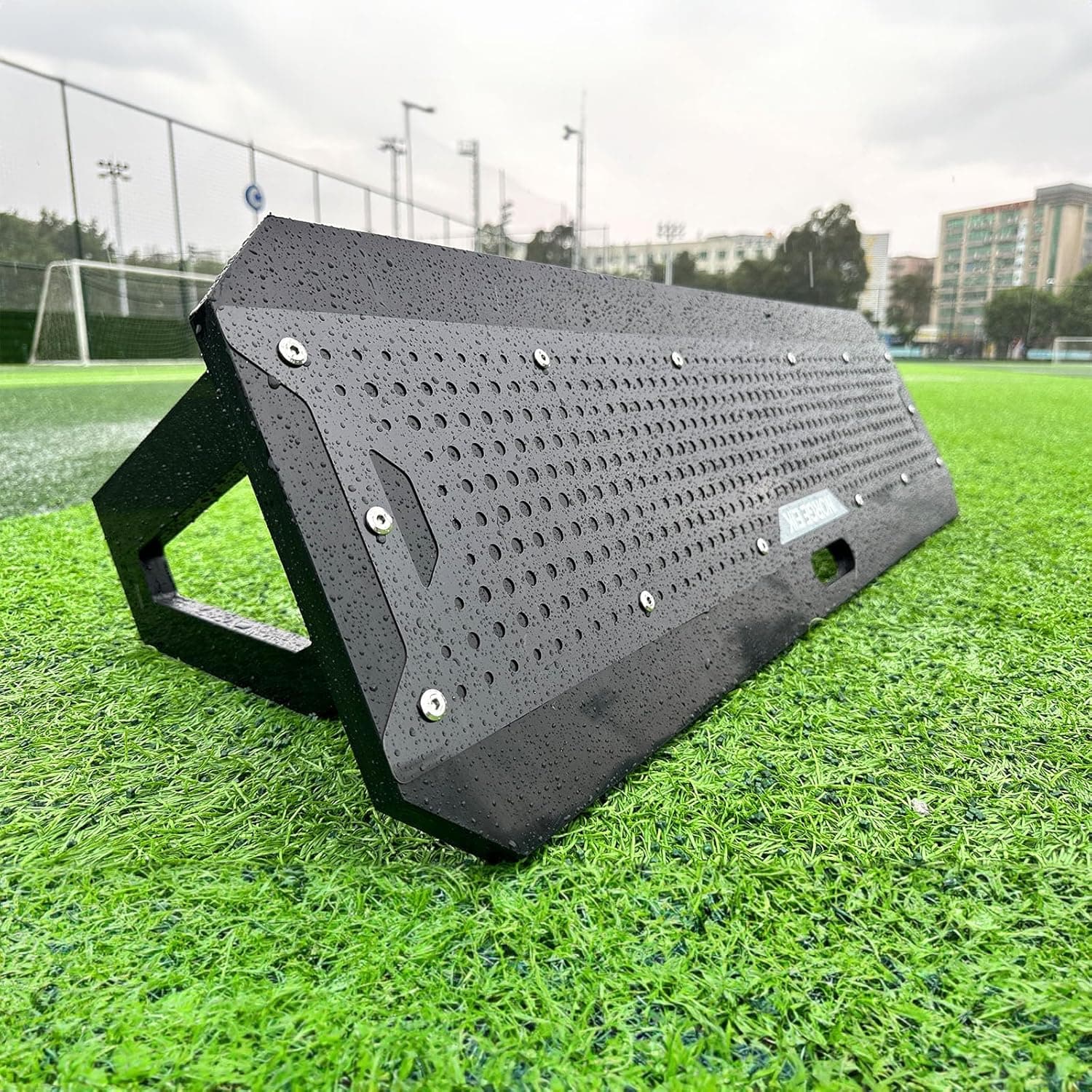
Soccer Rebounder
View on Amazon →As an Amazon Associate we earn from qualifying purchases, at no extra cost to you.