
When to Push and When to Back Off
February 16, 2026
When to Push and When to Back Off: Reading Your Child's Signals
If parenting a young athlete came with a manual, the chapter on knowing when to push and when to back off would be the longest and most dog-eared section. It's the question I wrestle with constantly, and I know I'm not alone. Push too hard, and you risk burnout, resentment, and your child quitting the sport they once loved. Back off too much, and you risk letting potential go unrealized, allowing laziness to win, and missing windows of development that don't stay open forever.
The answer, of course, is that there is no single answer. The right balance depends on your child's personality, their age, the specific situation, and a dozen other factors that shift from week to week. But after years of navigating this with my own kids — and getting it wrong plenty of times — I've developed a framework that helps me make better decisions more consistently. Here's what I've learned.
The Fundamental Distinction: Resistance vs. Distress
The most important thing I've learned is the difference between resistance and distress. They can look similar on the surface, but they require completely different responses.
Resistance is when your child doesn't want to do something because it requires effort, because they'd rather do something easier, or because the initial discomfort of starting feels unpleasant. Resistance sounds like:
- "I don't feel like it today."
- "Can I do it later?" (knowing later will never come)
- "It's too cold/hot/boring."
- "I'm tired." (said while bouncing around the house with energy)
Resistance is normal and, in many cases, appropriate to push through. Every high-performing person in any domain — sports, music, academics, career — has had to overcome resistance to practice regularly. Teaching your child to push through resistance is teaching them discipline, which is one of the most valuable life skills soccer can develop.
Distress is fundamentally different. Distress is when your child is genuinely suffering — emotionally, physically, or psychologically. Distress sounds like:
- "I hate soccer." (said with genuine emotion, not whining)
- Crying before or during practice consistently
- Physical symptoms: recurring headaches, stomachaches, sleep problems around soccer events
- Withdrawal: loss of appetite, social withdrawal, mood changes
- "Please don't make me go." (with genuine desperation)
Distress requires backing off, not pushing through. A child in distress is not being lazy — they're communicating that something is wrong. The appropriate response is to listen, investigate the cause, and address it.
Reading the Signals: A Practical Guide
Here are specific signals and how to interpret them:
Signal: "I don't want to practice today."
If it's occasional (once a week or less): This is normal resistance. Everyone has low-motivation days. A gentle push is appropriate: "I know you don't feel like it. Let's just do 10 minutes and see how you feel." Most of the time, once they start, the resistance disappears.
If it's frequent (most days): This is a pattern that suggests something deeper. Either the training is too long, too boring, too pressure-filled, or there's an underlying issue (problems at practice, social dynamics, burnout). Back off the pushing and investigate the cause.
Signal: Pre-game anxiety
Normal level: Butterflies, nervous energy, wanting to warm up extra, being quieter than usual. This is healthy pre-competition arousal. Support it with calm reassurance: "Some nerves are good — they mean you care. Just go out and play your game."
Concerning level: Crying, vomiting, panic attacks, begging not to go, recurring nightmares about games. This is beyond normal anxiety and suggests the competitive environment is too intense for your child at this point. Back off significantly — consider a less competitive team, a break from games, or professional support if symptoms persist.
Signal: Declining performance
If accompanied by low effort: Your child might be coasting or losing interest. A conversation about commitment and goals is appropriate. If they want to continue playing, increased home training (perhaps using Anytime Soccer Training) can help reignite progress and motivation.
If accompanied by high effort: Your child is trying but struggling. This could be a physical growth spurt affecting coordination, a confidence issue, or a skill plateau. This is not the time to push harder — it's the time to support, encourage, and potentially adjust the training focus. Pushing a child who is already trying their best creates frustration, not improvement.
Signal: Comparing themselves to others negatively
"She's so much better than me": This is an opportunity to redirect toward a growth mindset: "Maybe she's been training at home. Would you like to do some extra training?" Frame other players' success as evidence of what's possible through work, not as evidence of your child's inadequacy.
"I'll never be as good as her": This suggests a fixed mindset that needs attention. Back off any performance expectations and focus on progress relative to their own baseline: "You don't need to be as good as her. You need to be better than you were last month. And look at how much your left foot has improved."
The Age Factor
Your child's age significantly affects the push/back-off balance:
- Ages 5-8: Almost never push. At this age, soccer should be 95% fun and 5% structured learning. If your child doesn't want to play, let them skip. Forcing a six-year-old to practice creates negative associations that can last for years. The only thing that matters at this age is that they enjoy having a ball at their feet.
- Ages 8-11: Gentle pushes are appropriate for resistance, but back off immediately for distress. You can start establishing a home training routine, but keep it short (10-15 minutes), fun, and flexible. If they miss a day, don't make it a big deal. Consistency matters, but not at the cost of joy.
- Ages 11-14: More pushing is appropriate as children develop the capacity for discipline and goal-oriented behavior. This is the age where you can have honest conversations about commitment: "If you want to make the team, here's what it takes. Are you willing to do the work?" But always let the child make the final decision about their level of commitment.
- Ages 14+: By this age, the motivation should be primarily internal. Your role shifts from pushing to supporting. If a teenager needs constant parental pressure to train, the desire isn't there, and no amount of pushing will create it. Support their goals, provide resources, and get out of the way.
The Personality Factor
Every child responds differently to pushing and backing off. Knowing your child's personality is crucial:
- The self-motivated child: These kids need less pushing and more protecting. They'll train until they drop if you let them. Your job is to ensure rest, balance, and prevent burnout. With these children, backing off is often more important than pushing.
- The easygoing child: These kids are happy to play but won't seek out extra training on their own. Gentle, consistent nudging works well: "Your Anytime Soccer Training session is set up in the garage whenever you're ready." They need the structure and the reminder, but not the pressure.
- The anxious child: These kids want to do well but are paralyzed by fear of failure. Pushing them creates more anxiety. They need encouragement, patience, and low-pressure environments to build confidence. Home training is ideal for anxious kids because it removes the audience and performance pressure.
- The resistant child: These kids push back against anything that feels like an obligation. The trick is to give them ownership: "Would you rather train before dinner or after dinner? Would you rather work on dribbling or shooting today?" Choice reduces resistance because it transfers control to the child.
Practical Strategies for the Gray Area
Most situations aren't clearly resistance or clearly distress — they're somewhere in the messy middle. Here are strategies for navigating the gray area:
- The 10-Minute Rule: When your child doesn't want to train, suggest they do just 10 minutes. If after 10 minutes they're still miserable, let them stop. Most of the time, the resistance evaporates once they start. This teaches them that the hardest part is beginning, and that motivation often follows action rather than preceding it.
- The Choice Architecture: Instead of "Do you want to train?" (which invites a no), ask "Do you want to train now or after your snack?" This assumes training will happen but gives the child control over the when and how.
- The Training Contract: For older kids (10+), create a mutual agreement about training frequency and duration. When they've agreed to the commitment, gentle reminders are holding them to their word, not pushing. "Remember, we agreed to five sessions this week. Today is day three. Let's get it done."
- The Fun Injection: If resistance is building, change the format. Skip the structured drill and play a game. Do a silly challenge. Make it a competition. Sometimes the issue isn't the training — it's the monotony. Platforms like Anytime Soccer Training help with this because they provide variety and new sessions that keep training fresh.
- The Check-In Calendar: At the end of each week, ask your child to rate their soccer week on a scale of 1-10. Track this over time. If the numbers trend downward, something needs to change before it becomes a crisis.
When You've Pushed Too Hard: Recovery
If you recognize that you've been pushing too hard — and every devoted soccer parent will reach this point at some time — here's how to course-correct:
- Acknowledge it. Tell your child, "I think I've been pushing too hard. I'm sorry. Soccer is your thing, and I want you to enjoy it."
- Take a break. A few days or even a week off from all soccer can reset the dynamic. The break isn't a punishment — it's a palate cleanser.
- Let them lead. When training resumes, let your child choose when, what, and how much. Their sense of autonomy needs rebuilding.
- Focus on fun. For the next few weeks, make every soccer interaction fun. Games, challenges, pickup matches — nothing that feels like obligation.
- Re-evaluate your own motivations. Be honest: are you pushing because your child wants to improve, or because you want them to improve? The answer to that question changes everything.
The Bottom Line
The push/back-off balance is not something you figure out once and apply forever. It's a continuous calibration that requires paying attention to your child's signals, understanding the difference between resistance and distress, and being willing to adjust your approach as circumstances change.
The guiding principle is simple: your child's love of soccer is more important than any specific outcome. A child who loves the game will naturally develop the discipline to train hard. A child who is forced to train hard will eventually stop loving the game. Protect the love, provide the opportunities, and trust your child to find their own level of commitment.
When in doubt, err on the side of backing off. You can always push more later. But once you've broken a child's love of the sport, that's much harder to rebuild.
Gear we use for this
The kit our own players train with at home.

Adidas MLS Training Soccer Ball
View on Amazon →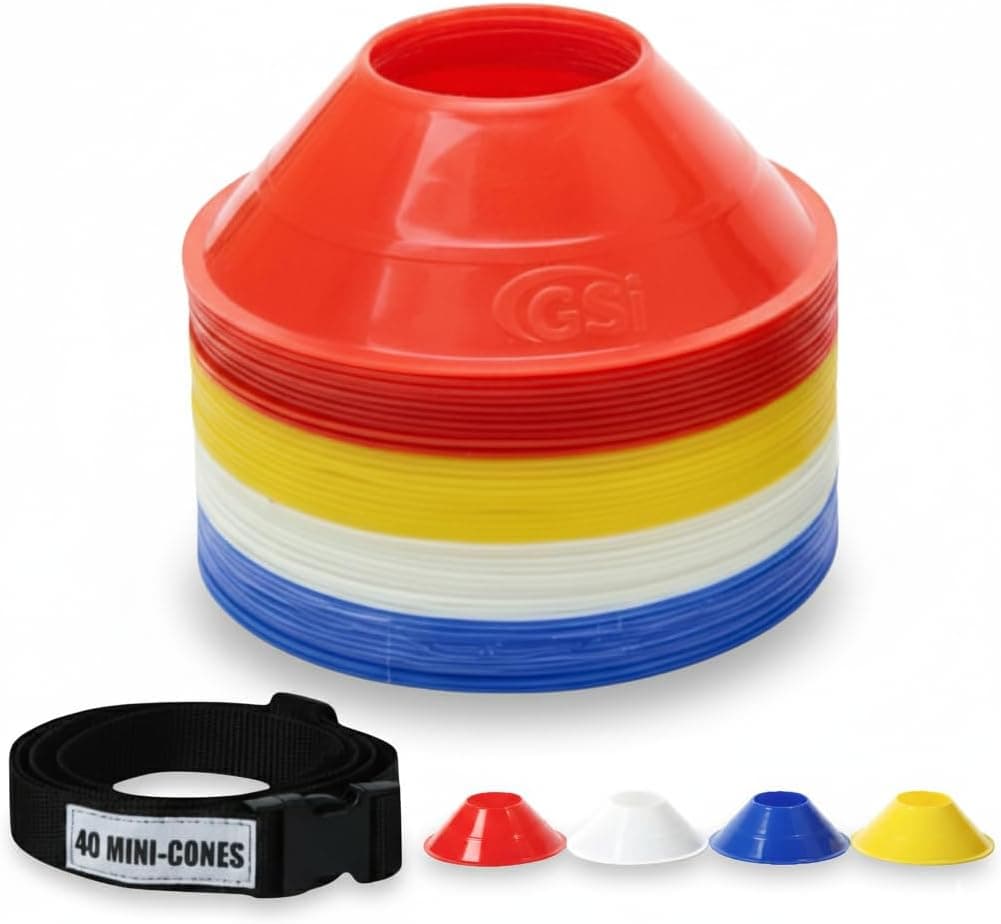
Disc Training Cones (Set of 40)
View on Amazon →
Soccer Rebounder
View on Amazon →As an Amazon Associate we earn from qualifying purchases, at no extra cost to you.