
What Parents Get Wrong About Youth Soccer Development
February 7, 2026
What Parents Get Wrong About Youth Soccer Development
I am going to be brutally honest in this post because I think it needs to be said. Most parents, myself included, make significant mistakes when it comes to their child's soccer development. I am not talking about small, inconsequential errors. I am talking about fundamental misunderstandings that can actually slow down your child's progress or worse, make them fall out of love with the game entirely.
I made every single one of these mistakes with my first son. By the time my second son started playing, I had learned from those mistakes and took a completely different approach. The difference in outcomes has been striking, and I want to share what I learned so you can avoid the same pitfalls.
Mistake 1: Prioritizing Team Results Over Individual Development
This is the biggest one, and it is the hardest one for competitive parents to accept. When your child is between the ages of five and twelve, the score of the game does not matter. I know that is a controversial statement. I know it is hard to accept when your kid's team is losing five to nothing and the other team's parents are celebrating like they just won the World Cup. But it is true.
What matters at young ages is individual skill development. Period. A child who develops strong technical skills between the ages of six and twelve will have a massive advantage when they reach the competitive ages of thirteen and beyond. A child who spent those early years on a winning team but did not develop individual skills will plateau and get passed by the kids who did the work.
I have seen this play out dozens of times. The kids who dominate at U8 and U10 because they are bigger, faster, and more physical often struggle at U14 and U16 when everyone else catches up physically and the game becomes more about technique and intelligence. Meanwhile, the smaller, more technical kids who were overlooked at young ages start to shine.
With my first son, I was obsessed with his team's results. I would get frustrated when they lost, analyze team tactics, and focus on winning. With my second son, I focus entirely on his individual development and could not care less about the score. Guess which one is the better player?
Mistake 2: Relying Solely on Team Training
This is the mistake that most directly impacts your child's development, and it is the one I feel most strongly about. Team training is not enough. It has never been enough, and it never will be enough for a child who wants to reach their full potential in soccer.
Think about it this way. Your child goes to team practice two or three times a week. During that practice, they share the ball with fifteen to twenty other kids. They spend a significant portion of the time listening to the coach, standing in lines, and doing team-based exercises where ball contact is limited. The actual number of individual ball touches your child gets in a team practice is surprisingly small.
The best players in the world did not become the best by only training with their team. They became the best by supplementing team training with hours of individual practice. Messi, Ronaldo, Neymar; they all spent countless hours as kids practicing on their own, working on their touch, their dribbling, their shooting.
Individual training at home is where the real skill development happens. Even just ten to fifteen minutes a day of focused ball work gives your child more quality touches than an entire week of team training. I wish I had understood this when my first son was starting out. We would have started home training years earlier.
This is exactly why programs like Anytime Soccer Training are so valuable. They provide the individual training curriculum that complements what your child is learning at team practice, ensuring they get the repetitions they need to truly develop their skills.
Mistake 3: Specializing Too Early
There is enormous pressure in youth soccer to specialize early. Club coaches want year-round commitment. Travel teams demand that players skip other sports. The message from the soccer industry is clear: if your child is not fully committed to soccer by age eight, they are going to fall behind.
This is not supported by the science. Research on long-term athlete development consistently shows that early specialization leads to higher rates of burnout, overuse injuries, and dropout from sports entirely. The athletes who reach the highest levels in most sports, including soccer, tend to be the ones who played multiple sports as children and specialized later.
I pushed my first son to specialize in soccer at age eight. He dropped basketball and swimming to focus on year-round soccer. By age twelve, he was burned out and wanted to quit. We had to take a six-month break from organized soccer to rekindle his love for the game.
With my second son, I have encouraged him to play multiple sports. He plays soccer in the fall and spring, basketball in the winter, and does swimming in the summer. He is a better athlete overall, he stays fresh and motivated for each sport, and his soccer skills have not suffered one bit. In fact, the athleticism and coordination he develops in other sports actually enhances his soccer ability.
Mistake 4: Coaching From the Sideline
I cringe when I think about how I used to behave at my first son's games. I was that parent. The one shouting instructions from the sideline. "Pass it!" "Shoot!" "Get back on defense!" "What are you doing?!" I thought I was helping. I was not. I was making things worse.
Sideline coaching is harmful for several reasons. First, it confuses your child because they are trying to process instructions from their coach and from you simultaneously, and those instructions often conflict. Second, it creates pressure and anxiety that inhibits performance. Third, it takes away your child's ability to make their own decisions on the field, which is essential for developing game intelligence.
The best thing you can do during your child's games is be supportive and let them play. Cheer for effort, not results. Say things like, "Great job working hard!" instead of, "Why did you not pass the ball?" Save any coaching or feedback for the car ride home, and even then, keep it positive and constructive.
When I stopped coaching from the sideline and just became a supportive spectator, my younger son's enjoyment of the game skyrocketed. He was free to experiment, make mistakes, and learn on his own. And his development accelerated because he was playing without fear.
Mistake 5: Comparing Your Child to Other Players
This one is hard to avoid because it is human nature. You watch your child's team and you see another kid who is clearly more skilled, and you start wondering why your child is not at that level. Or worse, you verbalize those comparisons to your child. "Did you see how Johnny dribbles? You should try to play like that."
Every child develops at a different rate. Physical maturity, previous experience, natural coordination, and countless other factors influence where a child is at any given point in their development. Comparing your child to others is not only unhelpful but can be actively damaging to their confidence and motivation.
The only comparison that matters is your child versus themselves. Are they better today than they were a month ago? Are they improving over time? Are they enjoying the process? Those are the questions that matter.
I used to compare my first son to his teammates constantly, and it made both of us miserable. Now, with my second son, I focus exclusively on his individual progress. We celebrate personal milestones like achieving a new juggling record or mastering a new skill, regardless of how he compares to anyone else.
Mistake 6: Neglecting the Mental Side of the Game
Youth soccer development is not just about physical skills. The mental and emotional aspects of the game are equally important, and most parents completely ignore them. Things like confidence, resilience, focus, and a positive attitude toward mistakes are all critical components of player development.
If your child is afraid to make mistakes, they will never take risks on the field. If they crumble after a bad game, they will not be able to perform consistently. If they cannot focus during training, they will not absorb what they are learning. These mental skills need to be developed intentionally, just like physical skills.
One of the most important things I have learned is to reframe mistakes as learning opportunities. When my son makes an error in a game, I do not say, "You should have done this instead." I say, "That was a great attempt. What do you think you could try differently next time?" This builds a growth mindset and teaches him that mistakes are a normal part of the learning process.
Mistake 7: Not Making It Fun
At the end of the day, soccer is a game. It is supposed to be fun. And when it stops being fun, kids stop playing. I have seen so many talented young players quit soccer because their parents or coaches turned it into a joyless grind of training and competition.
Fun does not mean there is no structure or discipline. It means that the training environment is positive, encouraging, and engaging. It means that your child looks forward to practice rather than dreading it. It means that the joy of playing is never sacrificed at the altar of winning or development.
With my first son, I made training feel like work. With my second son, I make it feel like play. We compete against each other, we play games, we set challenges and rewards. The training is just as effective, but the experience is completely different. He runs to get his ball when it is time to train. My first son used to drag his feet.
How to Get It Right
If you see yourself in any of these mistakes, do not beat yourself up. I made all of them, and my sons are doing fine. The important thing is to recognize these patterns and adjust your approach going forward.
Here is a summary of what I believe is the right approach to youth soccer development:
- Focus on individual skill development, not team results
- Supplement team training with daily individual practice at home
- Allow your child to play multiple sports and avoid early specialization
- Be a supportive spectator, not a sideline coach
- Compare your child only to themselves, not to other players
- Develop mental skills alongside physical skills
- Always prioritize fun and enjoyment of the game
Programs like Anytime Soccer Training can be incredibly helpful because they provide structured individual training that your child can do at home, which addresses mistake number two directly. They also make training fun and engaging, which addresses mistake number seven. And because the sessions are self-paced, your child develops at their own speed without the pressure of comparison, which addresses mistake number five.
If I could go back and give myself one piece of advice when my first son started playing soccer, it would be this: slow down, focus on the long game, and let your child fall in love with the ball. Everything else will follow from there.
Gear we use for this
The kit our own players train with at home.

Adidas MLS Training Soccer Ball
View on Amazon →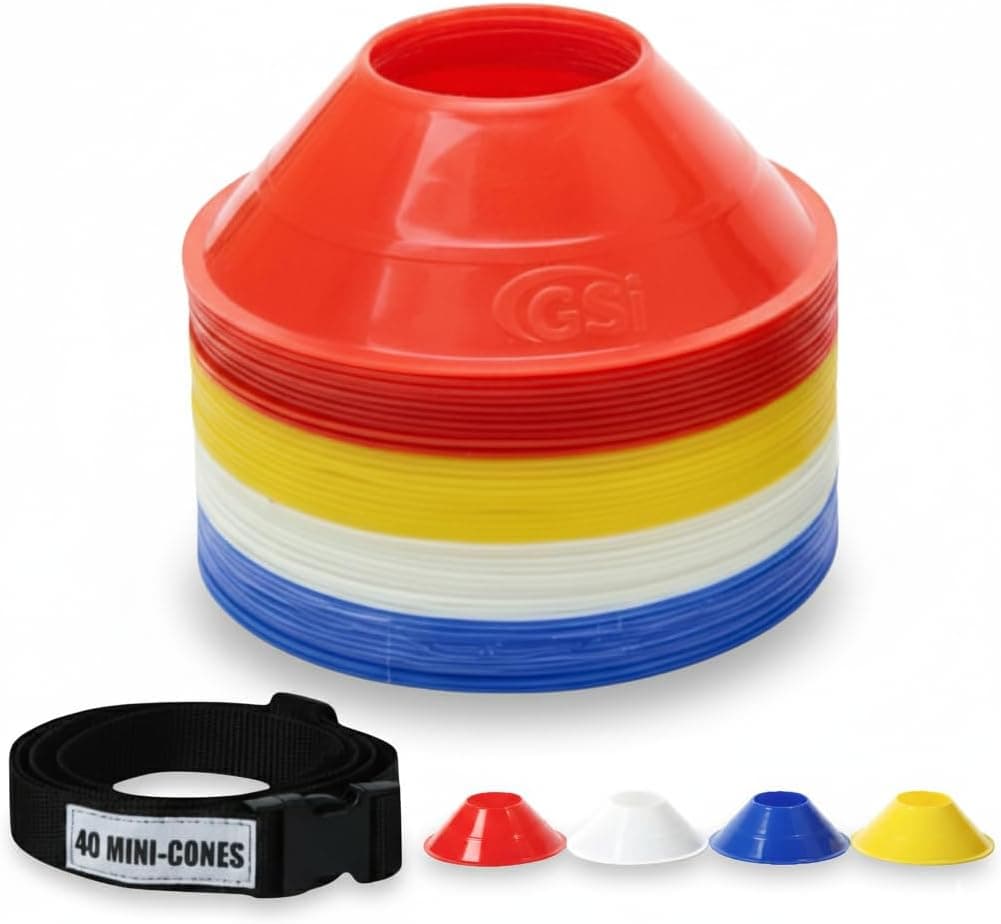
Disc Training Cones (Set of 40)
View on Amazon →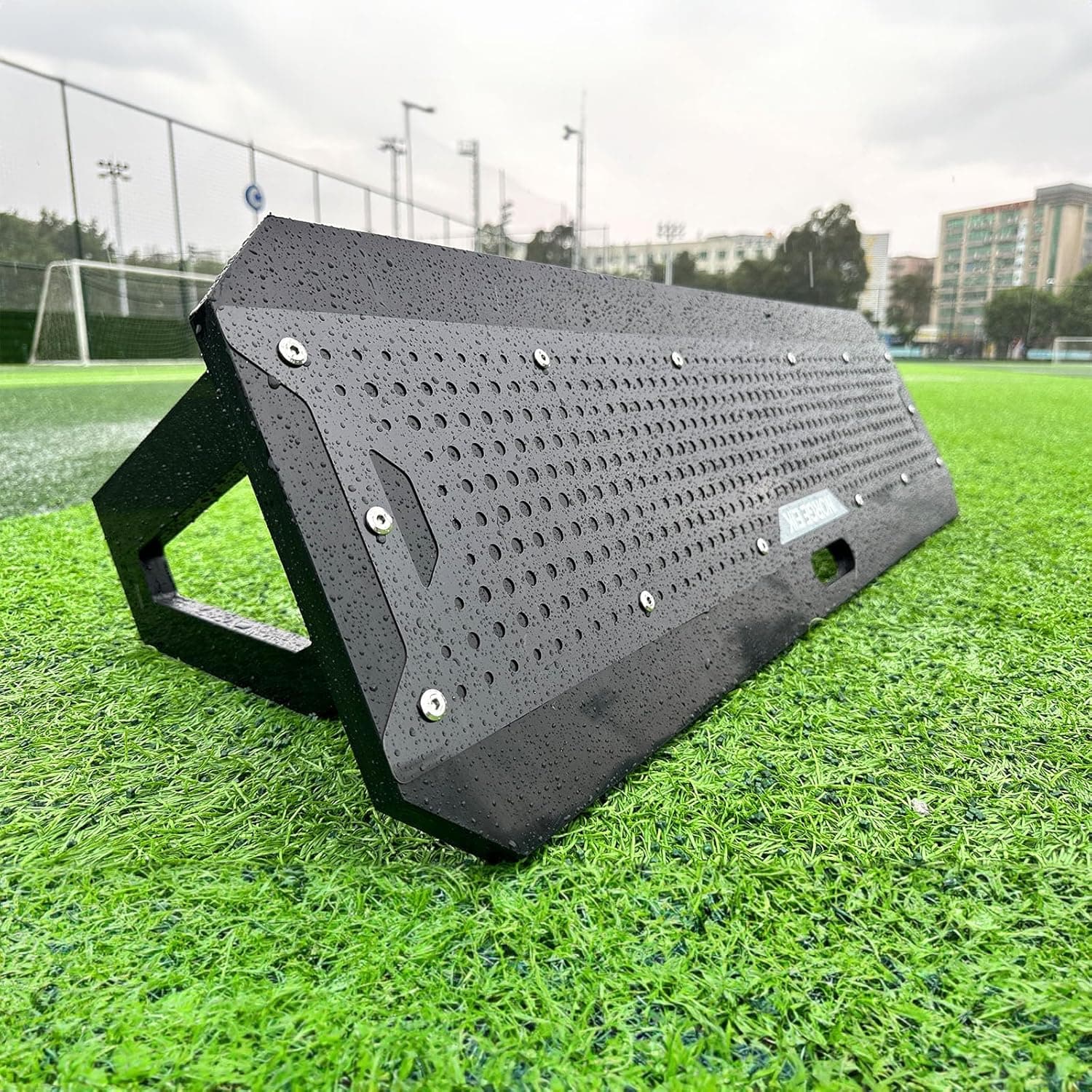
Soccer Rebounder
View on Amazon →As an Amazon Associate we earn from qualifying purchases, at no extra cost to you.