
Training 6-Year-Olds vs Training 10-Year-Olds What I Learned
December 3, 2025
Training 6-Year-Olds vs Training 10-Year-Olds: What I Learned the Hard Way
Having two kids who play soccer, four years apart in age, has been one of the most educational experiences of my parenting life. Not because I learned twice as much about soccer, but because I learned that what works for a six-year-old and what works for a ten-year-old are almost completely different approaches. And I had to learn this the hard way by failing spectacularly with my younger child using the exact methods that worked with my older one.
If you have multiple soccer kids or if you are trying to figure out the right approach for your child's current age, this comparison guide might save you from the same mistakes I made.
The Six-Year-Old: Everything Is a Game
Attention Span Is Measured in Minutes, Not Sessions
When my older son was ten, we could do a structured 20 to 25 minute training session with focused drills, progressions, and measurable goals. So when my younger daughter turned six and started showing interest in soccer, I assumed the same basic approach would work, just simpler drills.
I was wrong. My daughter's attention span for structured activities was about three to four minutes. After that, she was looking at bugs, making up stories about the cones being characters, or asking if we could get ice cream. My carefully planned session was irrelevant to her within five minutes.
What I learned: For six-year-olds, every activity needs to be a game. Not a drill dressed up as a game, but an actual game that happens to involve a soccer ball. Tag with a ball at your feet. Pretending the cones are sleeping dragons you need to dribble past without waking them. Scoring goals against dad while dad is a silly goalkeeper who falls down dramatically.
The soccer learning happens almost accidentally within the context of play. And that is not a compromise. That is developmentally appropriate and actually produces better outcomes for this age group.
Skill Focus: Movement, Not Technique
At six, the priority is not technical perfection. It is getting comfortable moving with a ball at their feet. It is developing balance, coordination, and the basic understanding that the ball goes where you kick it.
I wasted weeks trying to teach my daughter proper inside-of-the-foot passing technique. She was not ready for it. Her feet were too small, her coordination was not developed enough, and her brain was not wired for that level of technical instruction yet. When I let go of the technique obsession and just let her kick the ball in whatever way felt natural, she started making progress, enjoying herself, and developing organic ball comfort that would later become the foundation for technique.
For six-year-olds, focus on:
- Running with the ball in open space
- Stopping the ball with the sole of the foot
- Kicking toward a target with any part of the foot
- Changing direction while dribbling
- General athletic movements: jumping, hopping, balancing, skipping
Session Length: 10-12 Minutes Maximum
If you try to hold a six-year-old in a training session for 20 minutes, you will spend 10 of those minutes trying to get them back on task. Keep it to 10 to 12 minutes of engaged activity, and everyone stays happy.
With Anytime Soccer Training, I found that the shorter, age-appropriate sessions worked well for my daughter because they kept moving quickly between activities, which matched her attention span perfectly.
The Ten-Year-Old: Ready for Real Work
Attention Span Allows for Genuine Skill Development
By ten, my older son could handle a 20 to 25 minute focused session with repetitive drills, and he would actually stay engaged. His brain was mature enough to understand concepts like practicing your weak foot will make you better in six months. He could tolerate the boredom of repetitive practice because he understood the purpose behind it.
This is a massive shift from the six-year-old brain. The ten-year-old can delay gratification, understand cause and effect over time, and commit to a training plan with genuine buy-in. This changes everything about how you structure sessions.
Skill Focus: Technical Precision and Expanding the Repertoire
At ten, technical instruction is not only appropriate, it is essential. This is the golden age of skill acquisition when the brain is primed for learning complex motor skills. Every minute of quality technical training at this age produces outsized returns compared to other age groups.
For ten-year-olds, focus on:
- Proper passing technique with both feet
- First touch receiving from various angles and heights
- Dribbling moves and feints: scissor, step-over, Cruyff turn, body feint
- Shooting technique with proper body mechanics
- Weak foot development as a dedicated priority
- Juggling with progression goals
- Beginning to understand spatial concepts and tactical basics
Session Length: 20-30 Minutes
A ten-year-old can sustain 20 to 30 minutes of quality training if the session is well-structured with variety built in. The warm-up, focused skill work, fun challenge structure I described works perfectly for this age group.
The Key Differences Side by Side
- Motivation: Six-year-olds are motivated by fun and imagination. Ten-year-olds are motivated by improvement, competition, and goals.
- Instruction style: Six-year-olds need demonstration and copying, not verbal instruction. Ten-year-olds can process verbal cues and coaching points.
- Repetition tolerance: Six-year-olds need constant variety. Ten-year-olds can handle and benefit from repetitive practice.
- Feedback: Six-year-olds need encouragement and celebration for effort. Ten-year-olds can handle specific, constructive feedback about technique.
- Competition: Six-year-olds enjoy competing but should not be stressed by it. Ten-year-olds thrive on appropriate competitive challenges.
- Self-direction: Six-year-olds need full guidance and engagement from a parent. Ten-year-olds can begin self-directing portions of their training, especially with a platform like Anytime Soccer Training providing the structure.
- Goal setting: Six-year-olds live in the moment. Ten-year-olds can set and work toward weekly or monthly goals.
The Transition Ages: 7-9
What about the ages in between? The transition from the play-based approach to the skill-based approach does not happen overnight. It is a gradual shift that typically unfolds between ages seven and nine.
At seven, your child is still more play-oriented but can handle slightly more structure than at six. By eight, you can start introducing specific skill work within a playful framework. By nine, most kids are ready for genuine focused training sessions with structured drills and measurable goals, though they still need more fun and variety than a ten or eleven-year-old.
The key is to follow your child's readiness rather than imposing an arbitrary structure based on their age. Some eight-year-olds are ready for structured training. Others need another year of play-based development. Watch your child. If they are engaged and progressing, the approach is right. If they are resistant and miserable, adjust.
Common Mistakes Parents Make at Each Age
With Six-Year-Olds
- Expecting too much technical precision
- Sessions that are too long and too structured
- Getting frustrated when the child loses focus
- Comparing their child to older or more experienced kids
- Prioritizing skill development over love for the game
With Ten-Year-Olds
- Not challenging them enough because you are used to the gentle six-year-old approach
- Neglecting weak foot development during this critical window
- Overemphasizing what they are bad at rather than building on strengths
- Taking over the coaching role instead of letting video-guided platforms do the instruction
- Pushing too hard and turning training into a chore
What I Would Tell Myself
If I could go back and give myself advice before starting home training with each of my kids, here is what I would say:
For the six-year-old: Relax. Put away the clipboard. Get on the ground and play with your daughter. Let her lead. Make animal noises while you dribble. Fall down on purpose when she scores on you. The technical stuff will come later. Right now, your only job is to help her fall in love with having a ball at her feet.
For the ten-year-old: Lean into the training. He is ready for it and he wants it. Give him structure, give him challenges, and give him the tools to track his own progress. But also keep laughing together. Keep the 1v1 games. Keep the silly goalkeeper routine. The technical work is essential but the fun is what makes it sustainable.
Both kids. Both approaches. Both right for where they are. That is the lesson: meet your child where they are, not where you think they should be, and great things will follow.
Gear we use for this
The kit our own players train with at home.

Adidas MLS Training Soccer Ball
View on Amazon →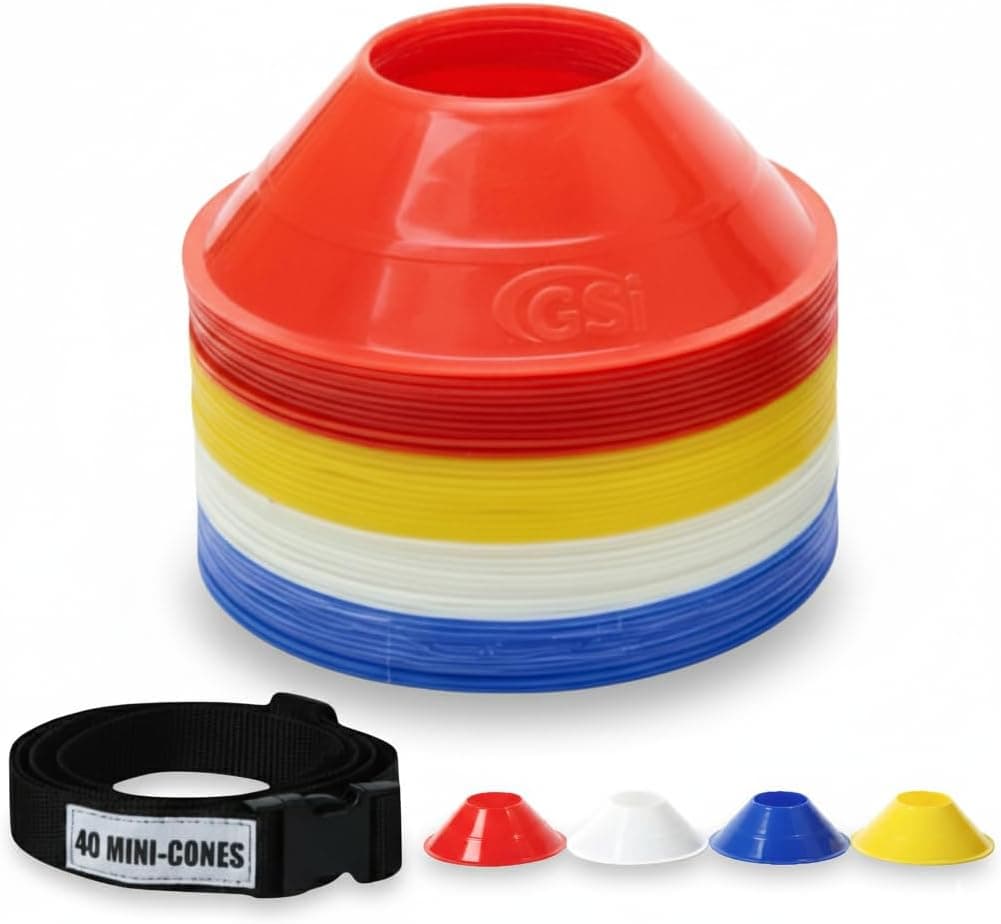
Disc Training Cones (Set of 40)
View on Amazon →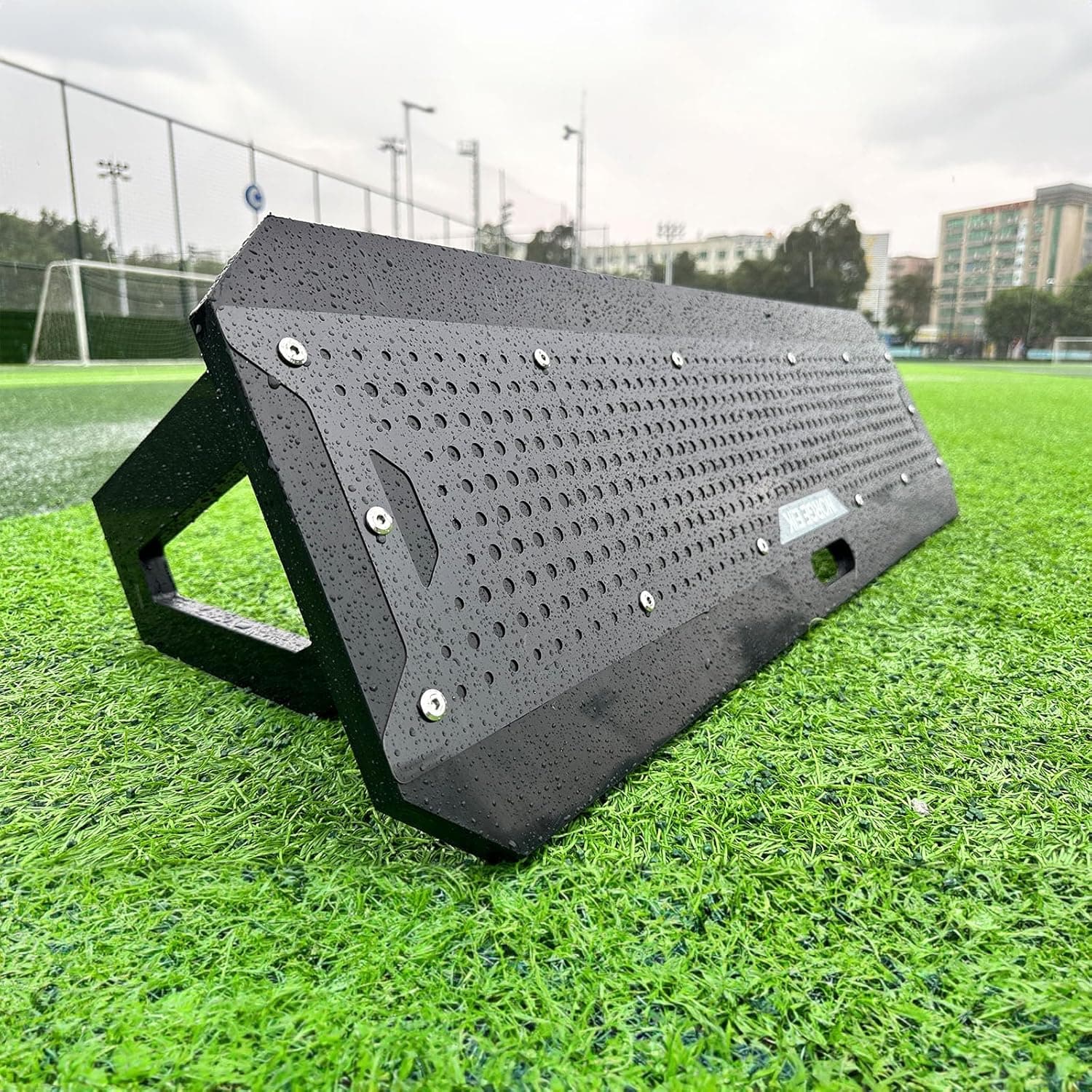
Soccer Rebounder
View on Amazon →As an Amazon Associate we earn from qualifying purchases, at no extra cost to you.