
The Science Behind Skill Development in Young Athletes
February 17, 2026
The Science Behind Skill Development in Young Athletes
As parents, we are often told that practice makes perfect. But the science of skill development in young athletes tells a much more nuanced and fascinating story. Understanding how your child's brain and body actually develop athletic skills can transform your approach to training and help you make smarter decisions about their soccer development.
I dove deep into this research when I was trying to figure out the best approach for my son's training, and what I learned surprised me. Most importantly, I discovered that ten focused minutes of practice can be more effective than an hour of unfocused repetition. Here is the science behind why.
How the Brain Learns Movement Skills
Every physical skill your child performs in soccer, from a simple pass to a complex dribbling move, is controlled by neural pathways in the brain. When your child first tries a new skill, the brain has to work extremely hard. The movement is awkward, slow, and requires conscious thought for every step.
With repetition, something remarkable happens. The brain begins to coat the neural pathways used for that skill with a substance called myelin. Myelin is a fatty sheath that wraps around nerve fibers and dramatically increases the speed and accuracy of signal transmission. Think of it like insulation on an electrical wire; it makes the signal faster and more reliable.
The more a neural pathway is fired through practice, the more myelin is laid down, and the more automatic and refined the skill becomes. This is why a skill that required intense concentration initially becomes second nature with enough repetition. It is literally a physical change in the brain.
This process is called myelination, and it is the biological foundation of skill development. And here is the critical point: myelination is most active during childhood and adolescence. Between the ages of roughly six and fourteen, the brain is in a state of heightened plasticity, meaning it is exceptionally good at building and reinforcing neural pathways. This is the window when skill development is most efficient and most important.
Why Ten Focused Minutes Beats One Hour
Understanding myelination explains why the quality of practice matters far more than the quantity. Myelin is only produced when neural pathways are fired with focused, deliberate attention. Going through the motions without concentration does very little for myelination, which means an hour of mindless repetition produces far less neurological change than ten minutes of focused, deliberate practice.
Research by Anders Ericsson, the psychologist behind the concept of deliberate practice, has consistently shown that the most effective practice is:
- Focused: The practitioner is fully concentrated on the task, not distracted or going through the motions
- Challenging but achievable: The task is at the edge of the practitioner's current ability, not too easy and not impossibly hard
- Feedback-rich: The practitioner receives immediate feedback on their performance, either from a coach, a video, or their own awareness
- Repetitive with variation: The skill is repeated many times but with enough variation to keep the brain engaged
This is why a focused ten-minute session where your child is fully engaged, working on a challenging skill, and getting feedback produces more skill development than an hour-long session where they are tired, distracted, or doing something that is too easy.
For parents, the practical implication is huge. You do not need to block out hours for training. You need to create ten to fifteen minute windows where your child is fully focused and working on the right things. This is manageable for even the busiest families.
The Golden Age of Motor Learning
Sports scientists refer to the period between approximately ages six and twelve as the "golden age of motor learning." During this window, children have an extraordinary ability to acquire new movement skills rapidly and efficiently. Their brains are primed for learning physical skills in a way that will never be replicated later in life.
This is why exposing children to a wide variety of movement experiences during this window is so important. Every new movement pattern your child learns creates new neural pathways that can be built upon later. A child who develops a broad base of motor skills during the golden age will have a significant advantage in any sport they choose to pursue.
For soccer specifically, this means that the ages between six and twelve are the most important years for developing technical skills like ball mastery, dribbling, first touch, and coordination. These skills are best learned during this window because the brain is most receptive to this type of learning.
Conversely, skills that require significant physical strength, tactical understanding, or abstract thinking are better developed later, during adolescence, when the brain and body are ready for them. Trying to teach complex tactics to an eight-year-old is like trying to teach calculus to a first grader; the cognitive hardware is not ready yet.
The Role of Sleep in Skill Development
One of the most underappreciated factors in skill development is sleep. Research has shown that a significant portion of motor learning actually happens during sleep, not during practice. When your child sleeps, the brain replays and consolidates the neural pathways that were activated during practice, strengthening the myelin coating and solidifying the new skills.
Studies on motor learning have found that performance on a newly learned skill often improves overnight, even without additional practice. This phenomenon, called sleep-dependent consolidation, means that a good night's sleep is literally part of the training process.
For parents, the implication is clear: make sure your child is getting adequate sleep, especially on training days. For children ages six to twelve, the recommended amount is nine to twelve hours per night. Skimping on sleep to fit in more training is counterproductive because it undermines the brain's ability to consolidate the skills that were practiced.
This also supports the case for shorter, more frequent training sessions rather than long, infrequent ones. A child who practices for fifteen minutes every day and sleeps well every night will develop skills faster than a child who does a two-hour session once a week, because the daily practice-sleep cycle produces more consolidation opportunities.
Intrinsic Motivation and the Brain's Reward System
Another fascinating aspect of the science is the role of motivation in skill development. When a child is intrinsically motivated, meaning they are practicing because they want to rather than because they have to, their brain releases dopamine, a neurotransmitter associated with reward and learning.
Dopamine does not just make your child feel good; it actually enhances the myelination process. Research has shown that motivated, engaged practice produces faster and more robust skill development than practice performed under duress or without genuine interest. The brain literally learns better when it is enjoying the process.
This is the scientific backing for something that most parents intuitively understand: if your child loves training, they will improve faster. And if they hate it, no amount of forced repetition will produce optimal results. Creating an enjoyable training environment is not just about keeping your child happy; it is about optimizing their neurological development.
Programs like Anytime Soccer Training leverage this principle by making training sessions engaging, varied, and fun. When a child is following along with an energetic coach, trying to complete challenges, and seeing their progress tracked, their brain is in an optimal state for learning. The training feels like play, but the neurological benefits are just as powerful as traditional drills.
The Myth of the 10,000-Hour Rule
You have probably heard the claim that it takes 10,000 hours of practice to master any skill. This idea was popularized by Malcolm Gladwell in his book "Outliers," but it is frequently misunderstood and misapplied, especially in youth sports.
The original research by Anders Ericsson did find that elite performers in fields like music and chess had accumulated approximately 10,000 hours of deliberate practice by the time they reached expert level. But there are several important nuances that get lost in the popular version:
- The 10,000 hours were of deliberate practice, not just any practice. Mindless repetition does not count.
- The number varies enormously between individuals and between domains. Some people reach elite levels with far fewer hours, while others never get there regardless of how much they practice.
- The 10,000 hours were accumulated over many years, starting in childhood and continuing into adulthood. It is not a target to rush toward.
- The quality of coaching, the training environment, genetics, and many other factors all play significant roles alongside practice hours.
For youth soccer parents, the takeaway is not to obsess over accumulating hours. Instead, focus on the quality of each training session. A child who does thirty minutes of focused, deliberate practice five days a week will develop faster than a child who logs twice as many hours but practices without focus or intention.
Periodization and Rest
Sports science also teaches us about the importance of periodization and rest. Periodization is the concept of varying the intensity and focus of training over time to optimize development and prevent burnout. Elite athletes use periodization extensively, alternating between periods of high-intensity training and recovery.
For young athletes, periodization means:
- Not training at maximum intensity every single day
- Having lighter training days mixed in with more demanding ones
- Taking breaks between seasons to rest and recover
- Varying the type of training to prevent overuse injuries
- Allowing for unstructured play alongside structured practice
Rest is not the enemy of development; it is a critical component of it. Muscles grow during rest, not during exercise. Neural pathways consolidate during sleep, not during practice. A well-rested child will perform better, learn faster, and enjoy training more than an overtrained one.
Practical Implications for Soccer Parents
So what does all of this science mean for how you should approach your child's soccer development? Here are the key takeaways:
- Short, focused sessions are more effective than long ones. Aim for ten to fifteen minutes of deliberate practice daily rather than infrequent marathon sessions.
- The golden age window is real. Ages six to twelve are the most important years for technical skill development. Use this time wisely by prioritizing ball mastery, first touch, and dribbling.
- Sleep is part of training. Ensure your child gets adequate sleep, especially after training days, to maximize skill consolidation.
- Motivation matters neurologically. Create an enjoyable training environment that keeps your child intrinsically motivated. Their brain will literally learn faster when they are having fun.
- Quality over quantity. Do not obsess over training hours. Focus on the quality and intentionality of each session.
- Rest is productive. Build rest days into your child's training schedule and avoid overtraining. Recovery is when the real development happens.
Understanding the science does not mean you need a degree in neuroscience to train your child. It means making informed decisions about how, when, and how much your child trains. And for most families, the optimal approach is surprisingly simple: a short, fun, focused training session every day, followed by a good night's sleep. That is the formula backed by decades of sports science research.
Anytime Soccer Training sessions are designed with these principles in mind. They are short enough to maintain focus, engaging enough to keep motivation high, and structured enough to ensure deliberate practice. When you combine these sessions with adequate sleep and rest, you are creating the optimal conditions for your child's brain to develop soccer skills as efficiently as possible.
The science is clear: you do not need more time. You need better time. And that is good news for every busy family trying to fit soccer development into an already packed schedule.
Gear we use for this
The kit our own players train with at home.

Size One Soccer Ball
View on Amazon →
Adidas MLS Training Soccer Ball
View on Amazon →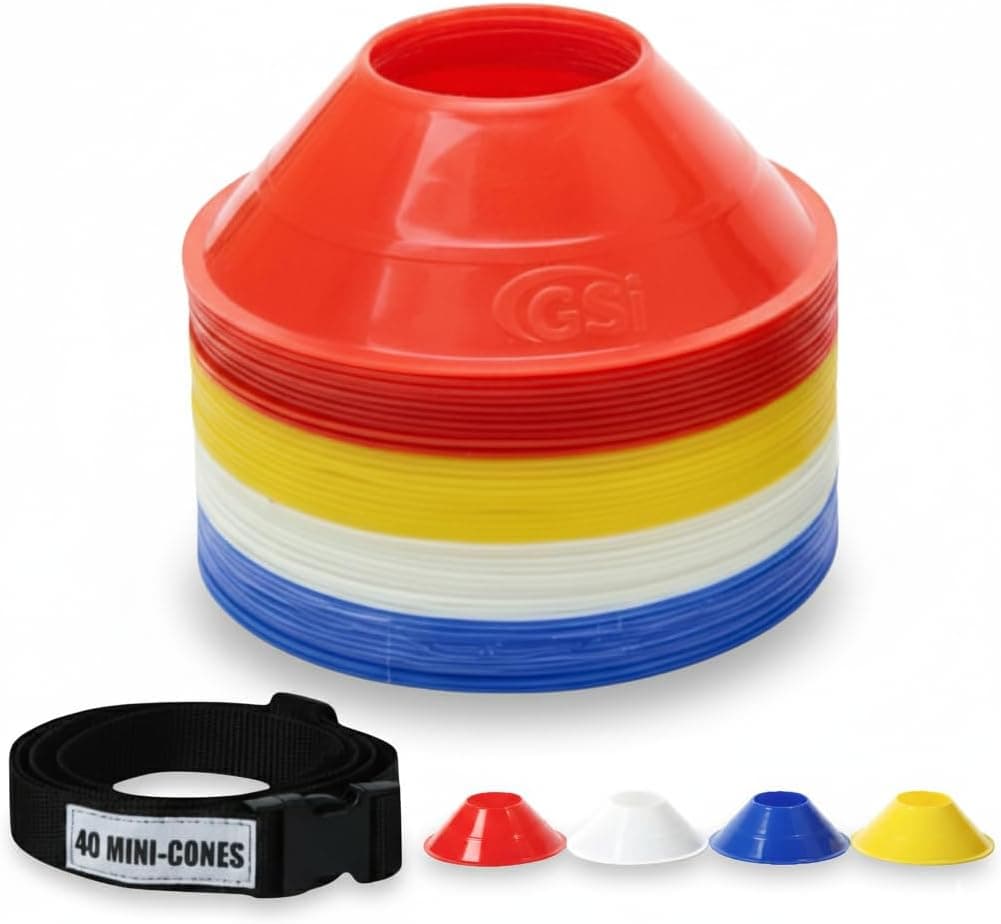
Disc Training Cones (Set of 40)
View on Amazon →As an Amazon Associate we earn from qualifying purchases, at no extra cost to you.