
The Garage That Became a Training Hub
January 12, 2026

How a Two-Car Garage Became Our Family's Soccer Academy
It started with a rainy afternoon and a bored ten-year-old. Our backyard was a mud pit, practice had been cancelled for the third time in two weeks, and my son was going stir-crazy. "Can I kick the ball in the garage?" he asked. My wife and I exchanged a look — the garage was full of bikes, storage boxes, holiday decorations, and all the accumulated stuff of family life. But the look on his face was so hopeful that I said, "Give me twenty minutes."
Twenty minutes later, I'd shoved everything to one side and cleared a space roughly 12 feet by 15 feet. Not huge, but big enough. I tossed him a futsal ball and said, "Have at it." He trained in that space for 45 minutes straight, and when he came inside, his face was glowing. "Dad, that was awesome. Can we keep the garage like that?"
That was eighteen months ago. Today, our garage is a permanent training hub that has produced more technical development than three years of team practices combined. And the best part? It cost us less than $200 to set up, and it's available 24/7 regardless of weather, daylight, or temperature.
Why a Garage Training Space Works So Well
At first, training in the garage felt like a compromise — a backup plan for when outdoor training wasn't possible. But over time, we discovered that the garage actually has several advantages over outdoor training:
Hard, Flat Surface
A concrete garage floor provides a consistent, hard surface that mimics a futsal court. The ball moves predictably, rolls true, and responds to touch with precision. This is actually better for technical development than grass, which can be bumpy, wet, or uneven. There's a reason so many of the world's best players developed their skills on hard surfaces — street soccer in Brazil, futsal courts in Spain, concrete playgrounds across Europe.
Confined Space Forces Close Control
You can't take big, loose touches in a garage. The walls are right there. The space demands tight control, quick feet, and precise movements. Every drill becomes a close-control exercise by default. This translates directly to game situations where defenders are closing in and space is at a premium.
Weather-Proof Consistency
This is the biggest advantage. Rain, snow, wind, extreme heat, darkness — none of it affects garage training. The consistency this enables is transformative. My son hasn't missed a single training day due to weather since we set up the garage. Over a year, that probably represents 30-40 sessions that would have been lost to weather if we were dependent on outdoor training.
Built-In Wall
Every garage has walls, and walls are the best training partner in soccer. Passing, receiving, volleying, and shooting against a wall provides unlimited repetitions at any pace. Our garage has become a wall-work paradise.
Setting Up Your Garage Training Hub
You don't need a fancy setup. Here's what we did, step by step:
Step 1: Clear the Space
This was the hardest part. We had to be honest about what was actually stored in the garage versus what was just dumped there. We donated several boxes of stuff we hadn't touched in years, consolidated the rest onto shelving along one wall, and freed up a space of about 12x15 feet.
If a full clear-out isn't possible, even half a two-car garage (about 10x10 feet) is sufficient for most drills. You'd be amazed at what you can accomplish in a 10x10 space.
Step 2: Address the Floor
Our garage floor was bare concrete, which works fine but can be hard on the feet and knees. We bought interlocking foam tiles (about $60 for our space from a sporting goods store) and laid them down in the training area. This provides cushioning, insulation from cold concrete, and a defined training zone.
If budget is tight, even a large exercise mat or a few yoga mats can make a difference. Or just train in indoor shoes on the bare concrete — plenty of kids do, and it works fine.
Step 3: Get the Right Ball
This is important: do not use a regular outdoor soccer ball in the garage. The bounce off concrete is too high and unpredictable, and you'll damage the ball, the walls, and probably a window. Instead, use:
- A futsal ball (best option): Size 4, low bounce, designed for hard surfaces. About $20-30. This is what we use, and it's perfect.
- A soft/foam soccer ball: Great for younger kids or if you're worried about impact on walls. About $10-15.
- A size 3 ball: Smaller balls force more precise technique and work well in confined spaces.
Step 4: Add Basic Equipment
Our garage training hub includes:
- 6 flat disc cones: For marking out drills and dribbling courses. $8-10 for a pack.
- A rebound net (optional but awesome): We picked up a small rebounder for $40 that has been worth every penny. It provides angled returns for first-touch practice and adds variety to wall work.
- A small whiteboard: Mounted on the wall for tracking records, writing down the day's session plan, and leaving motivational notes. $15.
- A Bluetooth speaker: Music makes training more fun. This isn't equipment per se, but it's become essential to our training sessions.
- A phone/tablet mount: For following along with Anytime Soccer Training sessions. A simple phone stand or wall-mounted tablet holder works great.
Total equipment cost: approximately $150-200 (less if you skip the rebounder).
Step 5: Protect the Valuables
If your garage still has items that could be damaged by a stray ball, take precautions. We hung a piece of mesh netting along one side to protect bikes and stored items. Old bedsheets or moving blankets also work. The futsal ball has much less impact than a regular soccer ball, but accidents happen.
Our Go-To Garage Drills
Here are the drills that work best in our confined garage space:
Ball Mastery Circuit (10 minutes)
The garage is ideal for ball mastery because the confined space naturally demands close control:
- Toe taps (increasing speed): 90 seconds
- Inside-outside sole rolls: 90 seconds each foot
- V-pulls: 90 seconds
- Pull-back and push: 90 seconds
- Foundation move sequence: 3 minutes (cycle through step-over, scissors, Cruyff, drag-back)
Wall Passing Circuits (10 minutes)
The garage wall is permanently available, always the same distance, always the same surface:
- Two-touch passing, right foot: 2 minutes
- Two-touch passing, left foot: 2 minutes
- One-touch passing, alternating feet: 2 minutes
- Receive and turn: 2 minutes
- Volleys (throw against wall, volley the rebound back): 2 minutes
Tight-Space Dribbling (5 minutes)
Set up four to six cones in the available space and create a dribbling course:
- Weave through cones, inside-outside: 1 minute
- Weave through cones, right foot only: 1 minute
- Weave through cones, left foot only: 1 minute
- Free dribbling in the space with direction changes: 2 minutes
Juggling (5 minutes)
Juggling in the garage has a unique advantage: the ceiling limits how high you can kick the ball, forcing soft, controlled touches. This actually develops better touch than outdoor juggling where kids can kick the ball sky-high.
The Training Schedule
My son trains in the garage five to six days per week, using a combination of the drills above and guided sessions from Anytime Soccer Training. The platform's programs are perfectly suited to garage-sized spaces since most of the drills require only a few feet of space and a ball.
A typical garage session lasts 20-25 minutes. On days when he's not feeling it, we do a quick 10-minute ball mastery session. On days when he's fired up, he might train for 30-35 minutes. The flexibility of having the space always available means training happens on his terms, when his energy and motivation are highest.
What the Neighbors Think
I'll be honest — the first few weeks, our neighbors probably wondered what was going on. The rhythmic thud of ball against wall, the music, the occasional shout of triumph after a new juggling record. But several neighbors have actually been inspired to set up similar spaces for their own kids. One family cleared half their garage after seeing the improvement in my son's game.
"Your kid's gotten really good," our neighbor told me recently. "What's the secret?" I pointed at the garage. "About 300 square feet of concrete and a futsal ball."
The Results
Eighteen months of garage training has produced results that speak for themselves:
- Juggling record: From 45 to 412
- Ball mastery: His routines are smooth, fast, and automatic — skills developed almost entirely in the garage
- First touch: Dramatically improved through thousands of wall-passing repetitions
- Weak foot: His left foot is now genuinely functional, largely because of dedicated garage work
- Team performance: Moved from the B team to the A team, with his coach crediting his technical improvement
But beyond the soccer numbers, the garage has become something more for our family. It's a space where my son takes ownership of his development. It's where he goes to de-stress after school. It's where he and his sister compete in juggling battles. It's become a positive, empowering part of our home.
Your Garage Is Waiting
You don't need a private training facility, an expensive academy, or a professional coach to develop your child's soccer skills. You need a garage (or a basement, or a covered patio, or any enclosed hard-surface space), a futsal ball, some cones, and a program to follow.
Clear the space this weekend. Order a futsal ball. Set up a phone or tablet with Anytime Soccer Training. And watch your garage transform from a storage room into the training hub that changes your child's game.
It worked for us. It can work for you.
Gear we use for this
The kit our own players train with at home.

Size One Soccer Ball
View on Amazon →
Adidas MLS Training Soccer Ball
View on Amazon →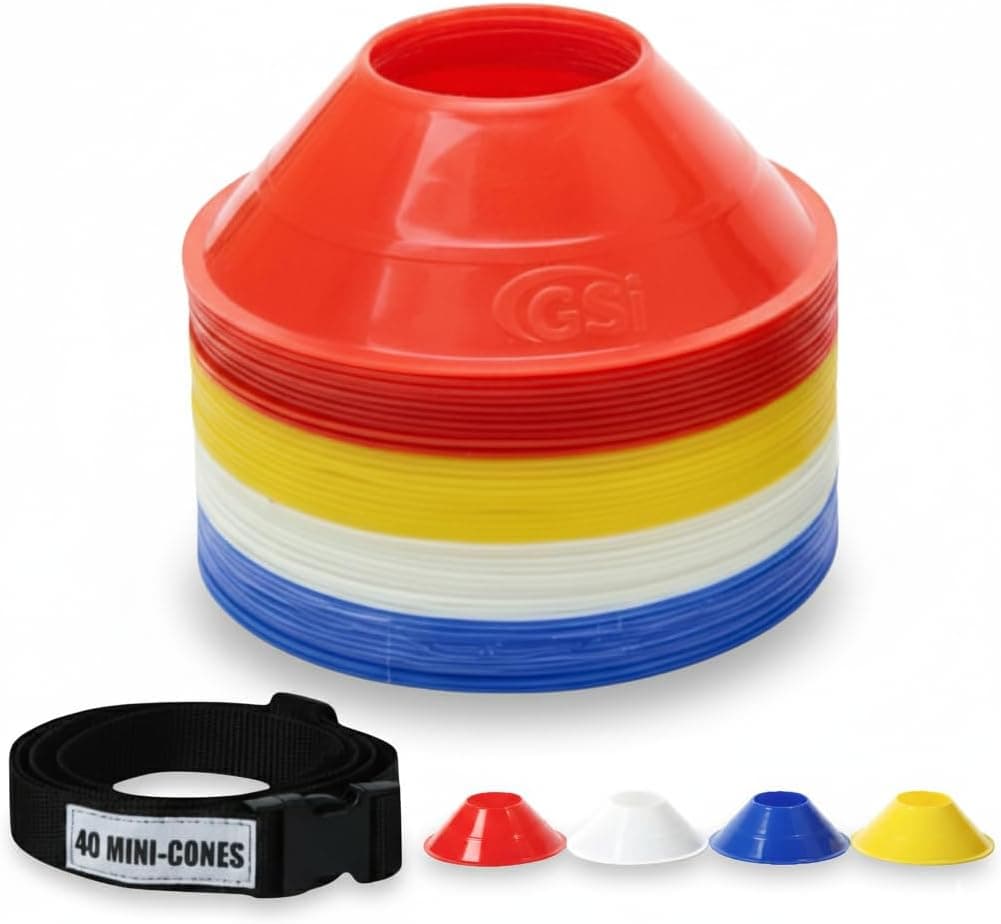
Disc Training Cones (Set of 40)
View on Amazon →As an Amazon Associate we earn from qualifying purchases, at no extra cost to you.