
The Day I Realized I Was Adding Pressure Not Removing It
February 25, 2026

The Day I Realized I Was Adding Pressure, Not Removing It
I thought I was being a good soccer parent. I drove to every game, cheered from the sideline, bought the equipment, paid the fees, and set up backyard training sessions. I wasn't the screaming parent on the sideline — I knew better than that. I wasn't the one harassing the referee or berating the coach. I was, in my mind, the supportive, engaged, positive soccer parent. The good one.
Then one evening, my eleven-year-old daughter, Lily, said something that stopped me cold: "Dad, soccer is more stressful with you than without you."
She didn't say it cruelly. She said it honestly, quietly, in that matter-of-fact way kids sometimes deliver devastating truths. And as much as I wanted to defend myself, to explain all the ways I was trying to help, I could see in her eyes that she was telling me something important. Something I needed to hear.
Unpacking the Pressure I Didn't See
Over the next few days, I replayed my behavior with fresh eyes. I asked Lily to tell me more — specifically, what I did that created stress. Her answers were illuminating:
- "You watch every single touch I take at games." I thought watching closely showed I cared. Lily felt it as surveillance. She was aware of my eyes on her every moment, which made her more self-conscious and less free.
- "You always say 'good game' but I can tell when you don't mean it." After losses or poor performances, my "good game" was clearly forced. Lily could read my disappointment even when I tried to hide it. My facial expressions, my tone, my energy after the game — all of it communicated what my words tried to conceal.
- "When you set up training in the backyard, it feels like homework I can't say no to." I thought I was creating optional training opportunities. Lily experienced them as obligations. The cones in the backyard weren't an invitation — they were an expectation.
- "You talk about soccer too much." I brought up soccer in the car, at dinner, during family time. I asked about practice, discussed upcoming games, analyzed her performance. To me, it was conversation. To Lily, it was constant evaluation.
Hearing this was painful. I genuinely believed I was being supportive. But the impact of my behavior — regardless of my intention — was adding pressure to every soccer-related moment of Lily's life. She couldn't play a game without feeling watched. She couldn't come home without being debriefed. She couldn't look at the backyard without seeing an obligation. Soccer, which she had once loved simply and purely, had become tangled up with the stress of managing my emotional investment.
The Self-Awareness Shift
That evening with Lily triggered a period of honest self-reflection. I started noticing things I'd been blind to:
- The way my mood after a game was directly correlated with how Lily played — and how she could see it on my face regardless of what I said.
- The way I positioned myself at games — always at midfield, always tracking the ball, always in Lily's line of sight.
- The way I framed home training as something I'd "set up for her" rather than something she could choose.
- The way every car ride had at least one soccer-related comment or question.
None of these behaviors, in isolation, seemed problematic. I wasn't screaming or criticizing. But together, they created an atmosphere of constant soccer awareness that Lily experienced as constant soccer pressure.
What I Changed
I made several specific changes based on Lily's feedback:
- I moved to the far end of the field at games. Not to disengage — to give Lily space. When I wasn't in her direct line of sight, she played more freely. She later told me she could tell when I moved and that it helped.
- I stopped initiating soccer conversations. No more "How was practice?" or "Are you ready for Saturday's game?" If Lily wanted to talk about soccer, she would. If she didn't, we talked about other things. This simple change dramatically reduced the sense that our relationship revolved around soccer.
- I made home training truly optional. Instead of setting up cones and announcing that training was available, I showed Lily the Anytime Soccer Training app and said, "This is here whenever you want it. Completely your call." Then I walked away. I didn't follow up. I didn't check. I let her come to it on her own terms.
- I worked on my own emotional regulation. After games, I practiced genuinely not caring about the result. I reminded myself before every game: "This is her experience, not mine. My mood does not get to be affected by an eleven-year-old's soccer game." It took weeks of conscious practice, but eventually, the emotional detachment became genuine. And paradoxically, I started enjoying the games more.
- I said "I love watching you play" and meant it unconditionally. Not "I love watching you play well." Not "I love watching you score." Just "I love watching you play." Full stop. Regardless of the result, the performance, or the outcome. When Lily felt that my enjoyment was truly unconditional, a visible tension left her shoulders.
The Transformation
The changes weren't instant. It took several weeks for Lily to trust that my behavior change was real and not just temporary. She watched me from the field, testing whether I'd revert to my old position at midfield (I didn't). She waited for the post-game questions that didn't come. She checked whether the backyard would be set up with cones as a silent obligation (it wasn't).
When she finally trusted the change, something beautiful happened. She started talking about soccer on her own. Not because I asked, but because she wanted to share. She'd come home from practice and tell me about a drill she liked or a funny thing that happened. She started doing Anytime Soccer Training sessions in the garage — unprompted, unobserved, on her own terms. She wasn't training because her dad wanted her to. She was training because she wanted to.
And here's the result that still amazes me: she started playing better. Significantly better. With the pressure removed, Lily played with a freedom and creativity that she hadn't shown in months. She took risks. She tried new moves. She smiled on the field. Her coach noticed. Her teammates noticed. I noticed — from my respectful position at the far end of the field.
The Uncomfortable Truth for Engaged Parents
Here's what I want to say to every dedicated soccer parent reading this: your engagement can be the problem even when it doesn't look like the problem. You don't have to be a screaming sideline coach to create pressure. Excessive attention, constant evaluation (even positive evaluation), soccer-dominant conversations, and emotionally loaded reactions to performance all contribute to an environment where your child feels more pressure, not less.
The question isn't "Am I being supportive?" The question is "Does my child experience my behavior as supportive?" These are not the same thing. Your intention doesn't matter if the impact is stress.
How to Check Yourself
If you want to know whether you're adding pressure, try these approaches:
- Ask your child directly. It requires vulnerability, but ask: "Do I ever make soccer stressful for you?" Be prepared for an honest answer, and don't get defensive. The fact that you're asking shows you care about their experience.
- Watch their body language around you. Does your child tense up when you arrive at the field? Do they look at you after mistakes? Do they seem relieved when you're not at a game? Body language often communicates what words won't.
- Record yourself at a game. Set up your phone to record yourself, not the game. Watch it back. What does your face look like? Are you visibly tense? Do you react to mistakes? You might be surprised by what you see.
- Ask their coach. A good coach sees how players respond to parent presence. Ask: "Does my child seem to play differently when I'm on the sideline?" If the answer is yes, that's information you need.
The Paradox of Letting Go
The great paradox of youth soccer parenting is that the more you let go, the more your child grabs hold. When I removed my pressure, Lily leaned into soccer more, not less. When I stopped pushing training, she started doing it on her own. When I stopped evaluating every performance, she started performing better.
This makes intuitive sense when you think about it. Soccer, at its best, is play. Play is something you do because you want to, because it's intrinsically rewarding, because it brings joy. When a parent's investment turns play into performance, the intrinsic reward is replaced by extrinsic pressure, and the joy drains away. Remove the pressure, and the play returns. And with the play comes the joy. And with the joy comes the effort. And with the effort comes the improvement.
Let your child train with Anytime Soccer Training on their own terms, in their own time, at their own pace. Be there to encourage, never to evaluate. Cheer at games without coaching. Talk about soccer when they want to, not when you want to. And trust that a child who loves the game will develop the discipline to improve at it — not because you pushed them, but because they pushed themselves.
The day I realized I was adding pressure was one of the most important days of my soccer parenting journey. I hope sharing this story saves you from having to learn the same lesson the hard way.
Gear we use for this
The kit our own players train with at home.

Adidas MLS Training Soccer Ball
View on Amazon →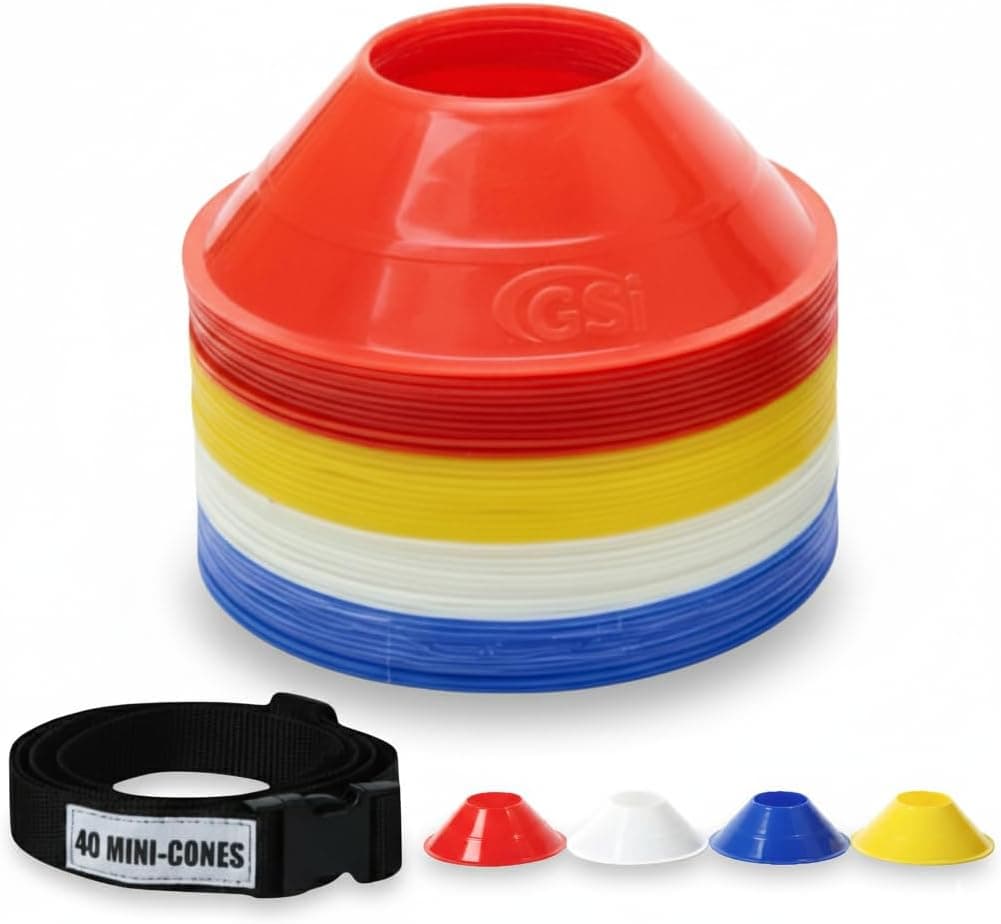
Disc Training Cones (Set of 40)
View on Amazon →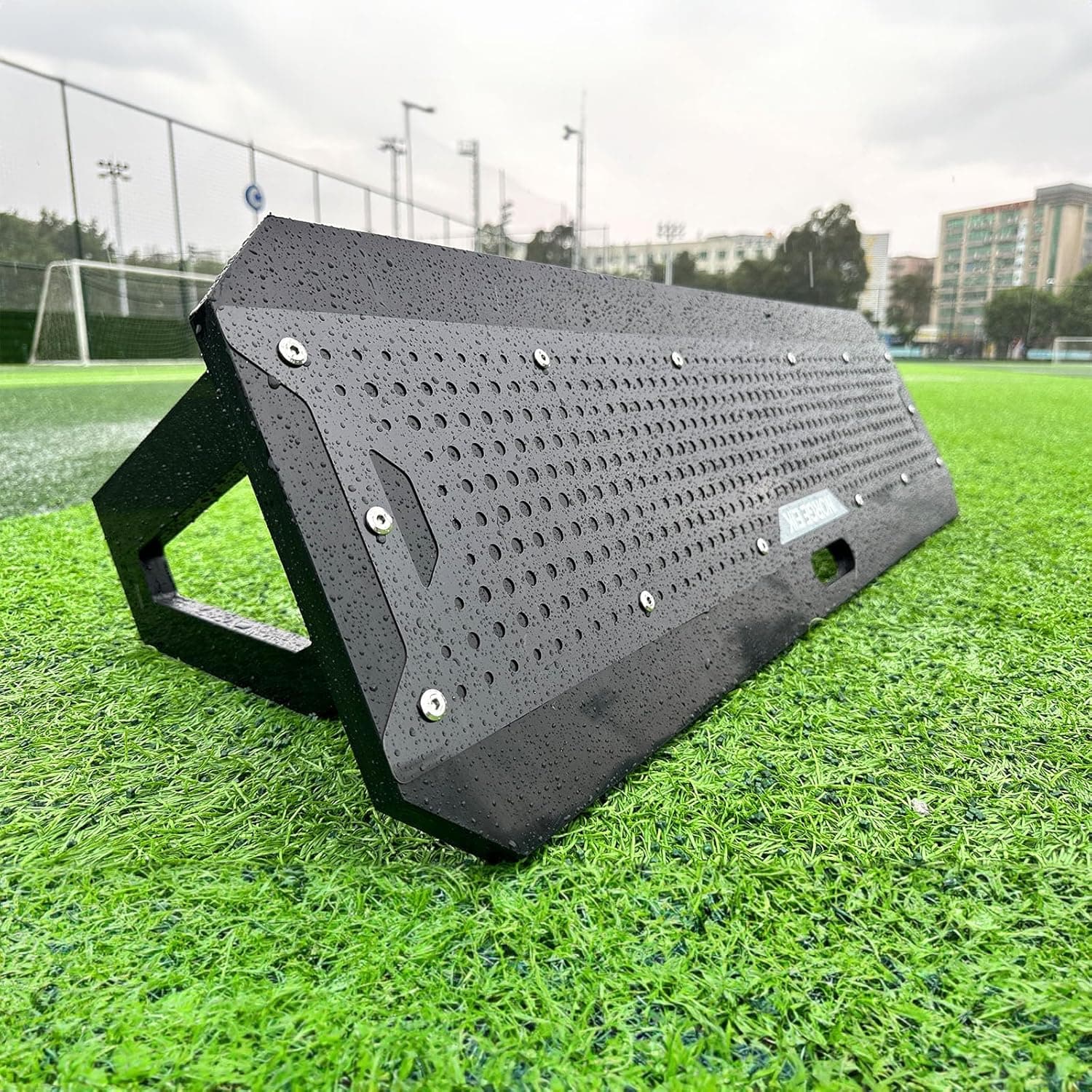
Soccer Rebounder
View on Amazon →As an Amazon Associate we earn from qualifying purchases, at no extra cost to you.