
The Critical Ages for Soccer Skill Development
February 8, 2026
The Critical Ages for Soccer Skill Development
Not all ages are created equal when it comes to learning soccer skills. Just as there are critical periods for language acquisition in children (it's much easier to learn a language before age seven than after), there are windows of opportunity in athletic development where certain skills are most efficiently learned. Understanding these windows can help parents and coaches optimize training to match what a child's developing brain and body are most ready to learn.
This doesn't mean that skills can't be learned outside these windows — they can. But it does mean that certain ages represent the most fertile ground for certain types of development. Working with these natural developmental phases, rather than against them, produces faster progress with less frustration.
Ages 2-6: The FUNdamental Phase
Primary focus: Physical literacy, basic movement, play
This is the age of general movement development. Children are learning to run, jump, throw, catch, balance, and coordinate their bodies in space. From a soccer perspective, this phase is about:
- Basic locomotion: Running, skipping, hopping, galloping. These fundamental movements form the foundation for all future athletic skills.
- Balance and coordination: Standing on one foot, walking on a line, changing direction. These skills directly translate to soccer movement later.
- Ball familiarization: Simply being around a ball, kicking it, chasing it, picking it up, throwing it. No technique instruction needed — just play and exploration.
- Social interaction through play: Learning to share, take turns, and interact with other children in a physical context.
What parents should do: Let your child play. Not structured practice — play. Provide balls of different sizes, open space, and opportunities to run around with other kids. If they're in an organized program, it should be 100% play-based with no technical instruction. Any coach who is teaching four-year-olds about instep technique is working against development, not with it.
This is not the time for soccer-specific training. It is the time for building the physical literacy that makes all future athletic development possible.
Ages 6-9: The Skill Hunger Phase
Primary focus: Basic technical skills, ball mastery, coordination
This is one of the most important developmental windows in soccer. Between ages six and nine, the brain is exceptionally receptive to learning new movement patterns. Neural pathways are forming rapidly, and skills learned during this phase tend to become deeply ingrained and automatic.
What's happening developmentally:
- The central nervous system is maturing rapidly, allowing for more refined motor control
- Children can now process sequential instructions ("Do this, then this, then this")
- Attention span is increasing, allowing for short periods of focused practice
- Children are naturally motivated to learn new physical skills — they want to try things
This is the window for:
- Ball mastery: Toe taps, sole rolls, inside-outside touches, basic dribbling. These foundational skills should be developed during this phase because the brain is primed to automate repetitive movement patterns. A child who develops ball comfort between ages six and nine will have a permanent advantage.
- Basic dribbling: Close control, simple changes of direction, using different surfaces of the foot.
- Introduction to passing and receiving: Inside foot passing, basic first touch, passing accuracy over short distances.
- Coordination and agility: Quick feet, change of direction, balance while moving with a ball.
What parents should do: This is the prime time for supplemental home training. Even 10-15 minutes of daily ball work can capitalize on this developmental window enormously. Platforms like Anytime Soccer Training are perfectly designed for this age group — they provide age-appropriate, progressive skill sessions that take advantage of the brain's hunger for new movement patterns.
Keep training playful and varied. Avoid repetitive drilling that kills joy. The goal is thousands of touches on the ball in a fun, engaging context. If your child is getting daily ball touches during this phase, they're building a technical foundation that will serve them for the rest of their soccer lives.
Ages 9-12: The Golden Age of Learning
Primary focus: Advanced technique, tactical introduction, speed development
Sports scientists call this the "golden age" of motor learning, and for good reason. Between ages nine and twelve, children can learn complex motor skills faster than at any other period in their lives. The combination of a mature enough nervous system to handle complex movements and a brain that is still highly plastic creates an ideal learning environment.
What's happening developmentally:
- Motor skills can be refined to a high level of precision
- Children can understand cause-and-effect relationships ("If I do this, that happens")
- Abstract thinking begins to emerge, allowing for basic tactical understanding
- Physical pre-puberty means the body is stable and predictable (before growth spurts complicate things)
This is the window for:
- Advanced dribbling moves: Step-overs, Cruyff turns, elasticos, drag-backs at speed. Complex moves that require precise timing and coordination are most efficiently learned during this phase.
- Weak foot development: If your child hasn't developed their non-dominant foot yet, ages 9-12 is the last best window. After puberty, establishing a comfortable weak foot becomes significantly harder.
- First touch refinement: Receiving under pressure, directional first touch, receiving out of the air.
- Passing sophistication: Longer passing, weighted passes, switching play, playing under pressure.
- Tactical introduction: Basic positioning, understanding of space, introduction to systems of play. The developing abstract reasoning ability allows children to start understanding the "why" behind where they should be on the field.
- Speed and agility development: The pre-puberty window is ideal for developing speed, agility, and quickness. The nervous system is responsive to speed training, and the absence of growth-related awkwardness allows for clean movement patterns.
What parents should do: This is the phase where daily home training pays the biggest dividends. A child who is doing 15-20 minutes of focused skill work daily during the golden age will develop at an extraordinary rate. Use Anytime Soccer Training to ensure the training is progressive and appropriate — the platform's structured skill pathways are designed to match this developmental window.
Critically, this is also the phase to develop the weak foot. Dedicate specific time each session to non-dominant foot work. If this window is missed, the player will likely be one-footed for their career.
Ages 12-15: The Adaptation Phase
Primary focus: Applying skills under pressure, tactical development, physical adaptation
Puberty changes everything. Growth spurts alter body proportions, temporarily disrupting coordination and movement patterns. A child who was smooth and coordinated at twelve might become awkward and clumsy at thirteen. This is normal and temporary, but it requires adjustment in training approach.
What's happening developmentally:
- Growth spurts cause temporary coordination disruption
- Strength and power increase dramatically
- Abstract thinking matures, allowing for sophisticated tactical understanding
- Social and emotional development creates new motivational dynamics
This is the window for:
- Applying technique under game pressure: The technical foundation built in earlier phases now needs to be pressure-tested. Training should include more game-realistic scenarios with defenders, time constraints, and decision-making.
- Tactical depth: Position-specific responsibilities, team systems, game reading, defensive and attacking principles. The maturing brain can now handle complex tactical concepts.
- Physical development: Introduction to strength training (bodyweight first, then light resistance), endurance building, injury prevention through mobility and stability work.
- Mental skills: Dealing with pressure, handling setbacks, competing consistently, self-motivation. These psychological skills become critical as competition intensifies.
What parents should do: Continue supporting home training, but shift the emphasis from skill acquisition to skill application and refinement. Your child should still be doing daily ball work, but the sessions might now include more game-scenario training, fitness components, and tactical video study.
Be patient with the awkward phase. If your child's touch or coordination seems to regress during a growth spurt, reassure them that it's temporary. The skills they built earlier are still there — the body just needs time to recalibrate. Maintain training through this phase; don't let frustration lead to quitting.
Ages 15-18: The Specialization and Performance Phase
Primary focus: Peak performance, position specialization, competitive mentality
By age fifteen, the major developmental windows for skill acquisition have largely closed. Skills can still be improved, but the rate of learning is slower than during the golden age. The emphasis now shifts to optimizing performance with the technical toolkit that has been built.
This is the window for:
- Position-specific training and tactical mastery
- Physical peak preparation — strength, speed, endurance, power
- Competitive mentality and leadership development
- Consistent performance under high-level competitive pressure
The Key Takeaway for Parents
The most important message from this developmental timeline is that the ages of 6-12 are disproportionately important for soccer skill development. The technical skills built during this window — ball mastery, dribbling, first touch, passing, weak foot — are the ones that stick permanently and form the foundation for everything that comes later.
This is why daily home training during these years is so powerful. Every touch on the ball during this window is an investment that pays compound interest. A child who develops strong technical skills between ages six and twelve will continue to build on that foundation through adolescence and beyond. A child who misses this window will spend the rest of their soccer career trying to catch up.
The tools exist to make the most of this window. Platforms like Anytime Soccer Training provide age-appropriate, progressive training sessions that align with developmental science. Fifteen minutes a day during the golden age of learning is worth more than any amount of training at sixteen. The window is open now — make the most of it.
Gear we use for this
The kit our own players train with at home.

Size One Soccer Ball
View on Amazon →
Adidas MLS Training Soccer Ball
View on Amazon →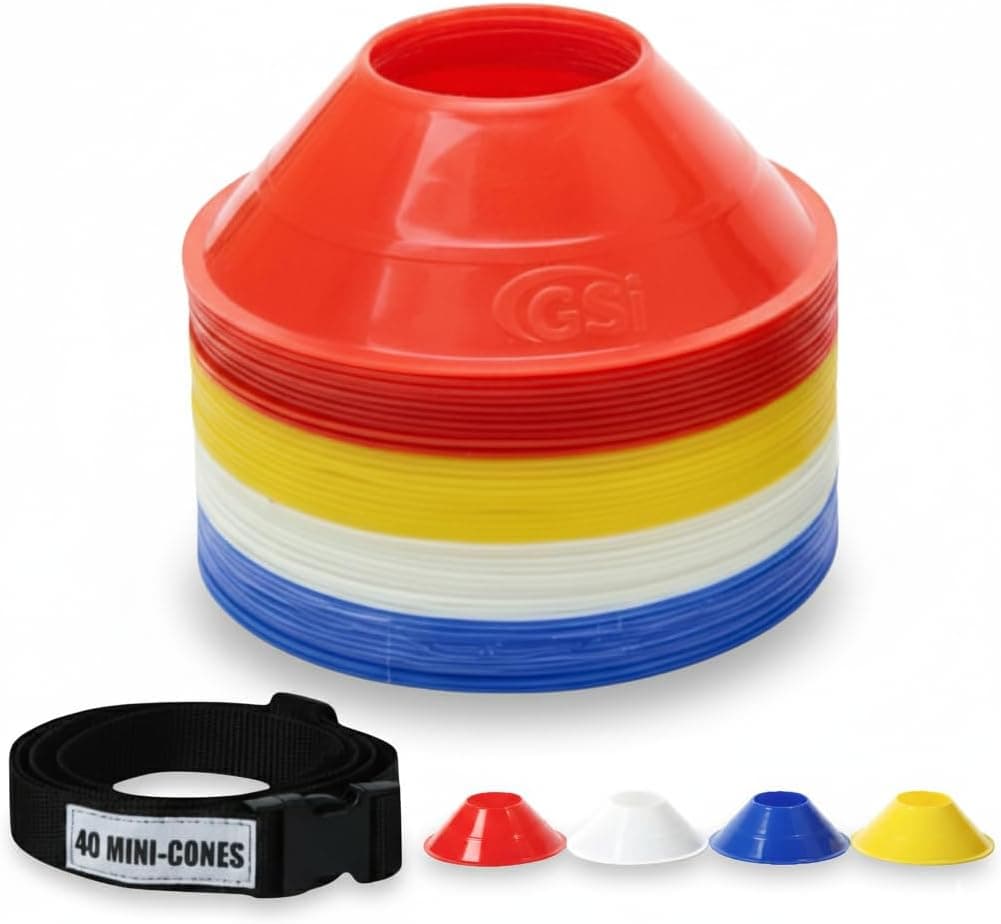
Disc Training Cones (Set of 40)
View on Amazon →As an Amazon Associate we earn from qualifying purchases, at no extra cost to you.