
Summer Skill Development Close the Gap
December 11, 2025
The Summer Advantage Nobody Talks About
Every fall, when the new soccer season kicks off, coaches notice the same thing: some players have gotten dramatically better over the summer, while others seem to have regressed. The gap between these two groups is often significant — and it has almost nothing to do with summer camps or expensive clinics. It has everything to do with what players did on their own, in their backyards, day after day.
I learned this lesson firsthand when my son was nine. He'd had a decent spring season — solid but not spectacular. That summer, we committed to a simple daily training routine: 20 minutes of ball work every morning before it got too hot. No coach. No team. Just my son, a ball, some cones, and a wall. By the time fall season started, his coach pulled me aside during the first week. "What happened to your son? He's a different player."
That's the summer skill development advantage. And it's available to every family willing to put in the work.
Why Summer Is the Perfect Time to Level Up
During the regular season, your child's training is largely controlled by their team schedule. Practices focus on tactical concepts, team shape, and game preparation. There's limited time for individual skill development because the coach has 15-18 players to manage and a game to prepare for every weekend.
Summer flips that equation. Suddenly, there's time, freedom, and space to focus exclusively on individual skills. No games to prepare for. No team tactics to absorb. Just pure, focused skill development — the kind that produces measurable improvement.
Consider the math:
- A typical team practice gives each player 50-100 meaningful touches on the ball in a 90-minute session
- A focused 20-minute home training session can deliver 500-1000+ touches
- Over a summer (roughly 10 weeks), daily home training produces 35,000-70,000 additional touches
Those numbers are staggering. A child who trains at home over the summer will accumulate more individual ball touches than they get in an entire year of team practices. This is how gaps close. This is how "average" players become "excellent" players.
Identifying the Gap: Where Does Your Child Need to Improve?
Before diving into summer training, you need to know what to focus on. A shotgun approach — working on everything a little bit — is far less effective than a targeted approach that addresses one or two specific weaknesses.
Ask the Coach
Before the spring season ends, schedule a brief conversation with your child's coach. Ask specifically: "What are the one or two things my child should focus on this summer to make the biggest improvement?" Good coaches will give you honest, actionable feedback.
Watch Game Film
If you've recorded any of your child's games, watch them together. Don't critique — observe. Look for patterns: Do they always default to their dominant foot? Do they struggle with first touch under pressure? Do they lose the ball in similar situations? These patterns reveal the skills that need the most work.
Ask Your Child
Kids often know their own weaknesses better than anyone. Ask your child what they wish they were better at. Their answer might surprise you — and because it comes from them, they'll be more motivated to work on it.
Common Gaps for Youth Players
In my experience, the most common skill gaps for U8-U12 players fall into a few categories:
- Weak foot ability: The number one gap for most young players. Being essentially one-footed is a massive limitation that becomes more pronounced at higher levels.
- First touch: The ability to control the ball cleanly with the first touch, whether receiving a pass, winning a header, or trapping a bouncing ball.
- Ball mastery: Overall comfort and control on the ball, including close dribbling, turns, and changes of direction.
- Speed of play: Not physical speed, but how quickly a player can receive, decide, and execute. This is largely a technical skill — the more comfortable you are on the ball, the faster you can play.
Building Your Summer Training Plan
A good summer training plan is simple, sustainable, and focused. Here's the framework we use:
The Daily 20
Commit to 20 minutes of focused training per day, five to six days per week. Not 60 minutes. Not 90 minutes. Twenty minutes. Here's why:
- It's short enough that kids won't resist it
- It's long enough to get 500+ quality touches
- It's sustainable over a 10-week summer without burnout
- It fits easily into any family schedule
We train first thing in the morning, before the day gets away from us. My son is out in the backyard by 8:30 AM, usually before it's too hot. By 8:50, he's done and free to do whatever he wants for the rest of the day. It's become so routine that he doesn't even think about it anymore — it's just what he does in the morning, like brushing his teeth.
The Weekly Structure
Variety keeps things interesting while ensuring comprehensive development. Here's a sample weekly structure:
- Monday: Ball mastery and footwork (follow an Anytime Soccer Training session)
- Tuesday: Weak foot focus — all drills done with the non-dominant foot
- Wednesday: Passing and receiving against a wall
- Thursday: Dribbling moves and turns
- Friday: Juggling and freestyle
- Saturday: Fun day — soccer tennis, trick shots, or pickup game with friends
- Sunday: Rest
The 10-Week Progression
Start easy and build gradually. The first two weeks should feel almost too simple — this builds confidence and establishes the habit. By weeks 5-6, your child should be working at a level that genuinely challenges them. Weeks 8-10 are about refining and solidifying the skills they've developed.
This progressive approach is one of the things I love about Anytime Soccer Training. Their programs are designed with built-in progression, so you don't have to figure out how to increase difficulty yourself. The platform handles it — each session builds on the last, keeping your child in the sweet spot of challenge and achievability.
The Skills That Close the Biggest Gaps
Weak Foot Development
If your child could only work on one thing this summer, it should be their weak foot. The ability to use both feet comfortably is perhaps the single biggest differentiator between good and great youth players. Here's a simple weak foot development plan:
Week 1-2: Basic touches — passing against a wall, toe taps, and sole rolls using only the weak foot. The goal is just getting comfortable making contact with the ball.
Week 3-4: Dribbling and turns with the weak foot. Simple moves like inside cut, outside cut, and drag back.
Week 5-6: Juggling with the weak foot. Start with catch-juggle-catch and build to consecutive touches.
Week 7-8: Combining both feet in drills. Alternating foot patterns in dribbling, passing, and juggling.
Week 9-10: Weak foot under speed and pressure. Timed dribbling courses, rapid wall passes, and competitive challenges.
By the end of the summer, your child's weak foot won't be strong. But it will be functional. And a functional weak foot is a massive competitive advantage at the youth level.
First Touch Improvement
First touch is largely about repetition — the more times your child receives a ball and controls it, the better their touch becomes. Wall work is the king of first touch development:
- Pass against the wall, receive with inside of right foot
- Pass against the wall, receive with inside of left foot
- Pass against the wall, receive with sole and pull back
- Pass against the wall, receive with outside of foot and turn
- Throw against the wall, control with thigh, then foot
- Throw against the wall, control with chest, then foot
Do each variation 20 times. That's 120 quality first touches in about 10 minutes. Multiply that by 60 days of summer training and you're looking at 7,200 first touch repetitions. The improvement will be unmistakable.
Close Control and Ball Mastery
Ball mastery routines — those sequences of touches, rolls, and moves done in a small space — are the secret sauce of technical development. They build the neural pathways that allow a player to manipulate the ball instinctively, without thinking.
Start with simple routines (toe taps, sole rolls, inside-outside) and progress to more complex sequences (combinations of moves, directional changes, tempo variations). Anytime Soccer Training has extensive ball mastery programs that progress systematically from beginner to advanced.
Staying Motivated Through the Summer
Ten weeks is a long time, especially for kids. Here are strategies to maintain motivation:
Track everything. Keep a visible record of training sessions completed. A simple calendar on the fridge with check marks or stars works wonders. Kids love seeing a streak build.
Set milestone rewards. "If you complete 20 sessions, we'll get those new cleats you've been wanting." External motivation isn't ideal long-term, but it can help establish habits that eventually become self-sustaining.
Train with a friend. Everything is better with a buddy. Invite a teammate over for training sessions. The social element makes it more fun and adds a competitive edge.
Mix it up. Don't do the same thing every day. Variety is built into the weekly structure above, but also feel free to throw in random challenges: trick shot contests, juggling wars, or recreating a famous goal in the backyard.
Celebrate progress. When your child achieves a new personal best — more juggles, faster dribbling time, hitting a target with their weak foot — make a big deal out of it. Recognition fuels motivation.
The Fall Payoff
When fall season starts, the payoff from summer training is almost immediate. Your child will notice it. Their coach will notice it. Their teammates will notice it. The confidence that comes from knowing "I worked hard all summer and I'm better because of it" is powerful and lasting.
But even more important than the on-field results is the lesson your child learns about the relationship between effort and improvement. They learn that gaps can be closed. Weaknesses can be turned into strengths. Progress is possible — not through wishing or hoping, but through daily, disciplined, enjoyable work.
That lesson will serve them long after they hang up their cleats.
So this summer, grab a ball, set up some cones, fire up Anytime Soccer Training, and close the gap. Twenty minutes a day. That's all it takes. By fall, you won't believe the difference.
Gear we use for this
The kit our own players train with at home.

Adidas MLS Training Soccer Ball
View on Amazon →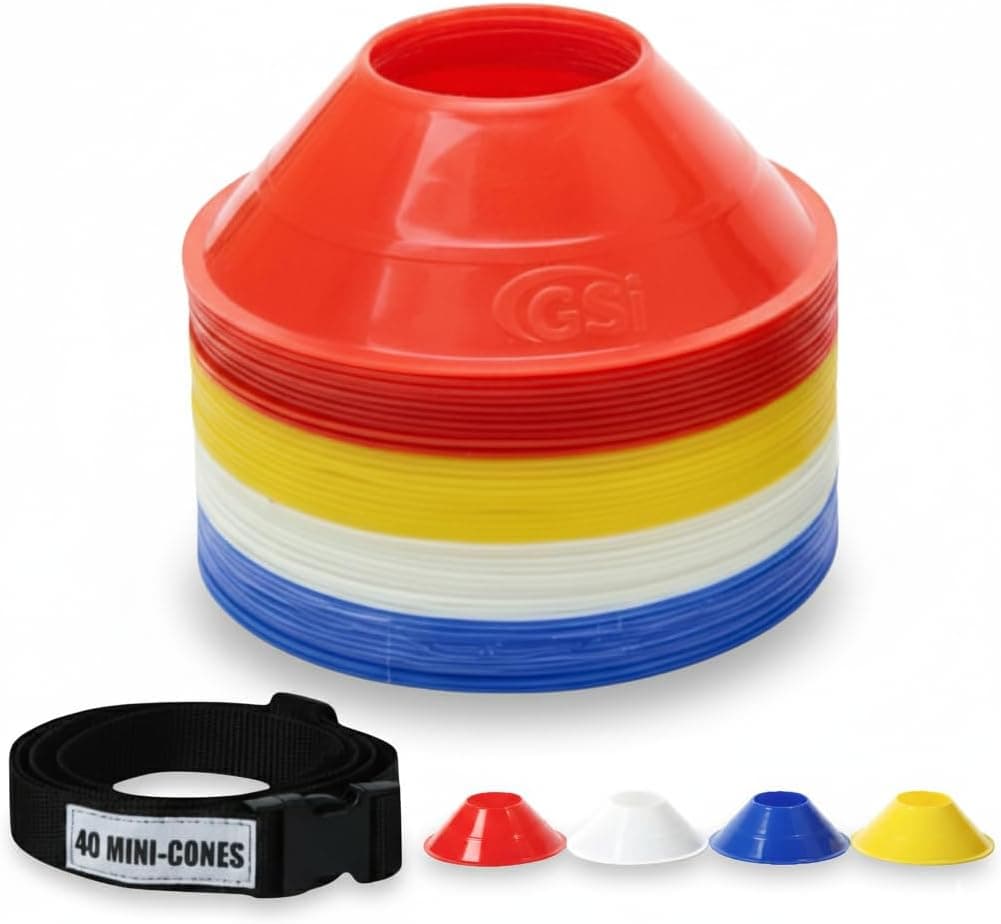
Disc Training Cones (Set of 40)
View on Amazon →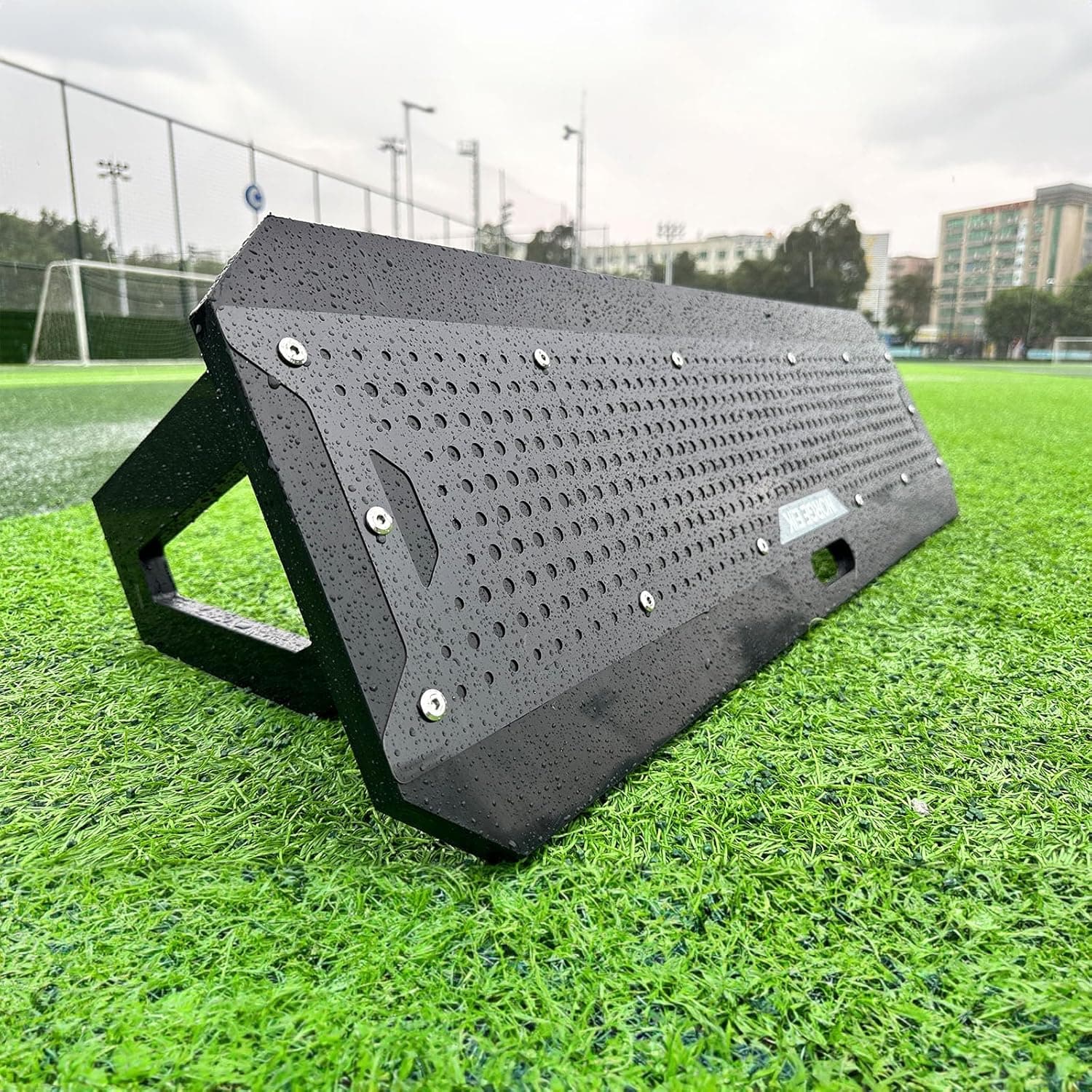
Soccer Rebounder
View on Amazon →As an Amazon Associate we earn from qualifying purchases, at no extra cost to you.