
Soccer Training for 5-Year-Olds What's Appropriate
February 23, 2026
Soccer Training for 5-Year-Olds: What's Appropriate
When my oldest was five, I signed him up for his first soccer league and immediately started thinking about training at home. I had grand plans: structured drills, skill progressions, the whole nine yards. Within about two sessions, I realized I was way off base. My five-year-old did not want to do drills. He wanted to kick the ball into puddles and pretend he was scoring the winning goal in the World Cup.
That experience taught me one of the most important lessons in youth soccer: what is appropriate for a five-year-old looks nothing like what is appropriate for an eight or ten-year-old. And if you make the mistake I made of treating a five-year-old like an older player, you risk killing their enthusiasm before it even has a chance to develop.
Understanding the Five-Year-Old Brain and Body
To understand what training is appropriate for a five-year-old, you need to understand where they are developmentally. At age five, children are:
- Still developing basic motor skills: Running, jumping, balancing, and coordinating movements are still works in progress. Do not expect refined athletic movements.
- Extremely short attention spans: Five-year-olds can typically focus on a single activity for five to ten minutes before they need to switch to something new.
- Ego-centric in their play: They do not yet understand teamwork concepts like passing or positioning. They want to chase the ball and kick it. That is completely normal and developmentally appropriate.
- Motivated by fun and imagination: Games, stories, and imaginative play are far more effective than structured drills for this age group.
- Still developing spatial awareness: Concepts like spacing, direction, and distance are still being learned at a fundamental level.
Given these developmental realities, soccer training for a five-year-old should look very different from training for older kids. The primary goals at this age should be: fall in love with the ball, develop basic coordination, and have fun. That is it. Everything else can wait.
What Training Should Look Like at Age Five
At age five, "training" should really be "playing." The activities should be disguised as games rather than presented as drills. Here is what I recommend:
Free play with the ball (five to ten minutes): Simply let your child play with a soccer ball in an unstructured way. Let them kick it, chase it, pick it up, roll it, and do whatever they want with it. This unstructured interaction with the ball builds comfort and familiarity that forms the foundation for later skill development.
I cannot emphasize this enough. Free play is not wasted time. It is essential developmental time. Your child is learning about the ball's weight, how it rolls, how it bounces, and how their body interacts with it. All of this learning is happening naturally through play.
Animal walks and movement games (five minutes): Five-year-olds love pretending to be animals. Use this to develop coordination and athleticism. Bear crawls, frog jumps, crab walks, and bunny hops all develop balance, strength, and body awareness that will serve their soccer development later.
You can incorporate the ball by having them roll the ball while doing bear crawls or kick the ball between frog jumps. This combines motor development with ball familiarity in a way that feels like play rather than practice.
Simple ball games (five to ten minutes): Games like:
- Red light, green light with a ball: Dribble on green light, stop the ball on red light. Develops dribbling and ball stopping.
- Kick and chase: Kick the ball as far as you can, then race to it. Develops kicking power and running.
- Volcanoes and ice cream cones: Set up cones in an area. Some are upside down (volcanoes) and some are right-side up (ice cream cones). Your child has to dribble around knocking over the ice cream cones while avoiding the volcanoes. Or vice versa.
- Sharks and minnows: One player is the shark and tries to kick the others' balls out of a defined area. Others try to protect their ball while dribbling. Great with multiple kids.
- Musical soccer: Like musical chairs but with soccer balls. When the music stops, everyone must stop their ball and stand on it.
These games develop real soccer skills like dribbling, stopping the ball, and spatial awareness, but they do it in a context that a five-year-old finds exciting and engaging.
What to Avoid at Age Five
Equally important is knowing what NOT to do with a five-year-old:
- Do not run structured drills. Standing in lines, repeating the same exercise over and over, and following complex instructions are not appropriate or effective for this age group. They will get bored, frustrated, and turned off from soccer.
- Do not focus on technique. Yes, you read that right. At age five, the focus should be on play and exploration, not on having the correct foot position or the right angle of approach. Technique refinement comes later, after the foundation of comfort and enjoyment is established.
- Do not worry about positions or tactics. Five-year-olds playing soccer will look like a swarm of bees chasing the ball. That is totally fine. They are not ready for positional concepts, and trying to impose them is futile and frustrating for everyone involved.
- Do not force it. If your five-year-old does not want to train today, let it go. Forcing training at this age creates negative associations with soccer that can persist for years. Keep it completely voluntary and pressure-free.
- Do not compare them to other kids. Developmental variation at age five is enormous. Some kids are coordinated and others are still figuring out how to run without falling. This is normal and says nothing about their future potential.
How Long Should Sessions Be?
For a five-year-old, training sessions should be no longer than fifteen to twenty minutes, and that includes breaks and transitions between activities. A typical session might look like this:
- Free play with the ball: five minutes
- An animal walk or movement game: three minutes
- A ball game: five to seven minutes
- Free play or a fun challenge to finish: two to three minutes
That is it. Fifteen minutes. If your child wants to keep playing after that, great. But do not push beyond their attention span, because once they check out mentally, the session is no longer productive.
As for frequency, three to four times per week is plenty at this age. Daily training is not necessary and can actually be counterproductive if it starts to feel like an obligation. Remember, the number one goal at age five is for your child to love being around a soccer ball. Everything else is secondary.
The Biggest Mistake: Pushing Too Hard Too Soon
Here is where my cautionary tale comes in. When my first son was five, I pushed too hard. I tried to do real drills with him. I corrected his technique. I got frustrated when he would not focus. And I treated our training sessions like they mattered for his long-term development in a way that put pressure on a five-year-old who just wanted to have fun.
The result? By age six, he was already starting to resist training at home. He associated it with pressure and correction rather than fun and play. It took me months to undo that damage and rebuild his enthusiasm for training.
With my second son, I took the opposite approach. At age five, I let him lead everything. If he wanted to kick the ball into the fence and count how many times he could hit a specific post, that was our training for the day. If he wanted to dribble around the yard pretending to be his favorite player and doing commentary in his made-up voice, that was training. If he wanted to stop after three minutes because he saw a cool bug, that was fine too.
The result? He developed a genuine love for the ball that has naturally evolved into a desire for more structured training as he has gotten older. He now asks to do Anytime Soccer Training sessions and eagerly seeks out new skills to learn, all because we protected his joy of the game when he was five.
What About Organized Leagues at Age Five?
Recreational soccer leagues for five-year-olds can be a wonderful experience if the league and coaching are appropriate. Look for programs that:
- Focus on fun and participation rather than competition and winning
- Use small-sided games like three-on-three or four-on-four rather than full team games
- Keep practice sessions short and activity-based
- Have coaches who understand early childhood development
- Ensure every child gets equal playing time
Avoid programs that are overly competitive, focus on winning, or have long practice sessions with lots of standing around. At age five, the organized league should be an extension of play, not a miniature version of adult soccer.
Setting the Stage for Future Development
Even though the training at age five looks like play, you are setting the stage for everything that comes after. A five-year-old who loves being around a soccer ball will naturally want to do more as they get older. A five-year-old who has positive associations with training will embrace structured programs like Anytime Soccer Training when they are developmentally ready for them at ages six, seven, and beyond.
Think of age five as planting a seed. You are not going to see a tree right away. But if you nurture the seed with the right conditions, water it with fun and positive experiences, and protect it from being crushed by too much pressure, it will grow into something strong and enduring.
The players who go on to play at the highest levels almost universally describe their early experiences with soccer as joyful and playful. They fell in love with the game before they were ever trained in the game. That love is what sustained them through the years of hard work that came later.
A Simple Checklist for Five-Year-Old Soccer
Here is a simple checklist to guide your approach with a five-year-old:
- Is my child smiling and having fun? If yes, you are doing it right.
- Am I keeping sessions under fifteen to twenty minutes? If yes, you are respecting their attention span.
- Am I using games and play rather than drills? If yes, you are age-appropriate.
- Am I avoiding technique correction and pressure? If yes, you are protecting their love of the game.
- Am I letting my child lead sometimes? If yes, you are fostering intrinsic motivation.
- Is my child excited to play with the ball again tomorrow? If yes, you are succeeding at the most important thing.
If you can check all of these boxes, you are doing everything right for your five-year-old's soccer development. Do not let anyone tell you that your child needs more structured training at this age. They do not. They need to play, explore, and fall in love with the beautiful game. The structured training will come when they are ready for it, and it will be so much more effective because the foundation of joy is already in place.
Gear we use for this
The kit our own players train with at home.
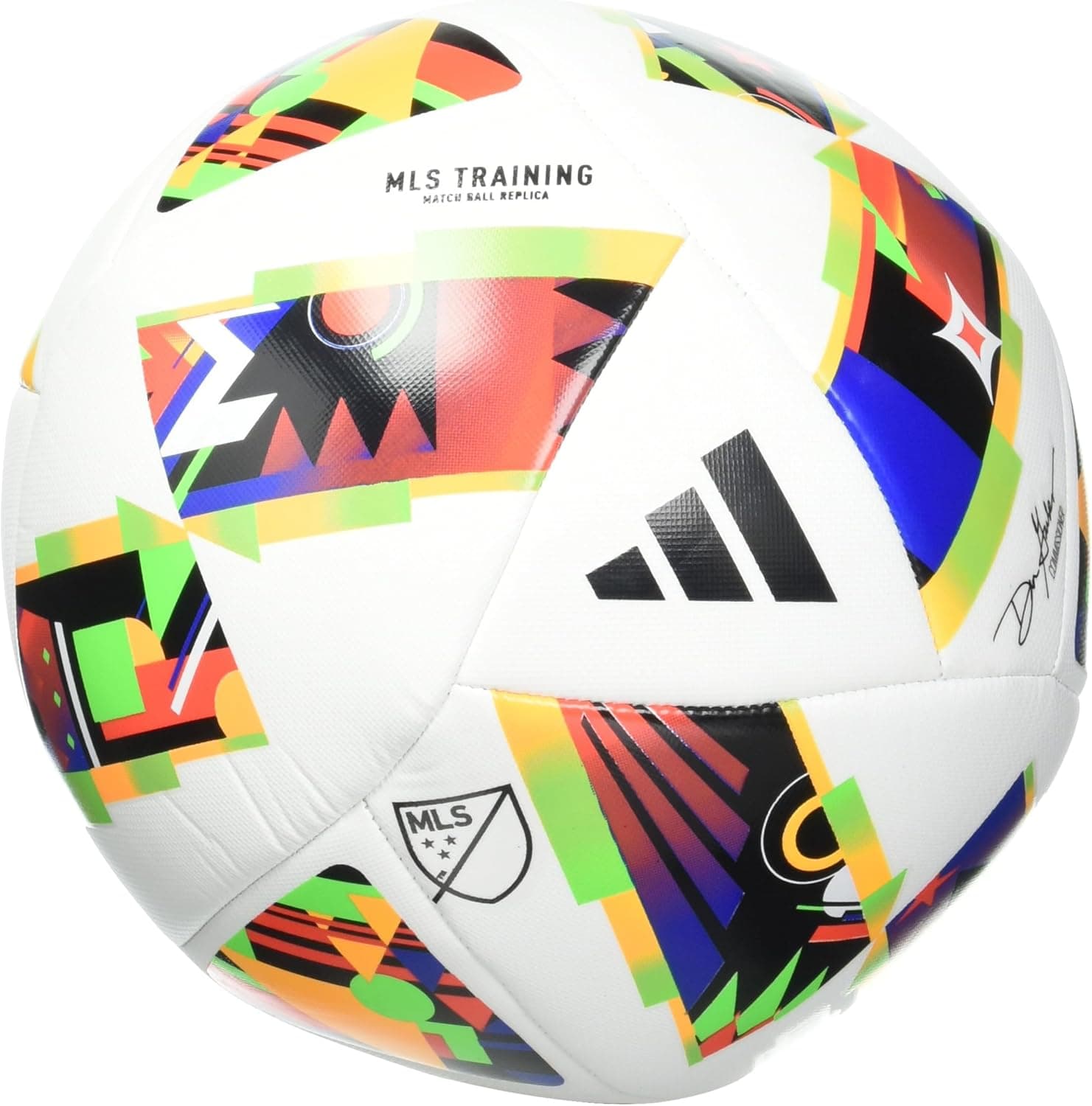
Adidas MLS Training Soccer Ball
View on Amazon →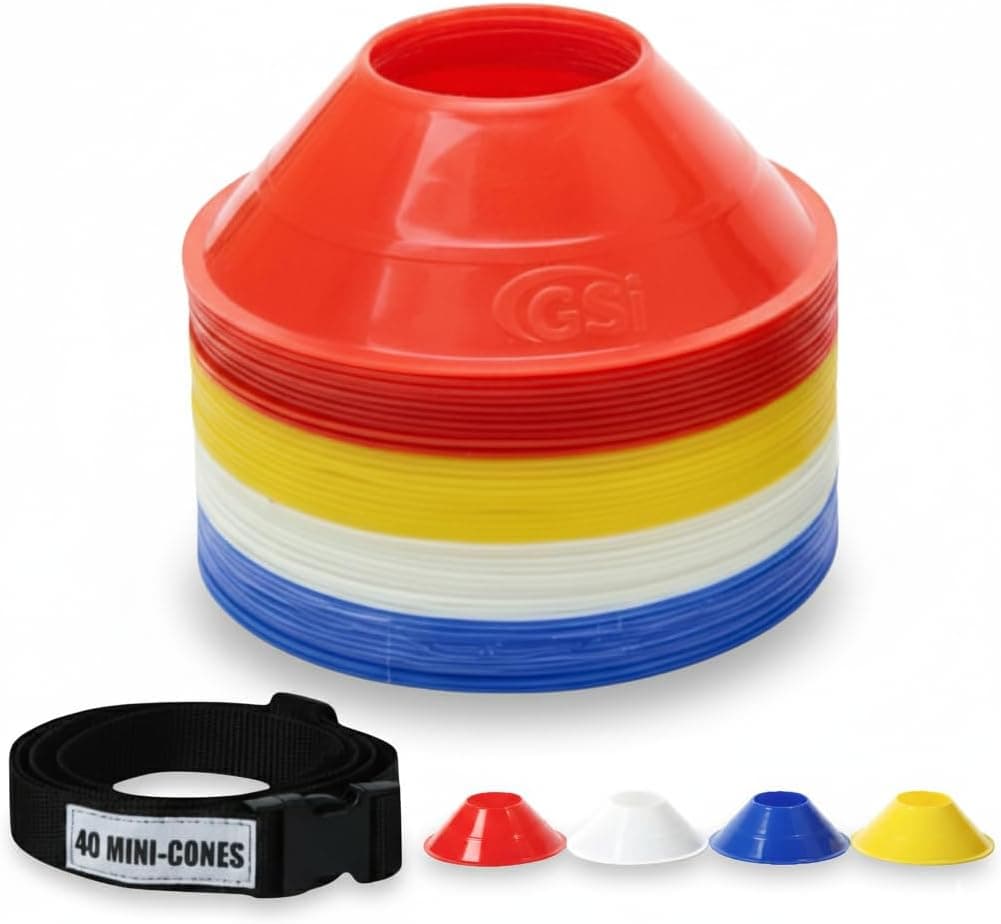
Disc Training Cones (Set of 40)
View on Amazon →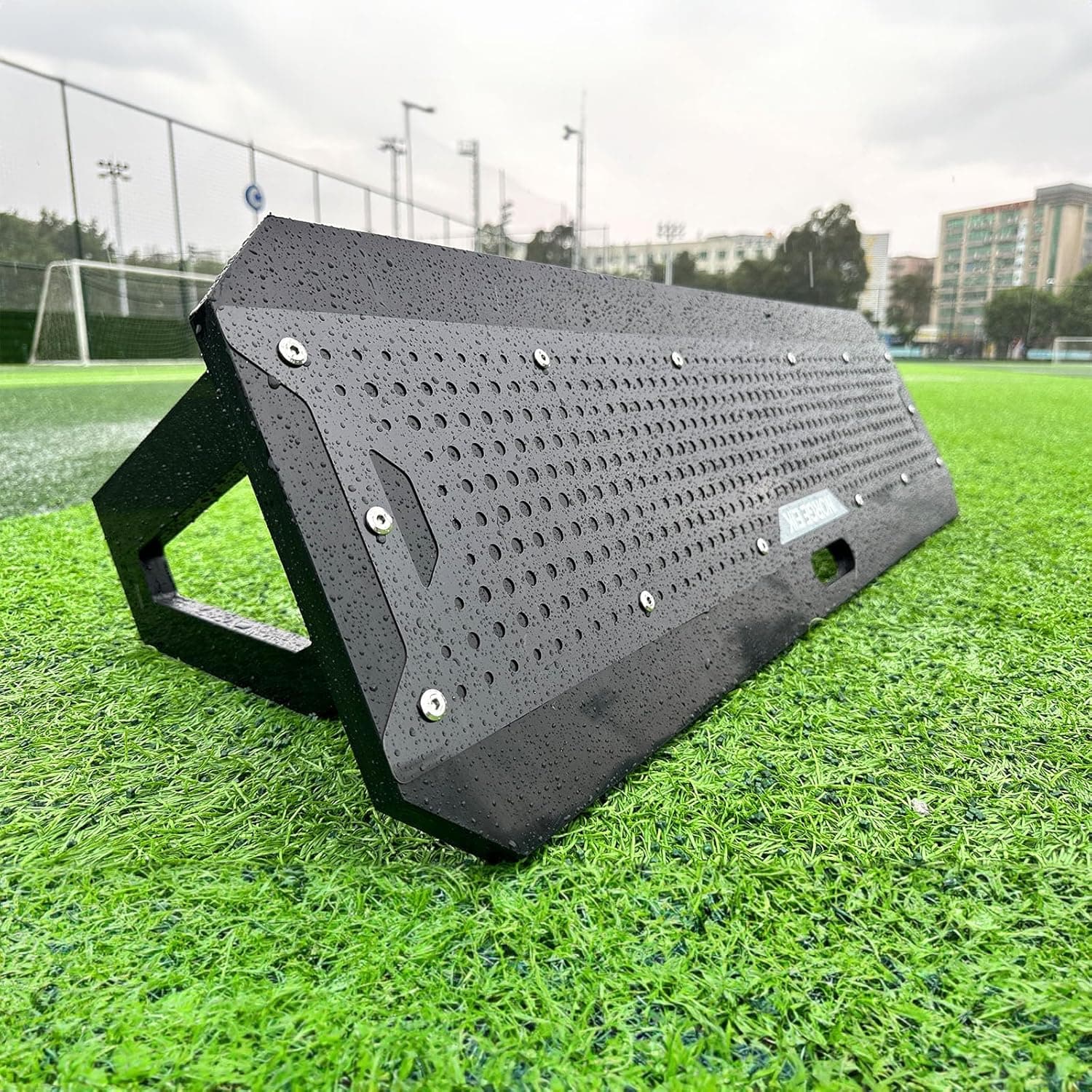
Soccer Rebounder
View on Amazon →As an Amazon Associate we earn from qualifying purchases, at no extra cost to you.