
Parent Q&A Your Most Common Youth Soccer Questions Answered
February 25, 2026

Parent Q&A: Your Most Common Youth Soccer Questions Answered
Over the past few years, I have received hundreds of questions from parents in our community about youth soccer development. The same questions come up again and again, which tells me that most soccer parents are dealing with the same challenges and uncertainties. I have compiled the most frequently asked questions and provided my honest answers based on my experience as a soccer parent and everything I have learned along the way.
Q: How young is too young to start soccer?
A: There is no such thing as too young to start playing with a soccer ball. Even toddlers can benefit from rolling, kicking, and chasing a ball around. However, organized soccer programs typically start at age three or four, and I think that is a reasonable age to begin as long as the program is play-based and age-appropriate.
What I would caution against is starting structured, serious training before age six. Before that age, the focus should be entirely on free play, fun, and developing a love for the ball. Formal skill training can begin gradually around age six or seven, when children have the attention span and motor development to benefit from it.
If your child shows interest in soccer at any age, encourage it. Just make sure the activities are appropriate for their developmental stage.
Q: My child's team keeps losing. Should I switch teams?
A: This depends on why the team is losing and what your priorities are. If the team is losing but the coaching is good, your child is developing skills, and they are having fun, I would strongly recommend staying. Results at young ages are largely meaningless for long-term development.
If the team is losing because the coaching is poor, training is unproductive, and your child is not developing, then a switch might be warranted. But make sure the move is motivated by development concerns rather than a desire to be on a winning team.
I have seen too many parents chase wins at young ages by moving their child to the most dominant team, only to find that their child was not developing individually because the team relied on one or two talented players to win games. Being on a weaker team can actually be beneficial because your child gets more opportunities to touch the ball and develop in game situations.
Q: How do I know if my child is talented enough for competitive soccer?
A: This is a question I hear all the time, and I think it is the wrong question to ask, especially at young ages. Talent is overrated in youth soccer. What matters far more is work ethic, passion, and consistent development.
I have watched so many kids who were considered "talented" at ages seven and eight plateau by age twelve because they relied on natural ability and never developed their skills through practice. Conversely, I have watched kids who seemed average at young ages become outstanding players through years of dedicated training.
Instead of asking whether your child is talented enough, ask whether they love soccer enough to put in the work. If they do, and if you provide them with opportunities for development through team training and home practice with programs like Anytime Soccer Training, they will reach whatever level their dedication takes them to.
Q: Should my child specialize in soccer or play multiple sports?
A: Under the age of twelve, I strongly recommend playing multiple sports. The research on long-term athlete development is clear: early specialization increases the risk of burnout, overuse injuries, and dropout, while multi-sport participation builds broader athletic abilities that enhance performance in any sport.
After age twelve, gradual specialization can begin if your child has a strong preference for soccer. But even then, maintaining some involvement in other physical activities is beneficial for overall athleticism and injury prevention.
The exception might be if your child is in an elite academy program that requires year-round commitment. In that case, the quality and variety of training within the program may compensate for the lack of multi-sport participation. But for the vast majority of youth players, playing multiple sports is the better path.
Q: How much should I spend on youth soccer?
A: This is a loaded question because youth soccer costs can be astronomical. Travel teams, tournaments, private coaching, camps, and equipment can easily run into thousands of dollars per year. But spending more does not necessarily mean better development.
Here is what I believe is worth the investment:
- A quality rec or travel team with good coaching: This is the foundation. A good coach is more important than a prestigious club name.
- Basic home training equipment: A ball, cones, and a rebounder. This is a one-time investment of about one hundred to two hundred dollars that will last for years.
- A home training program: Something like Anytime Soccer Training that provides structured, follow-along sessions for daily practice. This is incredibly cost-effective compared to private coaching and arguably more effective for individual skill development.
What I would spend cautiously on:
- Expensive tournaments: Some are valuable for competition experience, but many are overpriced and overhyped.
- Private coaching: Can be beneficial but is expensive and not necessary if you have a good home training program.
- Multiple teams: Playing on two teams simultaneously is usually more about parent ambition than player development.
The most important factor in your child's development is not how much money you spend. It is how consistently they train at home. A child who trains for fifteen minutes daily at home will out-develop a child who plays on an expensive travel team but never trains individually.
Q: My child wants to quit soccer. What should I do?
A: This is one of the hardest situations a soccer parent faces, and there is no one-size-fits-all answer. But here is my framework for thinking about it.
First, try to understand why they want to quit. Common reasons include:
- They are not having fun (the most common reason by far)
- They feel too much pressure from parents or coaches
- They are struggling and losing confidence
- They are interested in other activities
- They are burned out from too much soccer
- They are dealing with social issues on the team
For some of these reasons, the solution is not quitting soccer but changing the environment. A new team, a different coaching style, or a reduced schedule might reignite their passion. For others, taking a break or even stepping away from soccer is the right call.
What I would avoid is forcing your child to continue if they genuinely do not want to play. Forced participation breeds resentment and rarely leads to renewed passion. If your child needs a break, give them one. Many kids who step away from soccer for a few months come back with renewed enthusiasm.
I would also recommend that your child finish out their current season commitment before quitting. This teaches the value of honoring commitments even when things are difficult, which is an important life lesson.
Q: Is private coaching worth it?
A: Private coaching can be valuable, but it is not necessary for most youth players, and it is definitely not a magic bullet. A good private coach can identify specific weaknesses, provide personalized feedback, and accelerate development in certain areas. A bad private coach is a waste of money.
Before investing in private coaching, I would suggest first establishing a consistent home training routine using a program like Anytime Soccer Training. Daily follow-along sessions will develop your child's skills more effectively than a weekly private lesson because the frequency and consistency of practice matters more than having a personal coach present.
If you do pursue private coaching, look for a coach who focuses on individual skill development rather than tactical instruction, especially for younger players. Ask for references, watch a session before committing, and make sure the coach's approach aligns with your child's needs and personality.
Q: How do I deal with a coach I disagree with?
A: This is a delicate situation that requires diplomacy. Here is my advice:
First, recognize that the coach has the authority to make decisions about their team. Even if you disagree, undermining the coach in front of your child is harmful because it teaches them to disrespect authority and creates confusion about whose instructions to follow.
If you have a genuine concern about coaching methods, playing time, or your child's development, request a private meeting with the coach. Approach the conversation with curiosity rather than accusations. Ask questions like, "Can you help me understand your approach to player rotation?" rather than making demands like, "My child should be playing more."
If after a respectful conversation you still fundamentally disagree with the coach's approach and it is negatively affecting your child's development or enjoyment, it may be time to look for a different team. But exhaust diplomatic options first.
The one area where I think parents should speak up immediately is safety. If a coach is putting your child at risk of injury through inappropriate training methods or ignoring injuries, that is a conversation that should not wait.
Q: My child is the best player on their team. Should I move them up?
A: Not necessarily. Being the best player on a team is not a bad thing, as long as your child is still being challenged and developing. Some benefits of being the strongest player include more touches on the ball, leadership development, and the opportunity to try new skills in games with less fear of consequences.
However, if your child is so far ahead of their teammates that they are not being challenged at all, they may benefit from playing up an age group or moving to a more competitive team. The key indicator is not whether they are the best on their team but whether they are still improving.
If your child is the best but has stopped developing new skills, getting lazy in games, or showing signs of boredom, it is time for a more challenging environment. If they are the best but still working hard, trying new things, and improving, the current situation may be fine.
Regardless of the team situation, home training with Anytime Soccer Training ensures your child is continually challenged at their individual level, which can compensate for a team environment that is not as competitive as it could be.
Q: How important are soccer camps?
A: Soccer camps can be a fun experience and a good way to expose your child to different coaching styles and meet new players. However, in terms of actual skill development, the impact of a one-week camp is minimal compared to consistent daily training over months.
I think of camps as supplementary experiences rather than developmental necessities. If your budget is limited, I would prioritize a home training program over camps every time, because the daily consistency of home training produces far greater skill development than a week-long camp.
If you do attend camps, look for ones that focus on individual skill development rather than team tactics, have small player-to-coach ratios, and are run by qualified coaches. Avoid camps that are essentially just scrimmaging all day, as that is fun but not particularly developmental.
Final Thoughts
The fact that you are reading this and asking these questions means you are already a great soccer parent. You care about your child's development, you want to make the right decisions, and you are willing to learn. That puts you ahead of the majority of parents who just drop their kid off at practice and hope for the best.
If I could boil all of my advice down to one sentence, it would be this: focus on consistent daily home training, keep it fun, and let your child lead their own soccer journey. If you get those three things right, everything else will fall into place.
Gear we use for this
The kit our own players train with at home.

Adidas MLS Training Soccer Ball
View on Amazon →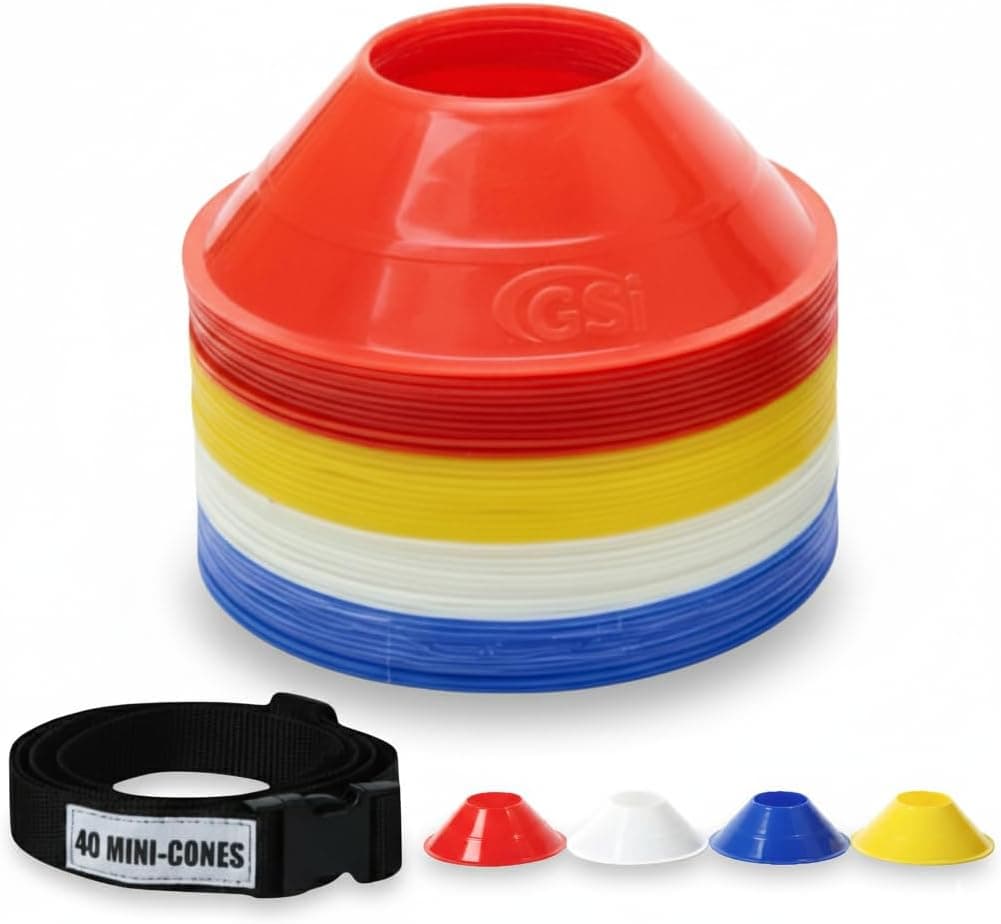
Disc Training Cones (Set of 40)
View on Amazon →
Soccer Rebounder
View on Amazon →As an Amazon Associate we earn from qualifying purchases, at no extra cost to you.