
New Year Soccer Goals for Kids
January 1, 2026

A Fresh Start for Young Soccer Players
There's something magical about a new year. That clean-slate feeling, the sense that anything is possible, the motivation to set goals and chase them. And while most of the New Year's resolution talk is aimed at adults, I've found that helping your child set soccer goals for the new year can be one of the most powerful things you do as a soccer parent.
I started this tradition with my son three years ago, when he was eight. We sat down on January 1st with hot chocolate and a notebook, and I asked him a simple question: "What do you want to get better at in soccer this year?" His answer surprised me. I expected him to say he wanted to score more goals or make the A team. Instead, he said, "I want to be able to juggle 50 times without dropping it."
That one goal changed our entire year. It gave us something specific to work toward, a metric we could track, and a shared project that brought us closer together. By March, he hit 50. By June, he was at 200. By the end of the year, he could juggle over 500 times consecutively. But more importantly, the discipline and confidence he developed through pursuing that single goal transformed his entire game.
Why Goal Setting Matters for Young Athletes
Goal setting isn't just a feel-good exercise. It's a well-researched psychological tool that genuinely improves performance. Dr. Edwin Locke's goal-setting theory, developed over decades of research, demonstrates that specific, challenging goals lead to higher performance than vague or easy goals. This applies to adults and children alike.
For young soccer players specifically, goal setting offers several benefits:
- Direction: Instead of training aimlessly, your child has a clear target. This makes every practice session more purposeful.
- Motivation: Progress toward a goal creates momentum. Each small improvement fuels the desire to keep going.
- Confidence: Achieving a goal — even a small one — builds the belief that effort leads to results. This growth mindset is invaluable.
- Ownership: When a child sets their own goal, they take ownership of their development. It's not about what the coach wants or what the parents expect. It's their goal, their journey.
The SMART Framework (Adapted for Kids)
You've probably heard of SMART goals — Specific, Measurable, Achievable, Relevant, Time-bound. It's a great framework, but it needs some adapting for young soccer players. Here's how I think about it:
Specific
"Get better at soccer" is not a goal. "Improve my weak foot so I can pass accurately with my left" is a goal. Help your child get specific about what they want to achieve. The more precise, the better.
Good examples for young players:
- "Juggle 30 times in a row with alternating feet"
- "Complete 8 out of 10 passes against the wall with my left foot"
- "Learn three new dribbling moves and use at least one in a game"
- "Dribble through a cone course in under 15 seconds"
Measurable
If your child can't measure it, they can't track it. Numbers are your friend here. Juggling counts, accuracy percentages, timed runs, consecutive passes — all of these give your child concrete data to work with.
We use a simple notebook to track progress. Every training session, my son writes down one or two key numbers. It takes 30 seconds and provides weeks of motivational data. Seeing a juggling record go from 12 to 15 to 23 to 35 over the course of a month is incredibly powerful for a young player.
Achievable (But Challenging)
This is where parent judgment comes in. The goal should stretch your child without being so far out of reach that it becomes discouraging. A child who can juggle 5 times shouldn't set a goal of 500. But 25 or 50? That's a stretch that feels possible with effort.
A good rule of thumb: the goal should require consistent work over at least 4-8 weeks. If they can achieve it in a few days, it's too easy. If it would take a year of daily work, it's too ambitious for an initial goal.
Relevant
The goal should matter to your child, not to you. I've seen parents set their child's goal as "make the top team" or "start every game." Those are outcome goals that depend on factors outside the child's control. Focus instead on process goals — things your child can directly influence through their own effort.
Time-Bound
Set a deadline. "By spring tryouts" or "by the end of February" or "in the next six weeks." A deadline creates urgency and provides a natural checkpoint for evaluation.
Goal Categories for Young Soccer Players
When sitting down with your child, it helps to think about goals across several categories. You don't need a goal in every category — one or two well-chosen goals are plenty. But considering different areas can help your child identify what matters most to them.
Technical Goals
These are the bread and butter of youth development: ball mastery, first touch, passing, shooting, dribbling. Technical goals are often the easiest to measure and the most directly impacted by home training.
Examples:
- Master three new dribbling moves
- Juggle 100 times consecutively
- Hit a wall target 7 out of 10 times with weak foot
- Complete a specific ball mastery routine without mistakes
Platforms like Anytime Soccer Training are particularly useful for technical goals because they provide structured progressions. Your child can follow a curriculum that systematically builds the skill they're targeting, with clear milestones along the way.
Physical Goals
Speed, agility, endurance, and coordination all matter in soccer. Physical goals can be highly motivating for kids who are naturally athletic or competitive.
Examples:
- Complete a shuttle run in under a specific time
- Hold a plank for 60 seconds
- Do 20 push-ups without stopping
- Improve 40-yard dash time by half a second
Mental Goals
These are harder to measure but incredibly important. Mental goals address the psychological side of the game — confidence, resilience, focus, and attitude.
Examples:
- "After making a mistake in a game, I will reset within 10 seconds and focus on the next play"
- "I will encourage a teammate at least three times per game"
- "I will practice visualization for 2 minutes before each game"
Habit Goals
Sometimes the most impactful goal isn't about a specific skill but about building a training habit. These "meta-goals" create the conditions for all other improvement.
Examples:
- Train at home at least 4 days per week for 15 minutes
- Complete 20 Anytime Soccer Training sessions by March 1st
- Do a ball mastery routine every morning before school
How to Have the Goal-Setting Conversation
The way you approach this conversation matters as much as the goals themselves. Here's a structure that has worked well for us:
Step 1: Reflect on the Past Year
Start by looking back. Ask your child:
- What are you most proud of from last season?
- What was the most fun you had playing soccer?
- What was frustrating or hard?
- If you could magically improve one thing overnight, what would it be?
Listen more than you talk. Their answers will naturally point toward meaningful goals.
Step 2: Dream Big, Then Focus
Let your child brainstorm freely. Write everything down without judgment. "I want to be the best player on the team" is fine as a dream. Then gently guide them toward specific, controllable goals that support that dream.
"That's awesome! So what skills do you think would help you become the best player? Which one do you want to focus on first?"
Step 3: Pick One to Three Goals
Resist the temptation to set too many goals. One primary goal and one or two supporting goals is plenty. Anything more becomes overwhelming and dilutes focus.
Step 4: Create a Plan
A goal without a plan is just a wish. Help your child figure out how they'll work toward their goal. When will they train? What drills will they do? How will they track progress?
This is where having a structured training platform like Anytime Soccer Training is invaluable. Instead of trying to design a training plan from scratch, your child can follow an expert-designed program that targets their specific goal. It takes the guesswork out of the equation.
Step 5: Write It Down and Make It Visible
Have your child write their goals on a piece of paper or a whiteboard and put it somewhere they'll see it every day — their bedroom, the garage, next to the back door. Visual reminders keep goals top of mind.
Checking In Without Checking Up
Once the goals are set, your role as a parent shifts to supportive observer. Check in periodically, but don't nag. There's a fine line between encouragement and pressure, and it's important to stay on the right side of it.
Weekly check-ins work well. "Hey, how's the juggling goal going?" or "I noticed you've been training a lot this week — how are you feeling about your progress?" These conversations show interest without creating stress.
If your child falls behind on their goal, resist the urge to lecture. Instead, ask questions: "What's getting in the way? Is the goal still exciting to you? Do we need to adjust anything?" Sometimes goals need to be modified, and that's perfectly fine. The ability to reassess and adjust is itself a valuable skill.
Celebrating Milestones
Don't wait until the goal is fully achieved to celebrate. Mark milestones along the way. If the goal is to juggle 100 times, celebrate 25, 50, and 75. If the goal is to train four times a week, celebrate the first full week, the first full month.
Celebrations don't need to be extravagant. A high-five, a special dessert, a mention at family dinner, or even just a heartfelt "I'm really proud of how hard you've been working" goes a long way. The point is to reinforce the connection between effort and recognition.
What If They Don't Hit Their Goal?
Not every goal will be achieved, and that's okay. In fact, it's more than okay — it's a learning opportunity. If your child falls short, help them process it constructively:
- What did they learn from the attempt?
- What would they do differently?
- How much progress did they make, even if they didn't reach the target?
- Is the goal worth continuing to pursue, or do they want to set a new one?
The message should be clear: the value is in the pursuit, not just the achievement. A child who sets a goal of 100 juggles and reaches 72 has developed more discipline, skill, and character than a child who never set a goal at all.
Making This Year Their Best Year Yet
The new year is an invitation. It's a chance for your child to take the reins of their soccer development, to dream about what they want to accomplish, and to build the habits that will get them there.
So sit down with your young player this week. Have the conversation. Set one meaningful goal. Create a simple plan. And then support them — with encouragement, with resources like Anytime Soccer Training, and with the unconditional love that reminds them that your pride in them has nothing to do with soccer and everything to do with who they are.
Happy New Year. Now let's make it a great one on the pitch.
Gear we use for this
The kit our own players train with at home.
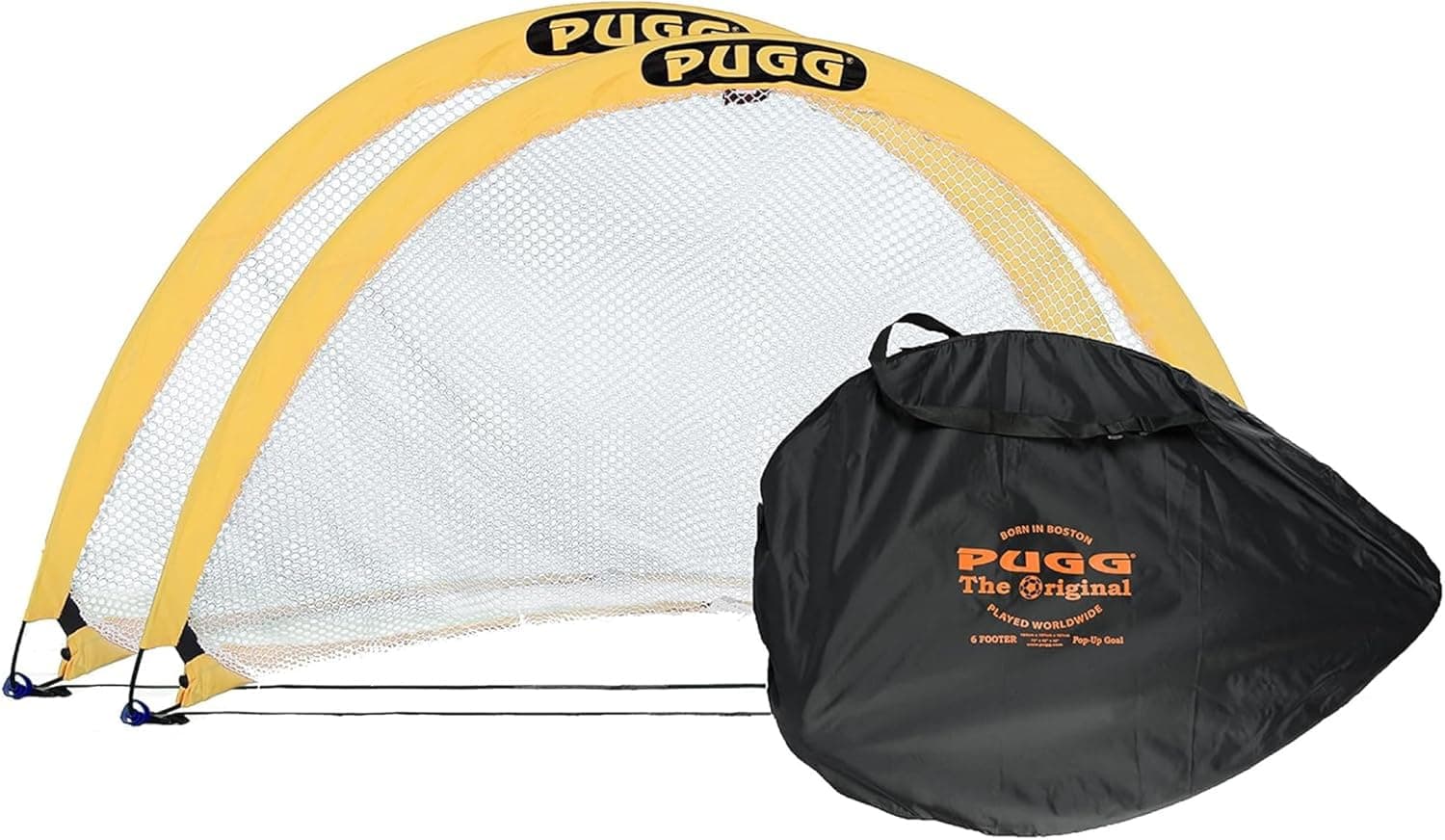
PUGG Pop-Up Soccer Goals (Set of 2)
View on Amazon →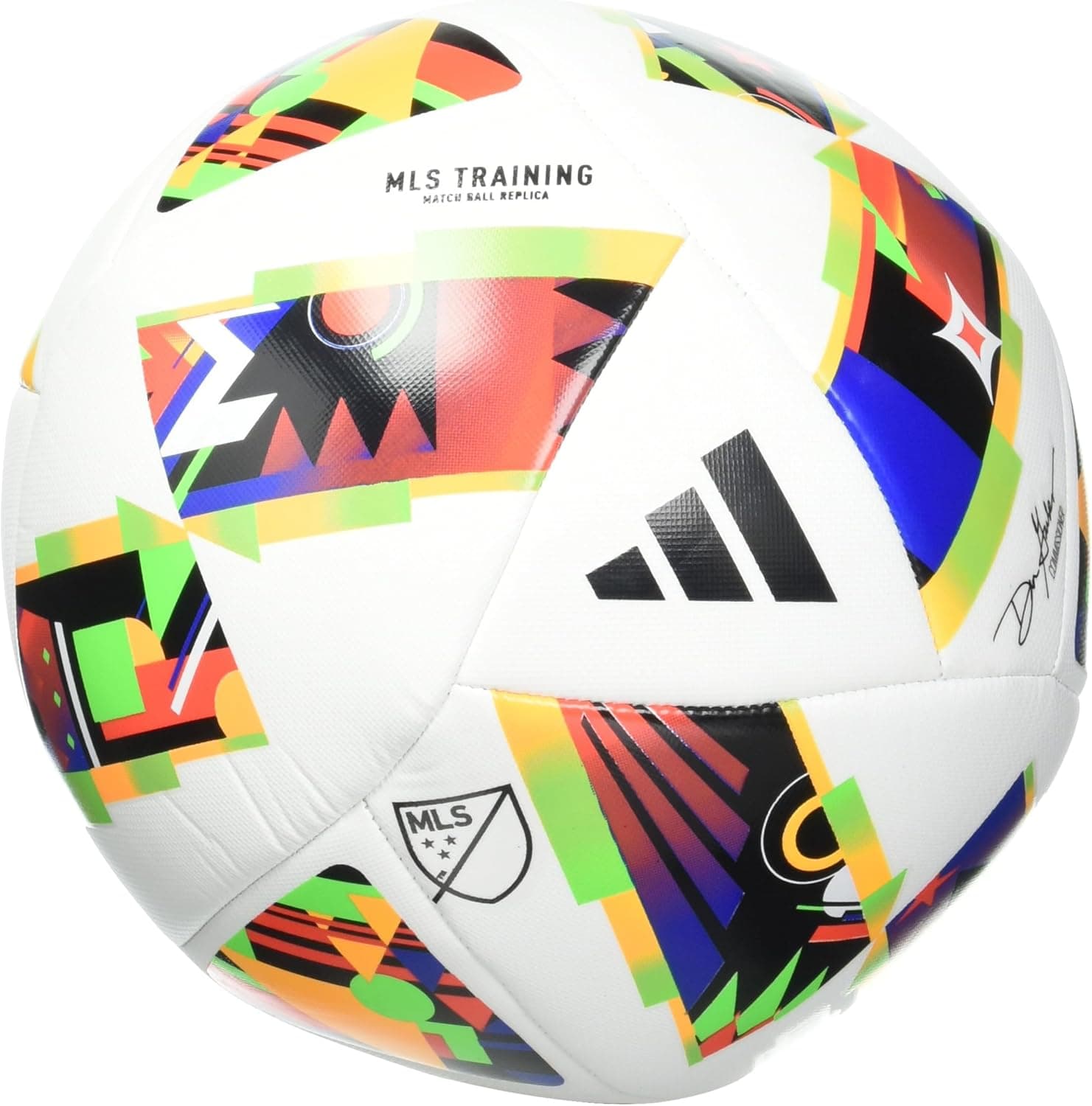
Adidas MLS Training Soccer Ball
View on Amazon →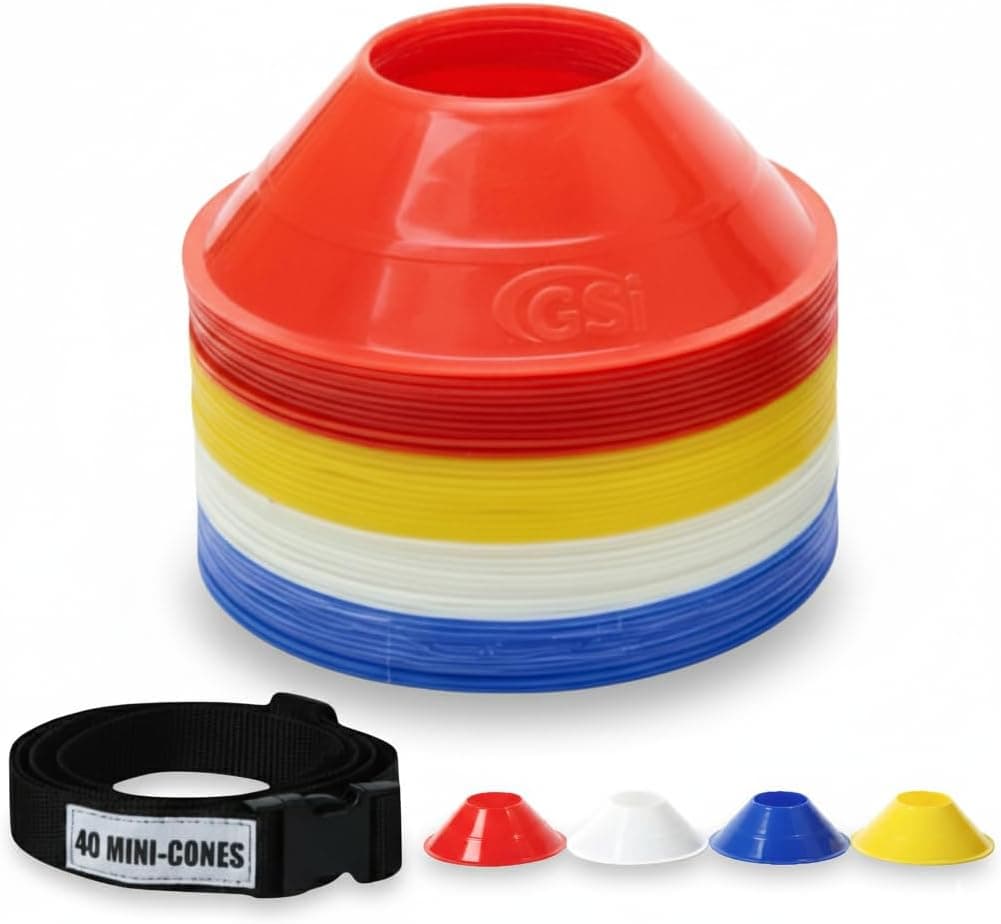
Disc Training Cones (Set of 40)
View on Amazon →As an Amazon Associate we earn from qualifying purchases, at no extra cost to you.