
Is Your Child Getting Enough Touches The 10000-Hour Truth
January 14, 2026
The Numbers That Changed How I Think About Soccer Development
Malcolm Gladwell's 10,000-hour rule has become one of the most cited concepts in sports development. The idea is simple: it takes roughly 10,000 hours of deliberate practice to achieve mastery in any complex domain. While researchers have debated and nuanced this figure — some skills require less, some require more, and the quality of practice matters enormously — the core insight remains powerful: mastery requires a massive volume of purposeful repetition.
In soccer, the equivalent concept is touches on the ball. Every time your child's foot contacts the ball — every pass, every dribble, every juggle, every shot, every first touch — a neural pathway fires and strengthens. The more touches, the more myelinated those pathways become, and the more automatic the skills.
So the question is: is your child getting enough touches?
When I first ran the numbers for my own son, the answer shocked me. And it completely changed our approach to his development.
Running the Numbers: A Typical Youth Player's Touch Count
Let's do the math for a typical U10-U12 player on a competitive club team:
Team Practices
- Frequency: 2-3 practices per week
- Duration: 60-90 minutes each
- Individual touches per practice: approximately 100-200 (accounting for instruction time, waiting in lines, scrimmaging where only one team has the ball, etc.)
- Weekly touches from practice: 200-600
Games
- Frequency: 1 game per week
- Duration: 40-60 minutes of playing time
- Individual touches per game: approximately 30-60 (yes, really — studies have shown that the average youth player touches the ball 2-3 times per minute of game play, and they're only on the ball for a small fraction of the total game time)
- Weekly touches from games: 30-60
Total Weekly Touches: 230-660
Over a 40-week season, that's approximately 9,200-26,400 touches per year from organized soccer alone.
Now let's put that in context. Research from the Dutch football association (KNVB) suggests that top youth academy players accumulate approximately 500,000-1,000,000 touches between ages 6 and 18 to reach the highest levels. That's roughly 40,000-80,000 touches per year.
The gap between what a typical club player gets (10,000-26,000 touches per year) and what's needed for elite development (40,000-80,000) is enormous. Team training alone provides only 20-40% of the touches needed for optimal development.
Where are the other 60-80% supposed to come from? The answer is individual practice — at home, on their own, outside of organized training.
The Touch Gap: Where Elite Development Happens
This gap — between what team training provides and what development requires — is what I call the "touch gap." And it explains why some players seem to improve so much faster than others.
The players who close the touch gap through individual practice are the ones who make rapid, visible progress. The players who rely solely on team training for their ball touches develop more slowly, not because they're less talented, but because they're getting fewer repetitions.
Think about it from a skill-acquisition perspective. A musician who practices piano for 30 minutes a day will improve faster than one who practices once a week for three hours, even though the total time is roughly the same. The daily repetition creates more consistent neural pathway activation, which accelerates myelination and skill consolidation.
Soccer is no different. A player who gets 500 touches a day through home training will develop faster than a player who gets 500 touches only during team practice twice a week.
How Home Training Closes the Gap
This is where the math gets exciting. A focused 15-20 minute home training session delivers approximately 500-1,000 quality touches on the ball. Let's see what that adds up to:
- Daily home training (5 days/week): 2,500-5,000 touches per week
- Over 50 weeks: 125,000-250,000 additional touches per year
Add those to the team training touches:
- Team training: ~20,000 touches/year
- Home training: ~125,000-250,000 touches/year
- Total: ~145,000-270,000 touches/year
That puts your child in the range of elite development — from home training alone. No academy fees. No private coaches. No year-round tournament schedule. Just consistent daily practice at home.
Quality vs. Quantity: The Nuance
Before you rush out and tell your child to kick the ball 1,000 times against the wall, there's an important caveat: not all touches are equal. The quality of practice matters as much as the quantity.
A thousand mindless, unfocused kicks against a wall is less valuable than 200 deliberate, concentrated touches where the player is actively working on a specific skill. The concept of deliberate practice — practicing with focused attention at the edge of current ability — is what separates productive training from mere repetition.
This is one reason structured programs like Anytime Soccer Training are so effective. They provide purposeful training sessions where every touch has an objective. The drills are designed to challenge the player at their current level, which creates the conditions for deliberate practice. Following a guided session produces higher-quality touches than unstructured ball-kicking.
The Quality Checklist
For touches to count as "quality" toward development, they should ideally include:
- Focused attention: The player is engaged and concentrating, not going through the motions
- Appropriate challenge: The drill is hard enough to require effort but not so hard that it produces constant failure
- Variety: Different types of touches (passing, dribbling, receiving, juggling) develop different neural pathways
- Both feet: Touches with the weak foot are particularly valuable because those pathways need more development
- Feedback: The player can see whether their touch was good or bad (hitting a wall target, completing a juggling sequence, etc.)
Practical Strategies to Maximize Touches
Strategy 1: The Daily Ball Mastery Routine
A five-minute ball mastery routine done every morning produces 200-300 touches and takes less time than scrolling social media. Toe taps, sole rolls, inside-outside touches — these fundamental moves accumulate thousands of touches per month when done daily.
Strategy 2: Wall Work Sessions
A 10-minute wall passing session produces 300-500 touches. The beauty of wall work is that it develops first touch, passing accuracy, weak foot, and reaction speed simultaneously. It's the highest-touch-per-minute activity available.
Strategy 3: Guided Training Programs
Following a structured session on Anytime Soccer Training for 15-20 minutes produces 500-1,000 touches across multiple skill areas. The guided format ensures quality by keeping the player on task and progressively increasing difficulty.
Strategy 4: Free Play
Encourage your child to play with the ball unstructured — in the backyard, at the park, with friends, with siblings. Free play produces touches that are game-like in their unpredictability and creativity. An hour of pickup soccer can produce 500+ touches in a context that also develops decision-making and game sense.
Strategy 5: The "Ball at Your Feet" Rule
Some families adopt a rule: whenever your child is outside, there's a ball at their feet. Walking to the car? Dribble. Waiting for a friend? Juggle. Playing in the backyard? The ball is always there. This ambient ball contact adds hundreds of incidental touches per week.
Tracking Touches: Simple Methods
You don't need a sophisticated system to track touches. Here are simple approaches:
- Session-based estimation: A 15-minute focused session = approximately 500 touches. Track sessions completed per week and multiply.
- Juggling as a proxy: Track daily juggling totals. A juggling session is concentrated touches.
- Training calendar: Simply tracking whether training happened each day (yes/no) gives you a strong proxy for touch accumulation.
The Long View: Development Is a Marathon
Skill development in soccer doesn't happen in weeks or months — it happens over years. The touches your child accumulates at age 8, 9, 10, 11, and 12 are building the technical foundation that will support their play for the rest of their lives.
This is both reassuring and urgent. Reassuring because you don't need to panic if your child isn't the best player on their team right now. They have years of development ahead. Urgent because the touches they get today are literally shaping the neural pathways that determine their future capability. Every day of training matters. Every session contributes to the total.
The players who look "naturally talented" at age 14 or 15 almost always turn out to have accumulated far more touches than their peers during the golden age of development (ages 6-12). The talent isn't natural — it's accumulated. And it's available to any child who puts in the daily work.
Making It Happen
Here's your simple action plan:
- Calculate your child's current touch count. Estimate based on their team schedule and any existing individual practice.
- Identify the gap. Compare to the 40,000-80,000 annual touches associated with elite development.
- Build a home training plan to close it. Even 15 minutes of daily practice adds 125,000+ touches per year.
- Use quality resources. Anytime Soccer Training provides structured sessions that maximize the quality and variety of every touch.
- Track and celebrate consistency. The goal isn't perfection — it's the steady accumulation of touches over time.
The 10,000-hour rule may be debatable in its specifics. But the underlying truth is incontestable: mastery requires massive amounts of purposeful practice. In soccer, that translates to touches on the ball. The more your child gets, the better they'll become. It's that simple — and that powerful.
Gear we use for this
The kit our own players train with at home.

Adidas MLS Training Soccer Ball
View on Amazon →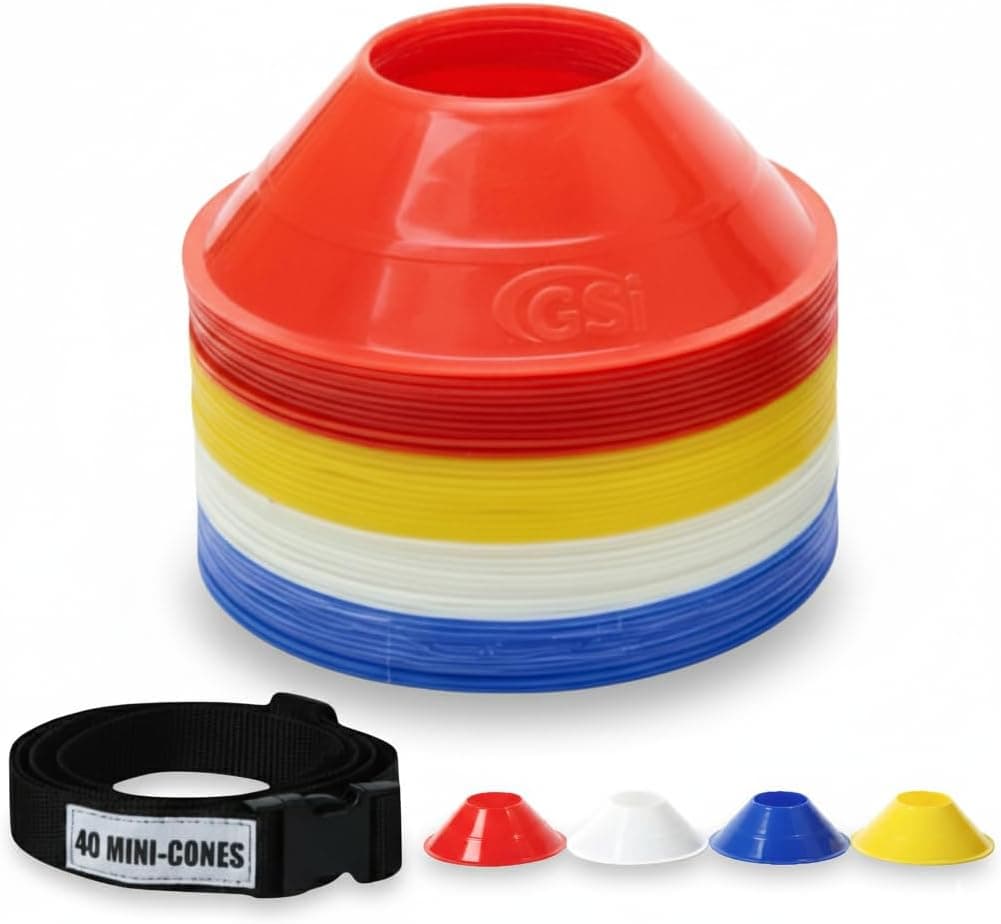
Disc Training Cones (Set of 40)
View on Amazon →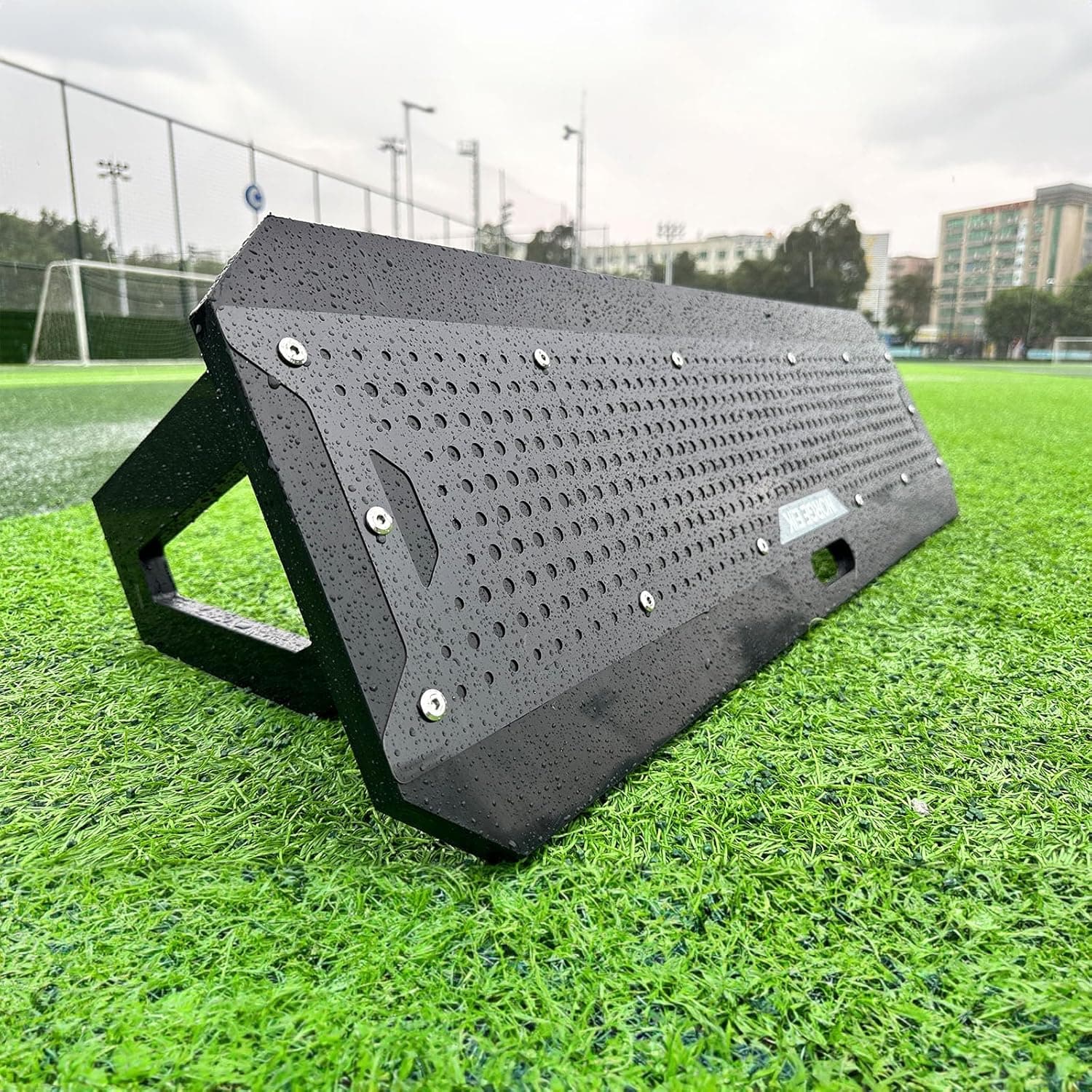
Soccer Rebounder
View on Amazon →As an Amazon Associate we earn from qualifying purchases, at no extra cost to you.