
Improving Weak Foot Training at Home
December 31, 2025
The One Skill That Changes Everything
If I could go back in time and tell younger-soccer-parent me one thing, it would be this: start weak foot training now. Not next month. Not next season. Now. Because the difference between a one-footed player and a two-footed player is the difference between a player with options and a player without them.
My son was ten when his coach told me, in the kindest possible way, that his left foot was "decorative." It was there, attached to his body, but it served no functional purpose on the soccer field. Every time the ball came to his left side, he'd adjust his body to use his right. He'd turn away from open space to avoid using his left. He'd pass backwards instead of forward because forward required his weak foot.
The coach was right. And addressing this weakness became our number one home training priority for the next six months. What happened during those six months fundamentally changed my son's game — and taught me lessons about skill development that apply far beyond the weak foot.
Why Weak Foot Matters More Than You Think
At young ages — U8, U10 — being one-footed isn't a huge disadvantage. The game is chaotic enough that players can usually get by with one strong foot. But as players move into U12 and beyond, the limitations of a weak foot become increasingly severe:
- Defenders exploit it. Smart defenders force one-footed players onto their weak side, knowing they'll be uncomfortable and predictable.
- Passing options shrink. A one-footed player can only comfortably pass in certain directions, limiting their contribution to team play.
- Dribbling becomes predictable. Without a functional weak foot, a player's dribbling patterns are readable and easier to defend.
- Shooting opportunities decrease. Chances that require a left-foot finish for a right-footed player (or vice versa) are wasted.
- Playing time may suffer. Coaches at competitive levels often prefer two-footed players because of their tactical flexibility.
The bottom line: a functional weak foot effectively doubles your child's capabilities on the field. It's the single biggest bang-for-your-buck improvement available to most young players.
The Neuroscience of Weak Foot Development
Here's why weak foot training can feel so frustrating: your child has spent years building thick myelin sheaths around the neural pathways for their dominant foot. Those pathways are like six-lane highways — fast, smooth, and automatic. The pathways for the weak foot, by comparison, are like unpaved dirt roads — slow, bumpy, and requiring conscious effort.
The good news? Those dirt roads can become highways too. The brain is plastic, and myelination responds to repetition regardless of which foot is doing the work. The weak foot simply needs the same volume of purposeful repetition that the strong foot has already received.
The bad news? It takes time and can feel discouraging. Your child will go through a period where their weak foot feels hopelessly clumsy. Things that are easy with the strong foot will be frustratingly difficult. This is completely normal and absolutely temporary.
The Six-Month Weak Foot Development Plan
Here's the plan that worked for us. It's structured in three two-month phases, each building on the previous one.
Phase 1: Foundation (Months 1-2)
The goal of Phase 1 is simply getting comfortable making contact with the ball using the weak foot. No pressure for accuracy or speed — just familiarity.
Daily weak foot touches (5 minutes):
- Toe taps with the weak foot (1 minute)
- Sole rolls forward and back with the weak foot (1 minute)
- Inside-of-foot passes against a wall, weak foot only (2 minutes)
- Gentle juggling attempts with the weak foot (1 minute) — catching between touches is fine
Additionally, during regular training sessions: Do the last 5 minutes of every session using only the weak foot. Whatever the drill — dribbling, passing, ball mastery — finish with the weak foot.
By the end of Phase 1, your child should be able to pass the ball against a wall with reasonable accuracy using their weak foot, even if it feels awkward. They should also be able to do basic ball mastery moves (sole rolls, toe taps) without constantly losing the ball.
Phase 2: Function (Months 3-4)
Phase 2 focuses on making the weak foot functional — able to perform common game actions with reasonable quality.
Dedicated weak foot sessions (15 minutes, three times per week):
- Wall passing: inside of foot, one-touch and two-touch (3 minutes)
- Dribbling through cones using only the weak foot (3 minutes)
- Receiving and turning with the weak foot (3 minutes)
- Dribbling moves with the weak foot: inside cut, outside cut, drag back (3 minutes)
- Juggling with the weak foot — building consecutive touches (3 minutes)
Integration drills (during regular sessions): Begin incorporating the weak foot into normal training. Alternate feet during ball mastery routines. Use the weak foot for every other wall pass. Dribble with the weak foot through one section of a cone course. The goal is to normalize using both feet rather than treating the weak foot as a separate project.
Programs on Anytime Soccer Training are particularly useful during this phase because many of their drills have built-in both-feet requirements. Following along with a structured program ensures your child is getting balanced development without having to think about it.
Phase 3: Confidence (Months 5-6)
Phase 3 is about building the confidence to use the weak foot in game situations. The skills are there — now they need to transfer from practice to competition.
Pressure drills (10 minutes, three times per week):
- Timed wall passing with the weak foot — how many clean passes in 60 seconds?
- Speed dribbling through cones with the weak foot — time each run
- Weak foot shooting: set up a target and practice hitting it from different angles
Game simulation: During pickup games, free play, or backyard sessions with friends/siblings, set a rule: the first touch must always be with the weak foot. Or: every third pass must be with the weak foot. These constraints force weak foot usage in game-like situations.
Mental rehearsal: Before games, have your child visualize themselves using their weak foot. "Picture yourself receiving a pass on your left side and playing a clean pass with your left foot." Visualization primes the brain to execute in real situations.
Practical Tips for the Journey
Make It a Game, Not a Punishment
Weak foot training should never feel like a penalty for having a weakness. Frame it positively: "We're going to give you a superpower that most players don't have." Set fun challenges: "Can you get your left-foot juggling record to half of your right-foot record?"
Celebrate Small Wins Relentlessly
Progress on the weak foot will be slower and harder to see than progress on the strong foot. That's why celebration matters even more. Every new juggling record with the weak foot, every clean wall pass, every game moment where the weak foot was used — make a big deal out of it.
Don't Abandon the Strong Foot
Weak foot development doesn't mean neglecting the dominant foot. Maintain regular training with both feet. The goal is to bring the weak foot up to a functional level, not to make both feet equally strong (that's unrealistic for most players).
Be Patient
Weak foot development takes months, not weeks. There will be plateaus and frustrations. Your child will have sessions where their weak foot feels worse than the week before. This is normal. Stay the course. The improvement is happening even when it doesn't feel like it.
Our Results
After six months of dedicated weak foot work, my son's left foot wasn't as good as his right — and it still isn't today. But it's functional. He can pass accurately with it. He can receive on his left side and play forward. He can dribble with it when the situation demands it. He even scored a goal with his left foot last season — and the look on his face was priceless.
More importantly, the weak foot work gave him confidence and freedom on the field. He stopped avoiding his left side. He stopped turning away from opportunities. He started playing with his head up because he no longer needed to constantly position the ball onto his right foot.
His coach noticed. His teammates noticed. And most importantly, he noticed. "Dad, I'm not scared of my left foot anymore," he told me one evening after practice. That sentence was worth every minute of those six months.
Start the weak foot journey today. Set up some simple wall-passing drills, pull up a balanced program on Anytime Soccer Training, and commit to five minutes of weak foot work per session. It's a small investment with an enormous payoff. Six months from now, your child will thank you.
Gear we use for this
The kit our own players train with at home.
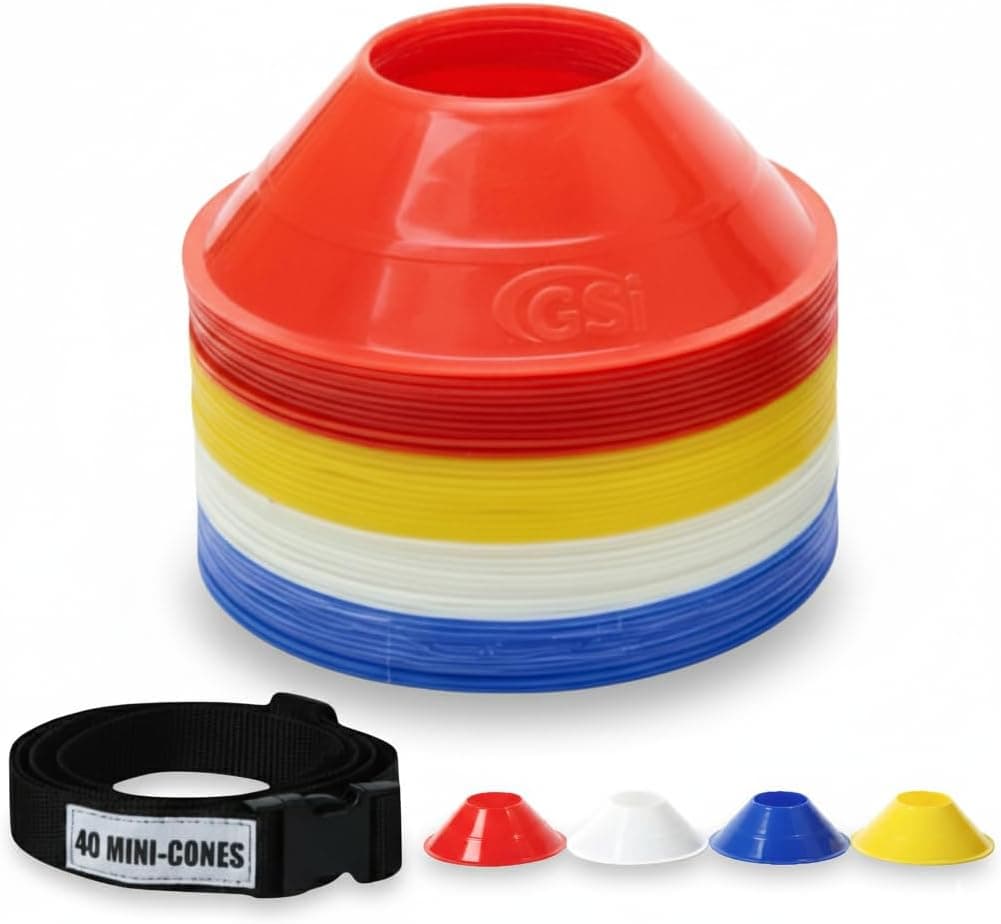
Disc Training Cones (Set of 40)
View on Amazon →
Adidas MLS Training Soccer Ball
View on Amazon →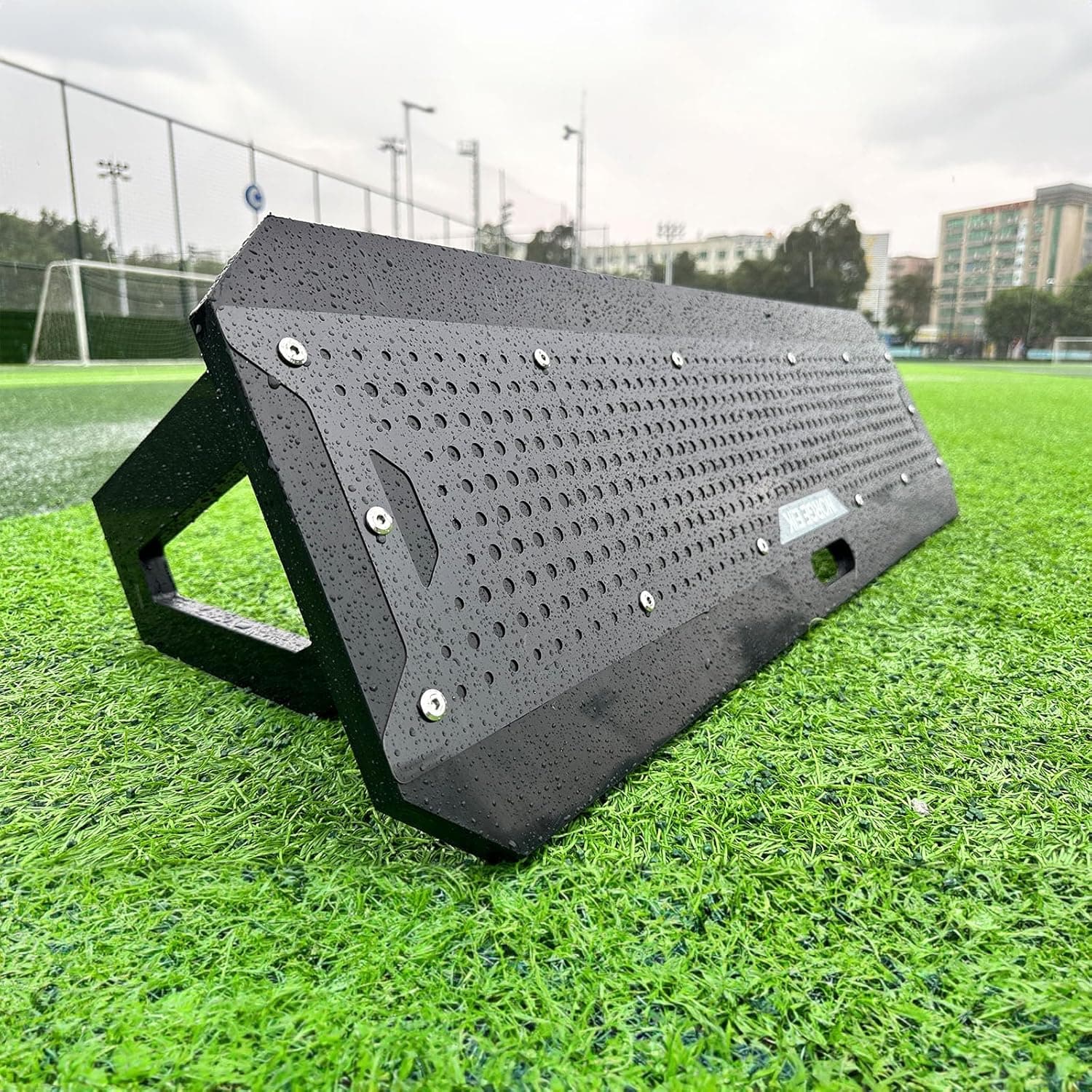
Soccer Rebounder
View on Amazon →As an Amazon Associate we earn from qualifying purchases, at no extra cost to you.