
How to Train for Soccer at Home on a Budget
February 28, 2026
How to Train for Soccer at Home on a Budget
The youth soccer industry has a spending problem. Between club fees, tournament travel, private training, camps, and equipment, families routinely spend thousands of dollars per year on their child's soccer development. And while some of that spending is necessary and worthwhile, there's a pervasive myth that quality development requires a big budget. It doesn't.
The best soccer players in history developed their skills in streets, alleys, and backyards with nothing more than a ball and open space. Messi didn't have a $200 rebounder. Marta didn't have an agility ladder. Ronaldinho's training ground was a dirt lot in a favela. The fundamental truth of soccer development hasn't changed: a ball, a surface, and consistent practice are all you need.
This article is for families who want to develop their child's soccer skills at home without breaking the bank. Every recommendation here is either free or very low-cost, and the training approach is the same one used by the best development programs in the world.
The Free Equipment: What You Already Have
Before you spend a single dollar, take inventory of what's already available:
- A wall. The side of your house, a garage wall, a school building, a retaining wall — any flat, solid surface becomes a world-class training partner. A wall returns the ball at exactly the speed and angle you send it, never gets tired, and is always available. Wall passing is how countless professional players developed their first touch and passing accuracy. Cost: $0.
- A driveway or sidewalk. Hard surfaces are actually excellent for developing ball control because the ball moves faster and less predictably than on grass, which forces quicker reactions and softer touches. Cost: $0.
- Household items as cones. Water bottles, shoes, rocks, sticks, tin cans — anything that marks a point on the ground can serve as a cone for dribbling courses. My kids set up some of their best cone courses using empty water bottles from the recycling bin. Cost: $0.
- A hallway. Your hallway is a perfect dribbling lane. The narrow width forces close control, and the hard surface develops quick feet. Cost: $0.
- Stairs. For toe taps and foot speed drills, a single stair step works perfectly. Tap alternating feet on the step as quickly as possible. Cost: $0.
The Minimal Spend: What's Worth Buying
If you have a small budget for training equipment, here's where to spend it for maximum impact:
1. A Proper Soccer Ball: $15-$30
This is the one essential purchase. A properly sized, properly inflated soccer ball is non-negotiable for quality training. But you don't need an expensive match ball — a basic training ball works just as well for home training purposes.
Budget tip: Check Facebook Marketplace, Goodwill, or local sports consignment shops. Used soccer balls in good condition are often available for $5-$10. Make sure it holds air and is the right size for your child (Size 3 for under 8, Size 4 for 8-12, Size 5 for 13+).
Budget tip #2: A $3 ball pump and needle from any sporting goods store or Amazon will keep your ball properly inflated. A flat ball is the enemy of good training.
2. A Structured Training Program: Affordable Investment
Having a ball and space is necessary but not sufficient. Without structure, home training tends to devolve into random kicking around, which is fun but not developmentally efficient. A structured program like Anytime Soccer Training provides the expert instruction, age-appropriate progressions, and session variety that turn backyard time into real development time.
Consider the cost compared to alternatives: private training runs $50-$100 per session. A single week of soccer camp costs $200-$500. A year of structured at-home training through a platform costs a fraction of a single month of private coaching. And your child can use it every day, not just once a week. Dollar for dollar, it's the highest-impact investment in your child's soccer development.
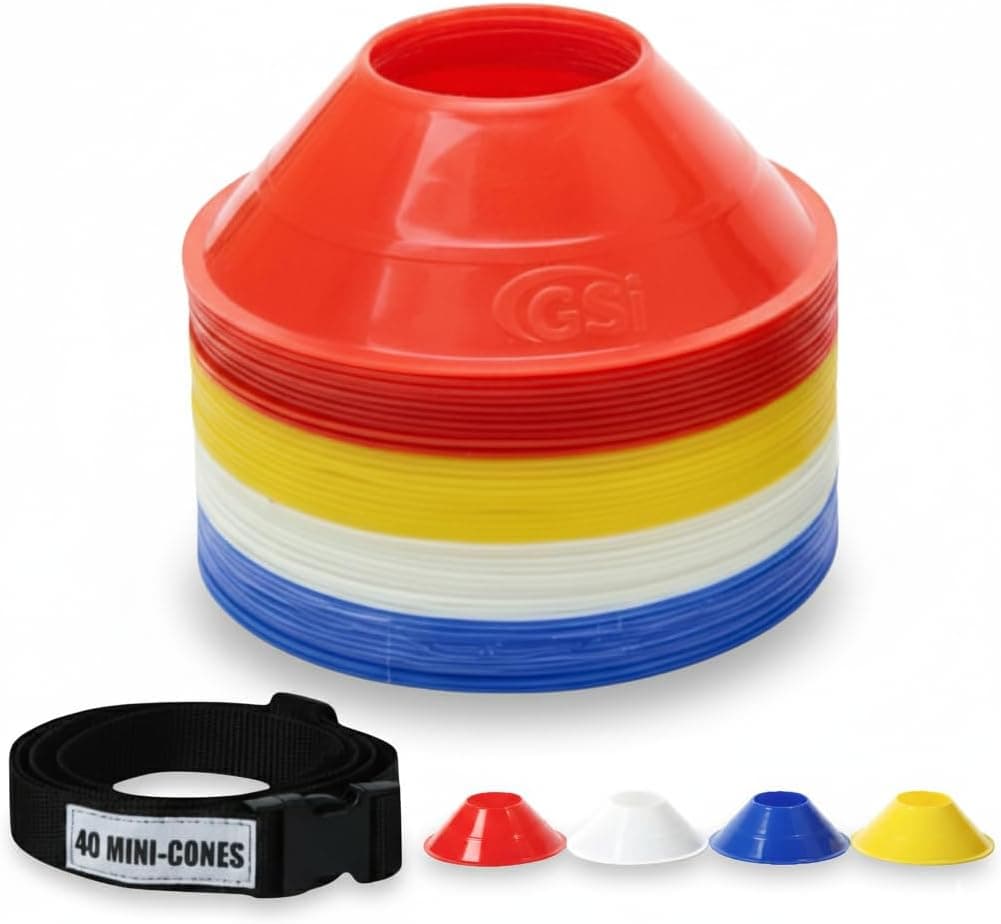
3. Flat Disc Cones: $8-$12
If you want to step up from household items, a set of 50 flat disc cones costs about $10 and will last for years. They're lightweight, easy to store, and versatile enough for any drill imaginable. But remember — this is an upgrade, not a necessity. Water bottles work just fine.
That's the Full List
A ball, a training program, and optionally some cones. Total cost: well under the price of a single private training session. Everything else is optional and can be added later if budget allows.
Free Training Activities That Develop Elite Skills
Here are specific, no-cost training activities your child can do at home:
Wall Work (15 minutes)
This is the single most valuable free training tool available. Your garage wall or the side of your house is all you need.
- Inside foot passing: Alternate feet, focus on clean first touch. (5 min)
- One-touch passing: Pass and receive without an extra touch. Develops quick decision-making. (3 min)
- Receiving and turning: Pass to wall, receive at 45-degree angle, simulating a game turn. (3 min)
- Volleys: Toss ball against wall, volley it back. Develops aerial technique. (2 min)
- Weak foot only: All of the above, but exclusively with the non-dominant foot. (2 min)
Living Room Ball Mastery (10 minutes)
No space? No problem. These can be done standing in a 3-foot square:
- Toe taps (2 min)
- Sole rolls — forward, backward, side to side (2 min)
- Inside-outside touches (2 min)
- The box — moving ball in a square with both feet (2 min)
- Freestyle — combine any moves creatively (2 min)
Driveway Dribbling (10 minutes)
- Set up household items as cones in a line. Dribble through, turn, come back. (3 min)
- Figure-8 dribbling around two objects. (2 min)
- Dribble from one end of the driveway to the other, incorporating a move at each end (inside cut, outside cut, pull-back). (3 min)
- Speed dribbling — how fast can you dribble the length of the driveway with control? Time yourself. (2 min)
Juggling (5-10 minutes)
The ultimate no-cost, no-space, no-equipment-besides-a-ball activity. Juggling develops touch, coordination, and concentration. Track your record and try to beat it daily. This can be done literally anywhere — your bedroom, backyard, a parking lot, a park.
1v1 With a Family Member (10-15 minutes)
Recruit a parent, sibling, or friend for the most developmentally rich activity in soccer. Mark two small goals with shoes or water bottles. Play to five goals and switch. This develops attacking, defending, decision-making, and competitive mentality — all for free.
The Budget Weekly Training Plan
Here's a complete weekly training plan that costs essentially nothing beyond a ball and an Anytime Soccer Training subscription:
- Monday: Living room ball mastery (10 min) + Anytime Soccer Training session (10-15 min)
- Tuesday: Wall work — passing and first touch (15 min)
- Wednesday: Rest day or light juggling
- Thursday: Driveway dribbling with household items as cones (10 min) + wall work (5 min)
- Friday: Anytime Soccer Training session (10-15 min) + juggling challenge (5 min)
- Saturday: Game day or 1v1 with family member (15-20 min)
- Sunday: Rest day
Total training time: approximately 75-90 minutes per week. Equipment cost: a ball and a training subscription. That's it.
Why Budget Training Can Be Better Than Expensive Training
Here's the counterintuitive truth: budget home training often produces better results than expensive alternatives. Why?
- Frequency trumps intensity. A child who trains for 15 minutes a day, six days a week, gets more developmental benefit than a child who does one hour-long private session per week. Daily repetition builds neural pathways more effectively than weekly sessions, regardless of how high-quality the weekly session is.
- Constraint breeds creativity. Small spaces, limited equipment, and improvised setups force players to be creative — which is exactly the quality that separates good players from great ones. The best technical players in history developed in constrained environments.
- Consistency is easier when the barrier is low. If training requires driving 20 minutes to a facility, paying $80, and scheduling around a trainer's availability, it won't happen five days a week. If training requires walking to the garage, pressing play on a video, and spending 15 minutes with a ball, it will.
A Message to Families on Tight Budgets
If you're reading this because money is tight and you're worried your child can't get quality development, I want you to hear this clearly: your child can absolutely develop into an excellent soccer player without spending a fortune. The essential ingredients for development are a ball, consistent practice, and some form of structured guidance. All of those are available at a fraction of the cost of club soccer, private training, and expensive camps.
Don't let the youth soccer industry's spending culture make you feel inadequate. Some of the most improved players I've seen are kids whose families couldn't afford expensive programs but committed to daily home training with a ball, a wall, and a structured platform like Anytime Soccer Training. Their improvement often outpaces kids in expensive programs because they're doing the one thing that matters most: touching the ball every single day.
Soccer was born as a game of the people — played in streets, on dirt lots, with makeshift balls and improvised goals. The most beautiful and effective development still happens that way. A child, a ball, a small space, and the daily habit of practice. Everything else is optional. Start with what you have, be consistent, and watch your child grow.
Gear we use for this
The kit our own players train with at home.
Disc Training Cones (Set of 40)
View on Amazon →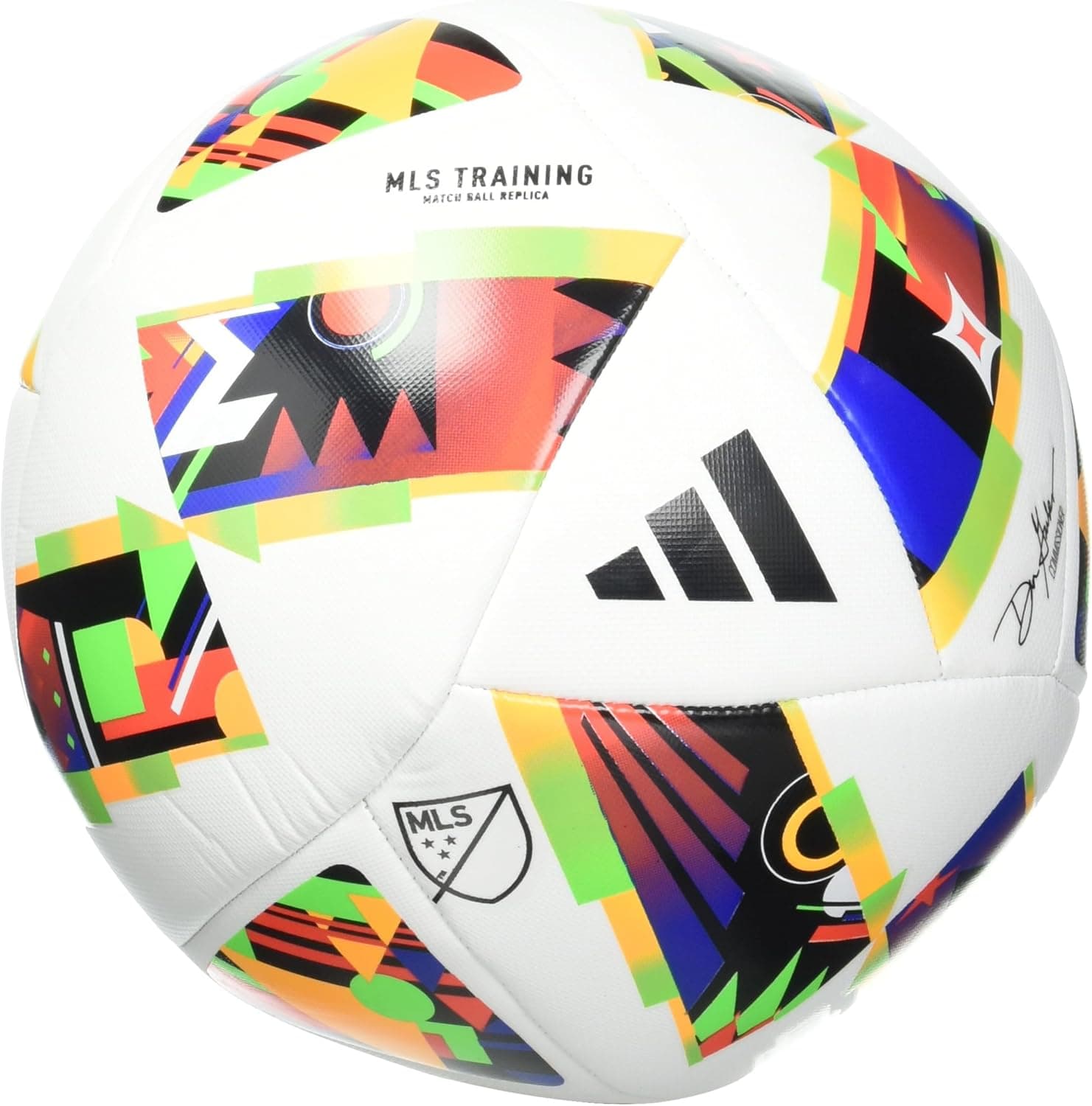
Adidas MLS Training Soccer Ball
View on Amazon →
Soccer Rebounder
View on Amazon →As an Amazon Associate we earn from qualifying purchases, at no extra cost to you.