
How to Track Your Child's Soccer Progress at Home
January 16, 2026
What Gets Measured Gets Improved
For the first year of my son's home training, we flew blind. He'd go outside, work on drills, come inside, and we'd both have a vague sense that he was "getting better." But getting better how? How much better? At what? Compared to when? We had no idea.
Then we started tracking. Nothing fancy — a notebook, a timer, and a few simple metrics. The impact was immediate and profound. Suddenly, we could see progress in black and white. My son could point to concrete evidence that his work was paying off. And when progress stalled, we could identify which areas needed more attention.
Tracking your child's soccer progress at home is one of the simplest, most impactful things you can do to support their development. Here's how to do it effectively without turning it into a bureaucratic nightmare.
Why Tracking Matters for Young Players
Motivation Through Visible Progress
For adults, the intrinsic satisfaction of improvement is often enough motivation to keep training. For kids, it's usually not. They need to see the improvement. They need concrete evidence that their effort is producing results. A juggling record that goes from 23 to 47 to 89 over the course of two months is powerful, visual proof that practice works.
Direction for Training Focus
Without tracking, you're guessing about what needs improvement. With tracking, the data tells you. If your child's juggling is improving steadily but their weak-foot wall passes have plateaued, you know where to redirect energy.
Building the Habit Loop
Behavioral science tells us that habits are formed through a loop: cue, routine, reward. Tracking provides the reward. The satisfaction of recording a new personal best, or simply checking off another completed session, reinforces the training habit and makes the next session more likely to happen.
The Metrics That Matter
You don't need to track everything. In fact, tracking too many things becomes overwhelming and counterproductive. I recommend selecting three to five metrics that collectively cover the main areas of technical development. Here are the ones we use:
1. Juggling Record
Why: Juggling is the purest measure of ball control and foot-eye coordination. It's easy to measure, impossible to fake, and has a clear numerical progression.
How: At the end of each training session, your child attempts to beat their personal best. Record the highest number achieved. Track both dominant foot (overall) and weak foot (separate record).
What to expect: Progress is usually fast at first (especially for beginners), then slows as the numbers get higher. A typical progression might look like: Week 1: 15 → Week 4: 40 → Week 8: 75 → Week 12: 120. Plateaus are normal and temporary.
2. Wall Pass Speed (60-Second Count)
Why: This measures first touch quality, passing accuracy, and processing speed — all critical game skills.
How: Stand 5-6 feet from a wall. Count how many clean two-touch wall passes (pass, control, pass) you can complete in 60 seconds. A "clean" pass means the ball doesn't get away from you. Track right foot and left foot separately.
What to expect: Beginners might start at 20-25. After a few months of regular wall work, 40-50 is achievable. Advanced players can hit 60+.
3. Cone Course Time
Why: This measures dribbling speed, close control, and agility — the ability to move with the ball quickly in tight spaces.
How: Set up a simple cone course (we use six cones in a straight line, three feet apart). Time how long it takes to dribble through the course using inside-outside touches. Use the same course every time so the data is comparable.
What to expect: Times will vary based on the course design. Track personal bests and look for gradual improvement over weeks and months.
4. Weak Foot Accuracy (Out of 10)
Why: Specifically tracks weak foot development, which is a priority for most young players.
How: Set up a target on the wall (a cone, a piece of tape, or a drawn circle). From a set distance (we use 8 feet), attempt 10 passes with the weak foot. Count how many hit the target. Track weekly.
What to expect: Many kids start at 2-3 out of 10. With consistent weak foot work, improvement to 6-7 out of 10 is typical within three to four months.
5. Session Streak
Why: This tracks the most important metric of all — consistency. How many consecutive days has your child trained?
How: Use a visible calendar (wall calendar, whiteboard, or fridge chart). Mark every day your child completes a training session. Count the streak.
What to expect: Building a streak creates powerful momentum. Kids become protective of their streak and reluctant to break it. Our longest streak was 87 consecutive days.
The Tracking Tools
Keep it simple. Complex systems don't survive contact with busy family life. Here are the tools we use:
The Training Notebook
A simple spiral notebook kept near the training area. After each session, my son spends 30 seconds writing:
- Date
- What he worked on (just a few words: "ball mastery + wall work")
- Any personal bests achieved
- How he felt (optional but useful: "felt great" or "tough day")
That's it. No paragraphs. No analysis. Just quick data capture that takes less than a minute.
The Wall Chart
A piece of poster board on the garage wall that tracks the "big" metrics:
- Current juggling record (both feet)
- Current wall pass record (60 seconds, each foot)
- Current cone course best time
- Current weak foot accuracy score
- Current session streak
When a record is broken, we update the chart with a new number and the date. Seeing the numbers go up over time is incredibly motivating.
The Training Calendar
A wall calendar near the back door. Each day my son trains, he puts a star sticker on that date. The visual impact of a month full of stars is surprisingly powerful. He refers to it constantly and takes genuine pride in the consistency it represents.
The Monthly Review
Once a month, we sit down together for a brief progress review. This takes about 10 minutes and includes:
- Celebrating improvements: Compare this month's metrics to last month's. Every improvement, no matter how small, gets acknowledged.
- Identifying focus areas: If one metric has plateaued while others are improving, we discuss adjusting the training focus.
- Setting next month's goal: Based on current numbers, set a realistic target for the coming month. "Let's try to get the juggling record above 150" or "Let's focus on getting the weak foot accuracy to 5 out of 10."
The monthly review is a positive, forward-looking conversation. It's not an evaluation or a performance review. It's a celebration of effort and a collaborative planning session.
Using Technology Wisely
There are various apps and platforms that can assist with progress tracking. Anytime Soccer Training has built-in progress tracking within its programs, so your child can see how many sessions they've completed and how they've progressed through the curriculum. This automated tracking supplements the manual metrics nicely.
For video tracking, occasionally recording your child performing a drill and saving it can provide qualitative evidence of improvement that numbers alone don't capture. Watch a video from three months ago next to a current one and the visual improvement is often striking. Just be careful not to turn every session into a video production — a few recordings per month is plenty.
Common Tracking Mistakes to Avoid
Tracking Too Many Things
If you try to measure 15 different metrics, tracking becomes a chore and nothing gets tracked consistently. Stick to three to five key metrics. You can always swap one out if your focus changes.
Making Tracking the Focus
The training itself should be the focus, not the tracking. If your child spends more time recording data than actually training, something's wrong. Keep tracking to less than two minutes per session.
Comparing to Other Kids
Your child's metrics should only be compared to their own previous metrics. Never compare to teammates, opponents, or "standard" benchmarks you found online. The only comparison that matters is your child today vs. your child last month.
Reacting Negatively to Plateaus
Numbers don't always go up. Plateaus are a normal part of skill development. When metrics flatten, don't panic and don't express disappointment. Instead, acknowledge the plateau as a sign that the brain is consolidating skills and that a breakthrough is likely around the corner.
Over-Emphasizing Results Over Effort
Always celebrate the effort (completing sessions, maintaining streaks) more than the results (breaking records, hitting targets). A child who trained five days this week without breaking any records deserves more praise than a child who broke a record but only trained twice.
The Power of Looking Back
One of the most powerful moments in my son's soccer journey happened when we looked back through his training notebook after a full year. We saw the progression laid out in black and white: juggling from 18 to 230. Wall passes from 22 to 51 per minute. Weak foot accuracy from 1/10 to 6/10. Session streak from shaky and inconsistent to an unbroken chain of daily training.
My son sat there reading through the entries with a look of genuine pride on his face. "I actually got really good," he said quietly. And he was right. The evidence was right there in his own handwriting.
That moment — that concrete, undeniable proof of what consistent effort produces — was worth more than any trophy, any team placement, any coach's compliment. It was self-generated evidence of the growth mindset in action. And it all came from a $2 spiral notebook and a commitment to writing down a few numbers each day.
Start tracking today. Keep it simple. Be consistent. And let the numbers tell the story of your child's incredible journey.
Gear we use for this
The kit our own players train with at home.
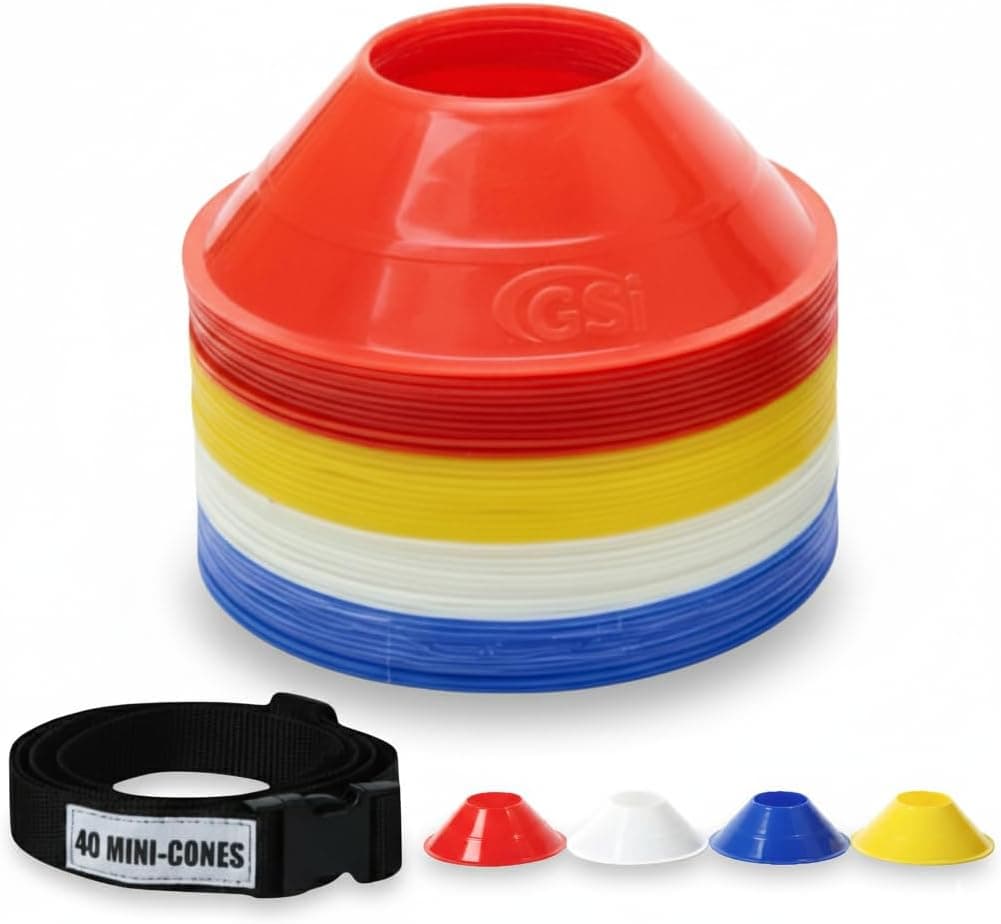
Disc Training Cones (Set of 40)
View on Amazon →
Adidas MLS Training Soccer Ball
View on Amazon →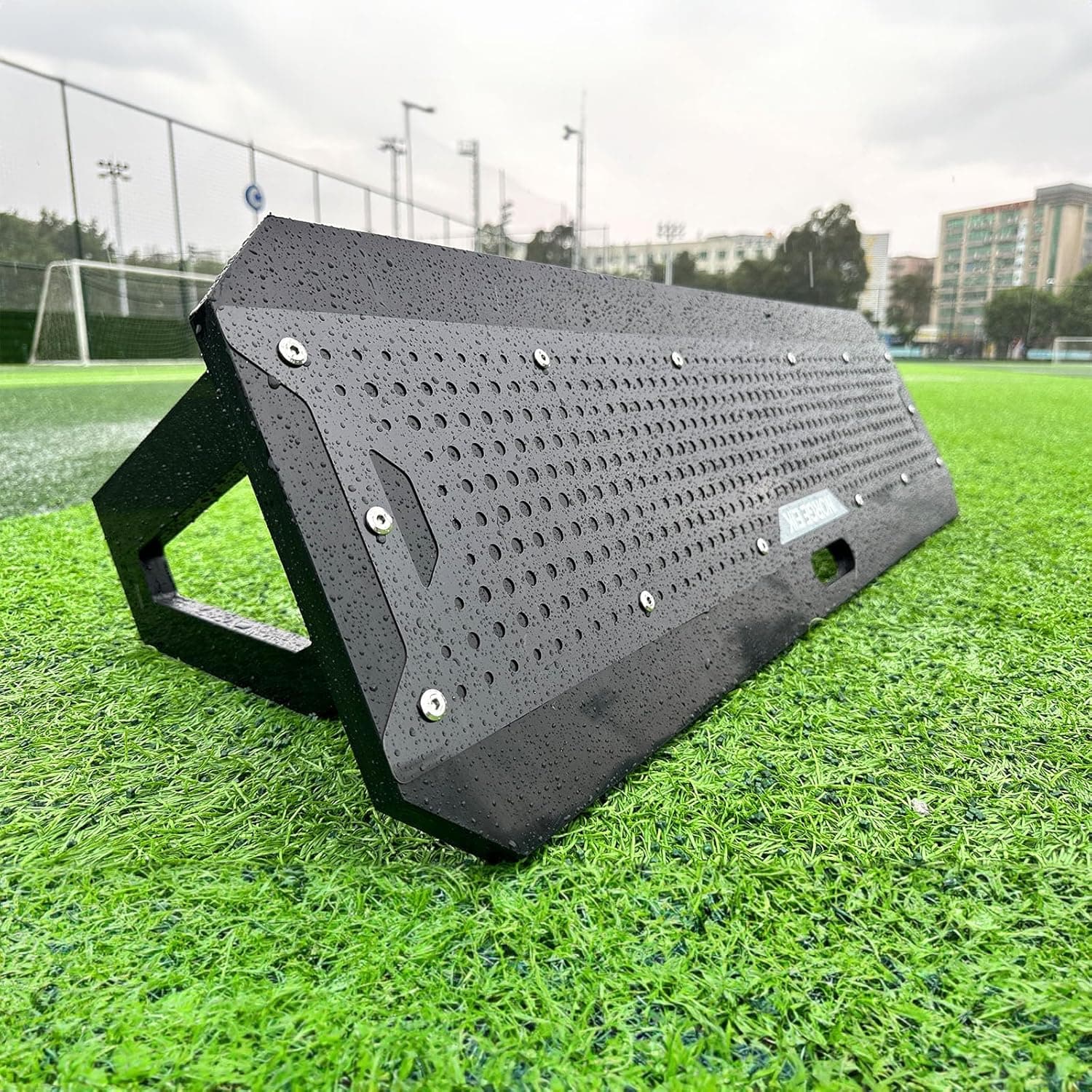
Soccer Rebounder
View on Amazon →As an Amazon Associate we earn from qualifying purchases, at no extra cost to you.