
How to Tell If Your Child's Club Is Actually Developing Them
February 28, 2026
How to Tell If Your Child's Club Is Actually Developing Them
You're paying thousands of dollars a year for club soccer. You're driving to practices three times a week and spending weekends at games and tournaments. You've bought into the promise that competitive club soccer will develop your child into a better player. But is it actually working?
This is a question that every club soccer parent should ask regularly but few actually do. We assume that because we're in a club program — with licensed coaches, competitive games, and a professional-looking website — development is happening. Sometimes it is. Sometimes it isn't. And knowing the difference can save you years of wasted time and money.
Here's an honest evaluation framework to determine whether your child's club is actually developing them.
The Six Signs of Real Development
Sign 1: Your Child's Technical Skills Are Measurably Improving
This is the most fundamental indicator. Over the course of a season, your child should be demonstrably better at core technical skills: first touch, passing, dribbling, and shooting.
How to evaluate: Think about your child's technical ability at the start of the season versus now. Can they control the ball more cleanly? Are they using both feet? Do they have new moves they didn't have before? Is their passing more accurate? If you recorded a game from September and compared it to one in March, would you see clear improvement?
Red flag: If your child has been with a club for a full year and you can't identify specific technical improvements, something is wrong. Either the coaching isn't prioritizing individual development, or the training methodology isn't effective.
Sign 2: Practice Has a Clear Structure and Purpose
Good development programs run practices with clear objectives, progressive skill building, and age-appropriate activities. Watch a practice session and evaluate:
- Does the warm-up include ball work (not just running laps)?
- Are drills progressive — building from simple to complex?
- Does each drill have a clear purpose that's communicated to the players?
- Is there a balance between technical work, tactical work, and game play?
- Do players get lots of touches on the ball, or are they standing in lines waiting for turns?
Red flag: Practices that consist primarily of scrimmaging with minimal structured skill development. While scrimmages are fun and have their place, a team that only scrimmages is not systematically developing individual skills. Players get better at playing the game at their current level without necessarily improving their technical toolkit.
Sign 3: The Coach Provides Individual Feedback
In a genuine development environment, coaches know each player's strengths and weaknesses and provide personalized feedback. Your child should be able to tell you what they're working on individually, not just what the team is practicing.
How to evaluate: Ask your child: "What did Coach say you need to work on?" If they can give you a specific answer ("My coach says I need to use my left foot more" or "I'm working on receiving on the half-turn"), the coach is providing individual development guidance. If they can't, the coaching may be team-focused without attention to individual growth.
Red flag: A coach who never communicates with parents about their child's development, never provides specific feedback to players, or gives the same generic advice to everyone.
Sign 4: Playing Time Is Balanced (At Younger Ages)
For players under 12, development should be prioritized over winning. This means relatively balanced playing time so all players are getting meaningful game experience. Development happens on the field, not on the bench.
How to evaluate: Track playing time roughly over several games. Are all players getting substantial time on the field? Are players being exposed to different positions to develop their understanding of the game? Or is the coach playing the "best" eleven for most of every game and giving bench players scraps at the end?
Red flag: A club that emphasizes winning at the U10 or U11 level at the expense of player development. This often manifests as the same five or six kids playing the majority of every game while the rest watch. At young ages, this is a clear sign that the club prioritizes results over development.
Sign 5: The Club Supports Multi-Sport Participation
Research overwhelmingly supports multi-sport participation for children under 12. A development-focused club should encourage, or at minimum not penalize, players who participate in other sports.
How to evaluate: What happens when your child misses a soccer practice for a basketball game or swim meet? Does the coach shrug it off? Or does the child face consequences — reduced playing time, pressure to choose, or passive-aggressive comments?
Red flag: A club that requires year-round commitment and punishes players for participating in other sports. This signals a club that prioritizes its own program over the holistic development of the child.
Sign 6: Your Child Loves Coming to Practice
The most important indicator of a good development environment is also the simplest: does your child enjoy it? A child who loves practice is a child who is in an environment where learning is happening, relationships are positive, and the experience is rewarding.
How to evaluate: Does your child talk positively about practice? Do they look forward to going? Do they come home energized or drained? Are they having fun while also being challenged?
Red flag: A child who consistently dreads practice, comes home deflated, or says they don't enjoy the team. While occasional bad days are normal, a persistent pattern of negative feelings suggests the environment isn't right.
The Four Red Flags That Should Make You Consider Leaving
Beyond the evaluation framework above, here are four serious red flags that warrant immediate action:
- The coach publicly humiliates players. Yelling at kids for mistakes, singling them out for criticism in front of teammates, or using humiliation as a motivational tool. This is never acceptable, regardless of the competitive level.
- The club is focused on winning, not developing. At the youth level (under 14), the primary objective should be player development. If the club's marketing emphasizes tournament trophies and league championships over player growth, their priorities are wrong.
- The coaching staff doesn't hold relevant qualifications. Coaches should have at minimum a grassroots coaching license from US Soccer or their country's federation. If your child's coach has no formal soccer coaching education, they may lack the knowledge to develop players effectively.
- Fees increase without transparency. If you're paying $3,000+ per year and the club can't clearly explain where the money goes and what your child receives in return, that's a business-first approach that may not prioritize development.
What to Do If Your Club Isn't Developing Your Child
If your evaluation reveals that your child's club isn't delivering genuine development, you have several options:
- Communicate with the coaching staff. Share your observations and ask what the development plan is for your child. A good coach will welcome the conversation. A defensive coach is another red flag.
- Supplement with home training. Regardless of the quality of your club, home training with a platform like Anytime Soccer Training ensures your child is getting individual skill development that team practice may not provide. This is the most impactful action you can take, whether your club is excellent or mediocre.
- Explore other clubs. If the issues are fundamental (coaching quality, club philosophy, player treatment), consider other options. Talk to families at other clubs, attend trial sessions, and evaluate the coaching staff before committing.
- Consider stepping down a level. Sometimes a child develops better on a lower-level team where they get more playing time, more touches, and more confidence than on a top team where they sit on the bench. Development happens through playing, not watching.
- Take a club break. It's okay to step out of club soccer for a season and play rec while focusing on home training. Sometimes a break from the intensity of club soccer reignites a child's love for the game and allows them to return with renewed enthusiasm.
The Home Training Equalizer
Here's the most empowering truth about youth soccer development: the most impactful development doesn't happen at the club level — it happens at home. The players who improve the most are those who supplement their team training with daily individual skill work. This is true regardless of whether the club is excellent, average, or poor.
A child on a mediocre club team who trains at home for 15 minutes a day using Anytime Soccer Training will likely develop faster than a child on an elite club team who only trains during team sessions. The daily individual repetitions — ball mastery, first touch, dribbling, weak foot — are what build the technical foundation that team practice can't provide in sufficient quantity.
This means you have more control over your child's development than you might think. Club quality matters, but it matters less than consistent, structured home training. Evaluate your club honestly, address any issues you find, and pair whatever team environment your child is in with the daily home training that truly drives individual improvement.
Your child's development is too important to leave entirely in someone else's hands. Take ownership of it, supplement it with the right tools, and ensure that every season produces real, measurable growth.
Gear we use for this
The kit our own players train with at home.

Adidas MLS Training Soccer Ball
View on Amazon →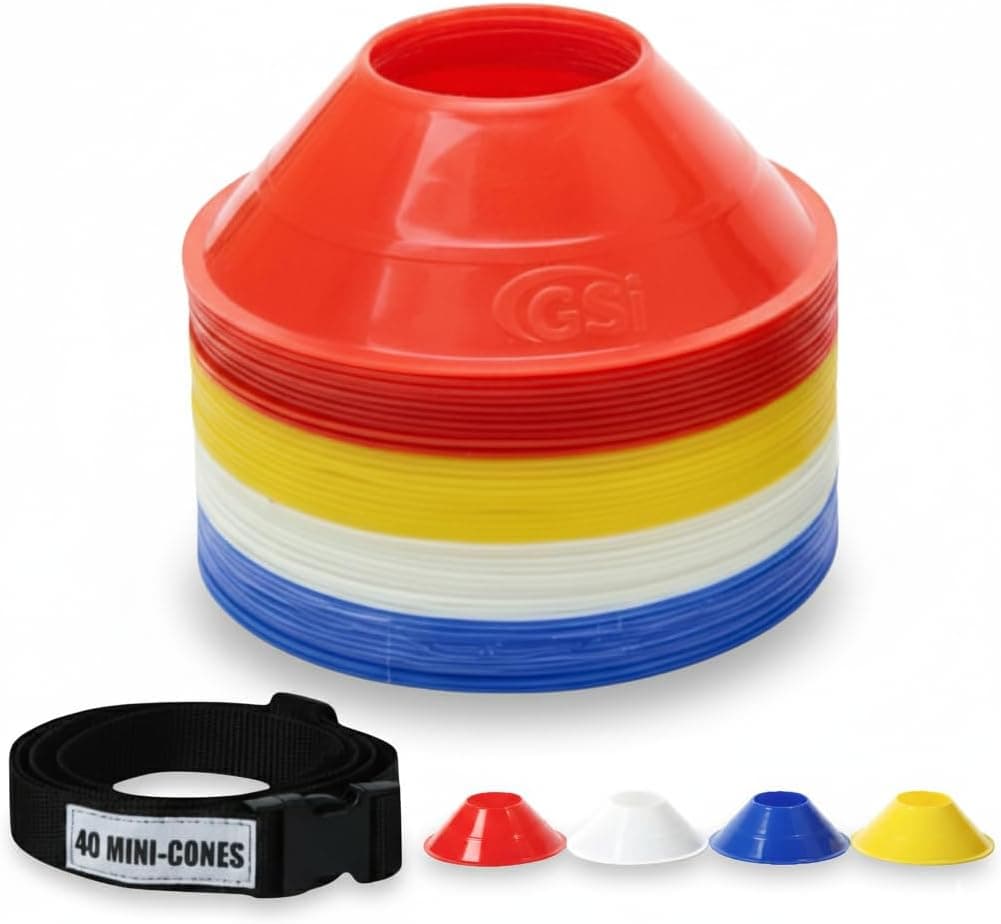
Disc Training Cones (Set of 40)
View on Amazon →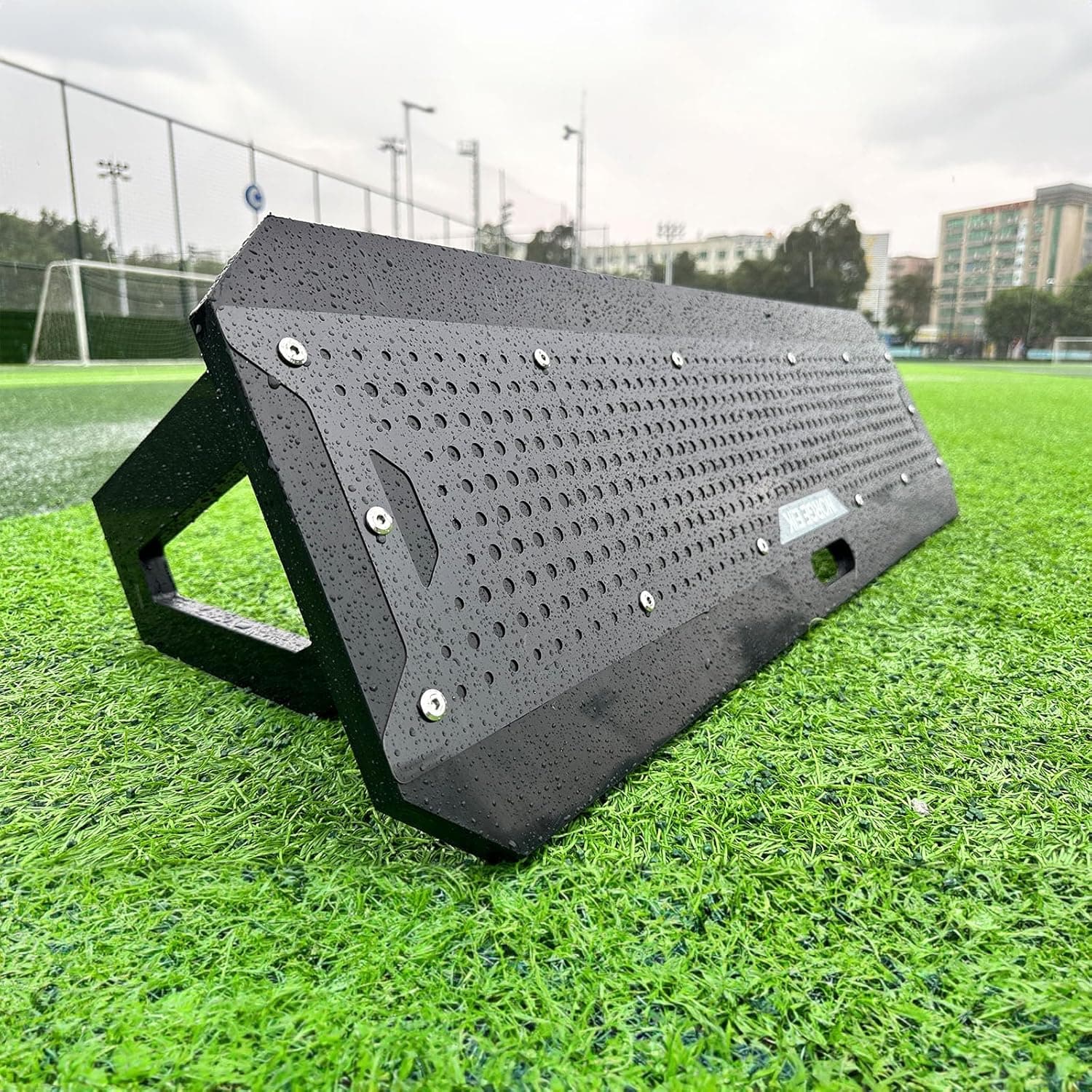
Soccer Rebounder
View on Amazon →As an Amazon Associate we earn from qualifying purchases, at no extra cost to you.