
How to Build Soccer Confidence Through Repetition
March 23, 2026
How to Build Soccer Confidence Through Repetition
Confidence is the invisible skill that makes all the other skills work. A technically gifted player who lacks confidence will hesitate, play safe, and never reach their potential. A moderately skilled player who is brimming with confidence will take risks, attempt creative plays, and often outperform more talented but less confident peers. Confidence changes everything in soccer.
But here is the thing most parents and coaches get wrong about confidence: you cannot just tell a child to be confident. Confidence is not a switch you can flip with a motivational speech. It is built through a very specific process, and that process is repetition.
The Confidence-Competence Loop
True athletic confidence comes from genuine competence. When a player has practiced a skill thousands of times and knows, deep in their bones, that they can execute it under pressure, they feel confident. This is not false bravado or empty self-belief. It is earned confidence, and it is the most powerful kind.
The process works like this:
- Step 1: Practice the skill through repetition. Your child performs a skill over and over, building the neural pathways and muscle memory required for consistent execution.
- Step 2: Competence develops. After enough repetitions, the skill becomes reliable. Your child can perform it consistently in training without thinking about it.
- Step 3: Confidence emerges. Because your child knows they can execute the skill, they feel confident attempting it in game situations. They are not guessing or hoping; they are executing something they have proven they can do.
- Step 4: Success reinforces confidence. When the skill works in a game, the positive outcome reinforces both the competence and the confidence, creating a virtuous cycle that drives further development.
This is the confidence-competence loop, and it is the formula for building unshakeable confidence in young soccer players. The entry point to this loop is always the same: repetition in training.
Why Repetition Works at a Neurological Level
The science behind why repetition builds confidence is fascinating. When your child practices a skill, the neurons involved in that movement fire together repeatedly. Over time, the brain coats these neural pathways with myelin, a substance that insulates the pathway and makes signal transmission faster and more reliable.
The more repetitions, the more myelin, and the more automatic and reliable the skill becomes. When a skill is fully myelinated, it can be performed without conscious thought, even under the stress and pressure of a game situation. This automaticity is what creates confidence because the player does not have to worry about whether they can execute the skill. Their brain and body have already proven it thousands of times in practice.
This is also why game-day nerves can derail players who have not done enough repetitions. Under pressure, the brain shifts to a heightened state where conscious thought takes over from automatic processing. If a skill is not sufficiently myelinated, this shift from automatic to conscious processing causes the skill to break down. The player is suddenly thinking about how to do something they should be able to do on autopilot, and the result is hesitation, mistakes, and lost confidence.
Sufficient repetition prevents this breakdown because the skill is so deeply encoded that even under pressure, the automatic processing takes over. The player does not have to think about the skill; their body just does it. And that is the definition of confidence.
How Many Repetitions Does It Take?
There is no exact number of repetitions required to develop confidence in a specific skill, because it varies based on the complexity of the skill, the individual player, and the quality of practice. However, research on motor learning provides some useful guidelines.
Studies suggest that it takes approximately three hundred to five hundred quality repetitions to develop basic proficiency in a new motor skill. To achieve the level of automaticity where the skill can be performed reliably under pressure requires somewhere in the range of three thousand to five thousand repetitions.
Let us put that in practical terms. If your child does fifty first-touch repetitions per day (which takes about five minutes using a wall or rebounder), they would reach basic proficiency in six to ten days and game-day automaticity in sixty to one hundred days. That is two to three months of daily five-minute practice to develop a skill that can be executed confidently under game pressure.
These numbers are approximate, but they illustrate an important point: the repetitions needed for confidence are absolutely achievable through consistent daily home training. You do not need to practice for hours. You need to practice for minutes, every day, over weeks and months.
The Confidence-Building Formula
Based on everything I have learned from watching my sons develop and from studying the science, here is the formula I use for building confidence through repetition:
Step 1: Identify one specific skill to build confidence in.
Do not try to build confidence across the board simultaneously. Pick one skill that your child needs most in their game. Maybe it is their first touch, their weak-foot dribbling, or a specific move like the inside cut. Focus on one skill at a time.
Step 2: Practice that skill for five to ten minutes every day.
Dedicate a portion of each home training session to repetitions of that specific skill. Follow a structured program that incorporates the skill into progressive exercises, or simply repeat the fundamental movement over and over with variations for engagement.
Step 3: Track repetitions and progress.
Counting repetitions provides a tangible measure of progress and reinforces the connection between effort and improvement. If your child did fifty first-touch repetitions today, and they know they have done two thousand total over the past six weeks, that cumulative number builds confidence independent of how any single session went.
Step 4: Apply the skill in low-pressure game situations.
Once the skill feels comfortable in training, encourage your child to use it in games. Start with low-pressure situations: a recreational game, a scrimmage at practice, or a one-on-one game in the backyard. Each successful application in a game-like environment reinforces the confidence-competence loop.
Step 5: Celebrate the effort and the improvement.
Recognize the work your child has put in, not just the results. "You've done over a thousand first-touch repetitions this month. That's amazing discipline." This type of acknowledgment builds confidence in the process, which is even more powerful than confidence in a single skill.
Real Examples from Our Family
Let me share some specific examples of how repetition built confidence for my sons.
Example 1: Weak-foot dribbling. My older son was terrified to use his left foot in games. He would contort his body to avoid using it, even when the left foot was the obvious choice. We dedicated five minutes of every home training session to left-foot-only ball mastery and dribbling. After about six weeks (roughly 2,100 left-foot touches), he used his left foot to dribble past a defender in a game for the first time. The look on his face was pure joy. After that moment, his left foot went from a liability to a genuine tool.
Example 2: Receiving under pressure. My younger son's first touch was fine in training but fell apart in games when a defender was nearby. The issue was not technique but confidence. He panicked when he felt pressure coming and rushed his touch. We set up a training exercise where I would stand behind him and apply light pressure as he received wall passes. Over eight weeks of daily repetitions, he became completely comfortable receiving the ball with someone near him. His game-day first touch improved dramatically because the pressure no longer triggered a panic response.
Example 3: The Cruyff turn. My older son learned the Cruyff turn in a team practice but was afraid to use it in a game. He had done it maybe twenty times in practice, which was not enough to feel confident. We spent three weeks doing Cruyff turns at home, probably five hundred total repetitions. The next game, he pulled it off twice, both times beating a defender. After that, it became one of his go-to moves.
In every case, the pattern was the same: insufficient repetitions led to lack of confidence, focused repetition built competence, and competence naturally produced confidence. There was no shortcut. There never is.
Common Confidence Killers (And How to Avoid Them)
While repetition builds confidence, certain behaviors can undermine it. Here are the most common confidence killers I see in youth soccer:
Criticism after mistakes. When a parent or coach reacts negatively to a mistake, the child learns to associate risk-taking with punishment. They become afraid to try new skills in games because the emotional cost of failure is too high. Instead, normalize mistakes as part of the learning process and focus on what can be improved rather than what went wrong.
Comparison to other players. Telling your child to play like another kid implies that who they are is not good enough. Compare your child only to themselves. Their progress relative to their own starting point is the only comparison that matters.
Inconsistent training. When training is sporadic, skills never become automatic. The child reaches the game without the myelinated pathways needed for confident execution. Consistent daily practice is the antidote.
Too much pressure. When the stakes feel too high, whether it is a tryout, a championship game, or a parent's expectations, the pressure can overwhelm a child's confidence reserves. Reduce the perceived stakes by focusing on effort and learning rather than outcomes.
Praising talent over effort. When you say "You're so talented," the child develops a fixed mindset where they believe their abilities are innate. This actually decreases confidence because they fear that any failure reveals they are not actually talented. Instead, praise effort: "You worked so hard on that. I can see how much you've improved."
How Anytime Soccer Training Builds Confidence
Anytime Soccer Training is designed around the principle of confidence through repetition. The progressive programs ensure that players accumulate thousands of repetitions of fundamental skills over the course of weeks and months. Each session builds on the previous one, gradually increasing complexity and speed while reinforcing the foundational movements.
The follow-along format also supports confidence building because the child can see the coach performing the skill in real time. This visual model provides a target to match, and as the child's execution gets closer and closer to what the coach is doing, their confidence in their own ability grows.
The challenge and achievement features add another layer of confidence building by providing concrete evidence of progress. When a child can see that they have completed twenty sessions, mastered a skill level, or achieved a new personal best, it reinforces the belief that their effort is producing real results.
The Bottom Line
Confidence is not a personality trait. It is a product of preparation. A child who has done the repetitions will feel confident. A child who has not done the repetitions will feel anxious. It really is that straightforward.
Your job as a parent is not to convince your child they are confident. It is to provide the environment, the time, and the tools for them to build genuine confidence through practice. Fifteen minutes a day. Thousands of repetitions over weeks and months. One skill at a time. That is the confidence-building formula, and it works every single time.
Start today. Pick one skill your child wants to improve. Commit to five minutes of focused repetitions every day. Track the progress. And watch as competence becomes confidence becomes performance. That is the formula, and your child is ready for it.
Gear we use for this
The kit our own players train with at home.

Adidas MLS Training Soccer Ball
View on Amazon →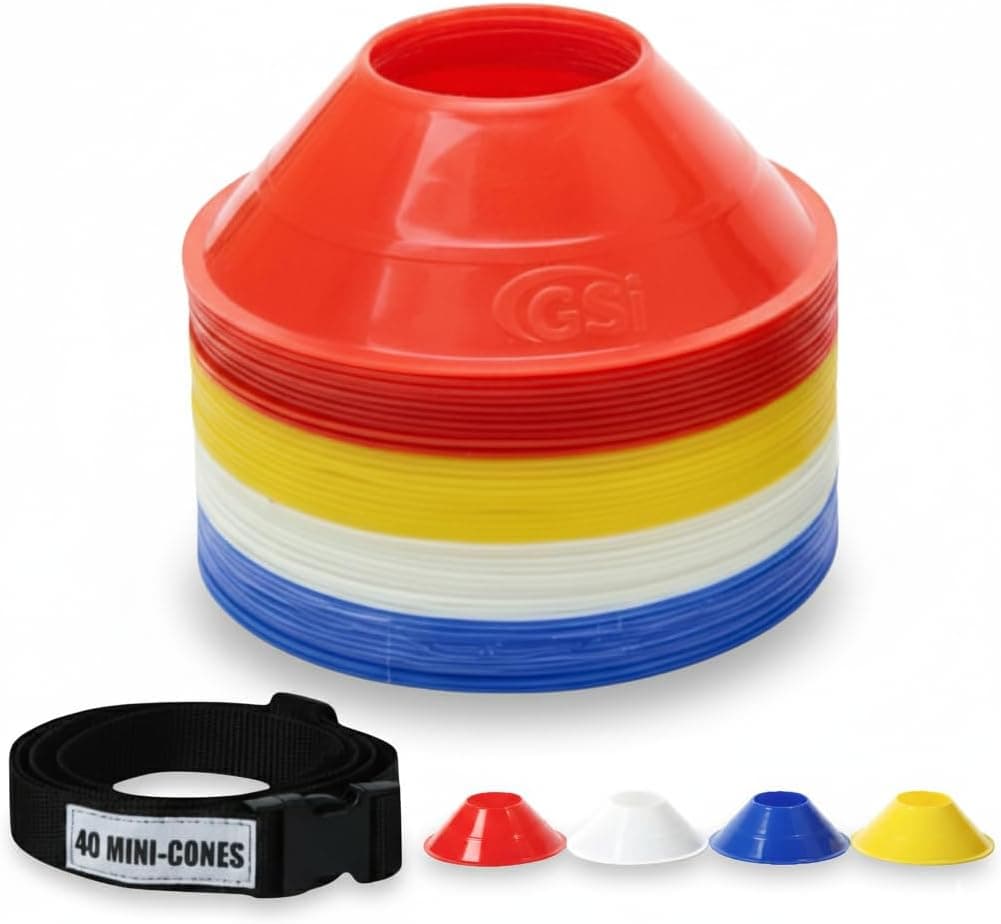
Disc Training Cones (Set of 40)
View on Amazon →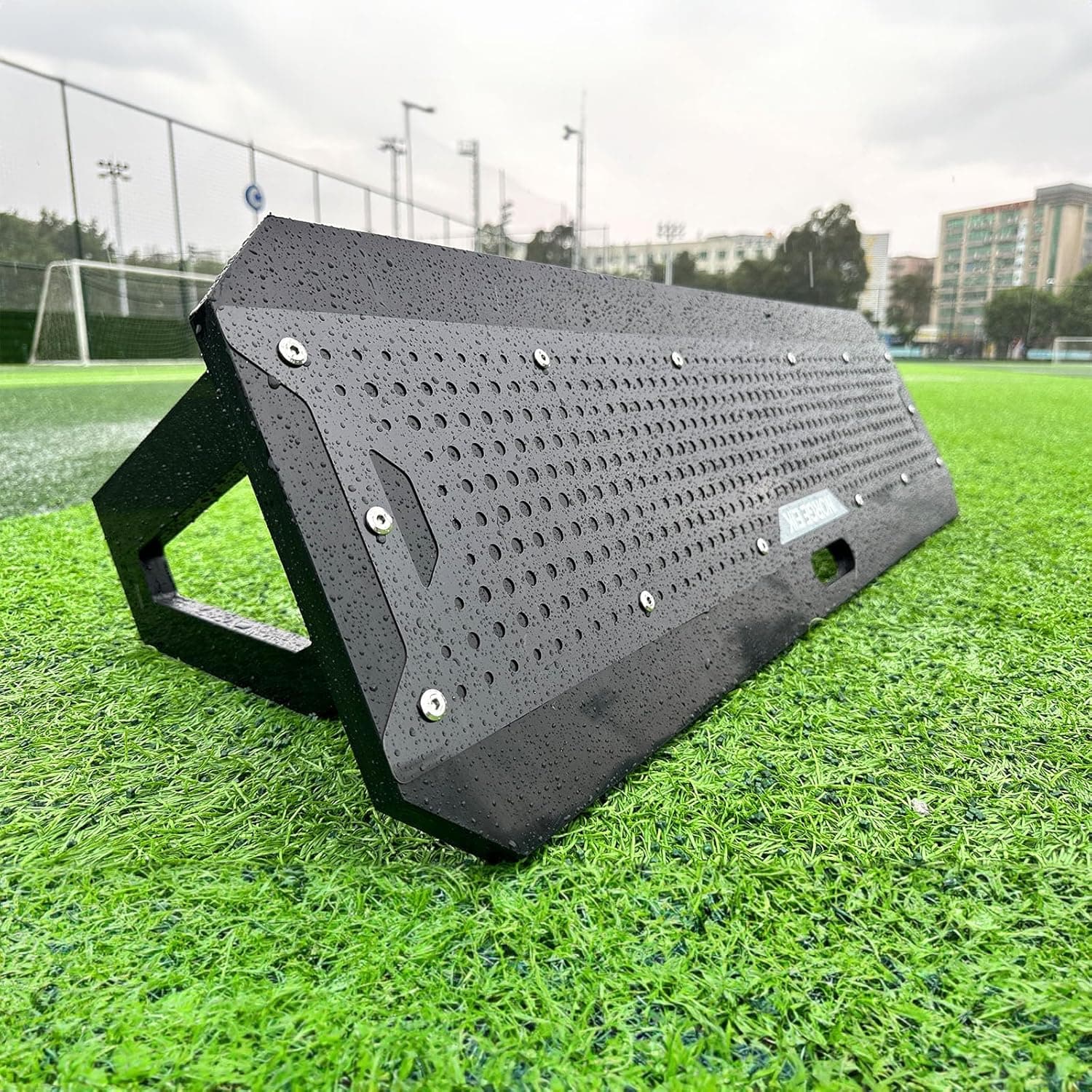
Soccer Rebounder
View on Amazon →As an Amazon Associate we earn from qualifying purchases, at no extra cost to you.