How My 7-Year-Old Finally Learned to Dribble
January 3, 2026

How My 7-Year-Old Finally Learned to Dribble
For the longest time, my daughter Mia treated the soccer ball like a hot potato. She'd boot it as far as she could and then chase after it. Dribbling? Forget it. The ball would roll away from her like it had somewhere better to be, and she'd end up just running alongside it or kicking it to the nearest teammate as fast as possible. As her parent, I watched game after game, wondering if she'd ever develop that close control that separates players who can create opportunities from players who just react.
This is the story of how she finally cracked the code — and it happened in ways I never expected.
The Problem: She Kicked, She Didn't Dribble
Let me paint the picture. At age six, Mia was on a rec team where everyone clumped around the ball in a classic "beehive" formation. She had great energy, loved running, and wasn't afraid to get in the mix. But when she got the ball, her instinct was always the same: kick it hard and far. In a beehive game, that sometimes worked — the ball would squirt out of the crowd and she'd chase it down. But it wasn't dribbling. It was clearance.
By age seven, the game started to spread out. Players were expected to receive the ball, control it, and make a decision. Mia was still in kick-and-chase mode, and it was starting to hurt her. She'd lose the ball immediately whenever she tried to do anything other than boot it, and she was getting visibly frustrated.
I could see her confidence dropping. After one game where she lost the ball five or six times in a row trying to dribble, she told me in the car, "I'm just not good at soccer." That broke my heart, because she was athletic, she loved the game, and she worked hard. She just hadn't developed the fundamental skill of keeping the ball close to her feet.
What Wasn't Working
Before I share what finally worked, let me tell you what didn't:
- Team practice alone wasn't enough. Mia's club practiced twice a week for an hour. In that time, she might get 50-60 touches on the ball in actual dribbling situations. That's simply not enough repetition to build muscle memory. Research suggests that developing ball mastery requires thousands of touches — you can't get there in two hours a week of shared practice time.
- My coaching was counterproductive. I'd stand in the backyard saying things like "Keep it close!" and "Use the inside of your foot!" But I'm not a soccer coach. I played basketball in high school. My instructions were technically correct but lacked the nuance and progression that Mia needed. I was trying to teach the end state without building the foundational steps.
- YouTube tutorials were too advanced. We tried watching dribbling tutorials online, but most were designed for older kids or adults. The moves were too complex, the explanations too fast, and the expectations too high. Mia would try a move, fail, get frustrated, and quit. Not exactly the confidence-building experience she needed.
The Breakthrough: Three Things That Changed Everything
Mia's dribbling transformation happened over about eight weeks, and it came down to three key changes.
1. We Started With Foot-on-Ball Comfort, Not Dribbling
The first thing we did was completely stop trying to dribble. Instead, we spent two weeks just getting Mia comfortable having the ball at her feet in a stationary position. This sounds almost too simple, but it was transformative.
We did exercises like:
- Toe taps: Standing over the ball, alternating tapping the top of the ball with each foot. Start slow, build speed. We did these while watching TV — seriously, she'd just tap the ball during commercial breaks.
- Sole rolls: Rolling the ball forward and backward under the sole of each foot. This taught her that she could control the ball's movement with gentle pressure rather than a kick.
- Inside-outside touches: Standing in place, tapping the ball from the inside of her foot to the outside and back. Again, stationary. No movement. Just getting comfortable with the ball responding to different surfaces of her foot.
These weren't "drills" in the traditional sense. They were more like fidgeting with a ball. But after two weeks of doing these for 10-15 minutes a day, something shifted. Mia could feel where the ball was without looking down at it. She had developed what coaches call a "feel" for the ball.
2. We Found Age-Appropriate, Structured Training
This is where Anytime Soccer Training became a game-changer for us. I'd been struggling to create a coherent progression for Mia — I didn't know what skills to teach in what order, how long to spend on each one, or how to make it engaging enough that she'd actually want to do it.
The platform had structured ball mastery programs broken down by age and skill level. Instead of me awkwardly demonstrating moves I'd half-learned from YouTube, Mia could follow along with professional coaches who knew how to break complex skills into manageable steps. The sessions were 10-15 minutes long, which was perfect for her attention span. And because it was a video she was following — not her dad barking instructions — she was relaxed and focused.
We started with the beginner dribbling modules, and they followed exactly the kind of progression I'd stumbled into with the stationary ball work: start with comfort, add slow movement, build to speed, then introduce changes of direction. The difference was that the program knew the right sequence, the right pace, and the right cues. I just had to press play.
3. We Made It a Game, Not a Chore
The third piece was critical: we kept it fun. Every backyard session had a game component. After Mia did her training session, we'd play a game. Some favorites:
- Shark Attack: I was the "shark" and tried to kick her ball away. She had to dribble around the backyard keeping the ball away from me. This was her absolute favorite and it naturally encouraged close control — if she kicked the ball too far ahead, I'd pounce on it.
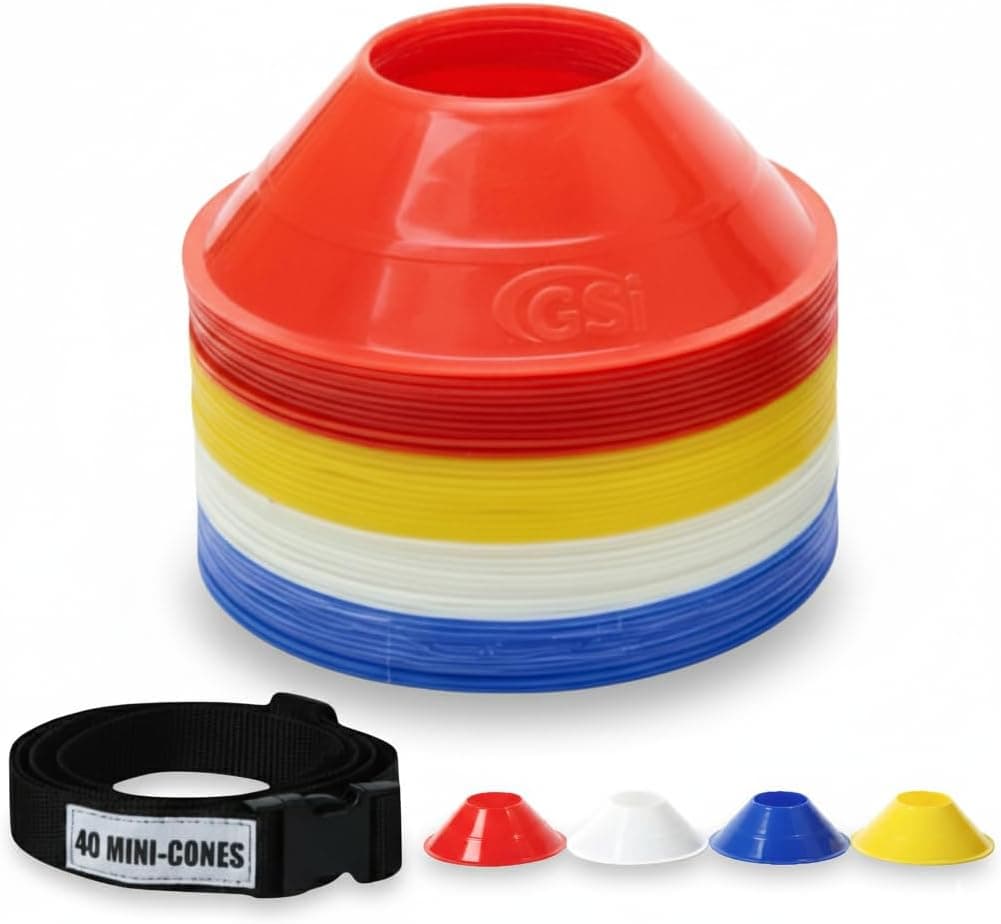
- Cone Slalom Race: We'd set up a line of cones and race through them. She'd dribble, I'd run without a ball but had to do silly obstacles (jumping jacks at each cone, for example). This kept it competitive without making it a direct skill comparison.
- Dribble Tag: Both of us dribbling our own balls, trying to tag each other. This forced her to dribble with her head up — she had to watch me, not the ball.
The games served a dual purpose: they reinforced the skills she was learning in her training sessions, and they made the whole experience something she looked forward to rather than dreaded.
The Timeline: What Progress Actually Looked Like
I want to be honest about the timeline because I think parents sometimes expect overnight transformations. Here's what the eight weeks actually looked like:
- Weeks 1-2: Stationary ball work. Toe taps, sole rolls, inside-outside touches. No visible improvement in games. Mia still booted the ball during matches. But she was building comfort.
- Weeks 3-4: Started basic dribbling in straight lines. Walking pace at first, then jogging. In games, I noticed Mia occasionally taking a touch before passing instead of first-time kicking. Small but significant.
- Weeks 5-6: Introduced changes of direction — inside cuts, outside cuts, pull-backs. Mia started attempting these in low-pressure game situations. She lost the ball sometimes, but she was trying, which meant her confidence was growing.
- Weeks 7-8: Things clicked. Mia dribbled past a defender in a game for the first time. The look on her face was pure joy. She didn't score — she actually lost the ball a few seconds later — but she had beaten someone one-on-one with a move she'd practiced at home. That moment was worth every minute of those eight weeks.
What I Learned as a Parent
Watching Mia's dribbling development taught me several important lessons:
- Skills need way more repetition than team practice provides. Two practices a week with 12 other kids is great for learning to play the game. It is not enough for developing individual technical skills. Those need to be supplemented at home, and even 10-15 minutes a day makes a massive difference.
- Progression matters. You can't teach a seven-year-old to do a Cruyff turn before she can comfortably roll the ball under her foot. Skills build on each other, and skipping steps leads to frustration. This is why structured programs like Anytime Soccer Training are so valuable — they understand the developmental sequence.
- Confidence precedes competence. Mia didn't start dribbling in games because she suddenly became technically perfect. She started dribbling in games because she'd had enough successful repetitions at home that she believed she could do it. The technical skill and the confidence grew together, but confidence had to lead.
- The parent's role is environment, not instruction. My job wasn't to teach Mia how to dribble — I'm not qualified for that. My job was to create an environment where she could learn: provide the space, the equipment, the structured training, and the encouragement. Once I accepted that role, everything got easier and more enjoyable for both of us.
- Ten minutes beats zero minutes. We didn't do hour-long training sessions. Most of our backyard work was 10-15 minutes. But we did it almost every day. That consistency — short, frequent sessions — was more effective than occasional marathon practices.
Where Mia Is Now
Mia is nine now, and dribbling is actually one of her strengths. She's the kid who's comfortable receiving the ball under pressure, who can beat a defender one-on-one, and who has the confidence to try new moves in games. She still loses the ball sometimes — every player does — but she's not afraid to try. That willingness to take on defenders is something that can't be coached into a player. It comes from genuine confidence, built through thousands of repetitions in low-pressure environments.
More importantly, she loves training. She does her Anytime Soccer Training sessions without being asked, often pulling up the app and working through a module while I'm making dinner. It's become her thing — not something her dad makes her do, but something she chooses to do because she enjoys the process and sees the results.
Practical Tips for Parents in the Same Boat
If your child is struggling with dribbling, here's my advice:
- Start slower than you think you need to. Stationary ball work might seem too basic, but it builds the foundation everything else sits on. Spend at least a week just getting comfortable with the ball at their feet before adding movement.
- Keep sessions short and frequent. Ten minutes a day, five days a week is better than one fifty-minute session on the weekend. Young brains learn through repetition and sleep — short daily sessions let them process and consolidate between practices.
- Use a structured program. Unless you're a qualified coach, you'll benefit from a platform like Anytime Soccer Training that provides age-appropriate progressions. It takes the guesswork out of training and ensures your child is building skills in the right order.
- Always end with a game. Whatever skill work you do, finish with something fun. This ensures your child associates training with enjoyment and looks forward to the next session.
- Be patient with the process. Real skill development takes weeks and months, not days. Celebrate the small wins — the first successful sole roll, the first inside cut, the first time they try a move in a game — and trust that the big breakthroughs will come.
Mia's dribbling journey taught me that any kid can develop this skill. It doesn't require special talent or expensive personal coaching. It requires consistent practice, the right progression, and a supportive environment. If a kid who treated the ball like a hot potato at age six can become a confident dribbler by age eight, your child can too. You just have to help them find the right path — and then let them walk it at their own pace.