
Building Mental Toughness in Young Soccer Players
February 21, 2026
Building Mental Toughness in Young Soccer Players
I used to think soccer was ninety percent physical and ten percent mental. After watching my sons go through years of youth soccer, I now believe it is the opposite. The mental game matters most. I have seen incredibly talented players crumble under pressure, and I have seen average players outperform everyone because they had an unshakeable mindset. The difference between the two is mental toughness, and it is a skill that can be trained just like dribbling or passing.
This is a topic that does not get nearly enough attention in youth soccer. We spend hours working on technical skills and tactical awareness, but very few parents or coaches intentionally develop the mental and emotional skills that determine how those technical abilities show up in high-pressure moments. Let me share what I have learned about building mental toughness in young players.
What Is Mental Toughness in Soccer?
Mental toughness is not about being emotionless or never feeling nervous. It is about having the psychological tools to perform at your best even when things are not going well. For a young soccer player, mental toughness shows up in several key areas:
- Resilience: The ability to bounce back after a mistake, a bad game, or a tough loss
- Focus: The ability to concentrate on the task at hand without being distracted by the crowd, the score, or negative thoughts
- Confidence: A deep belief in your own abilities that persists even when you are struggling
- Composure: The ability to stay calm and make good decisions under pressure
- Determination: The willingness to keep working hard even when results are not immediate
These are not personality traits that your child either has or does not have. They are skills that can be developed through deliberate practice and the right environment. And the earlier you start building them, the better.
Why Mental Toughness Develops at Home, Not Just on the Field
Team training and games provide opportunities for mental toughness to be tested, but the foundation is built at home. The way you talk to your child about soccer, the way you react to their successes and failures, and the training environment you create all have a profound impact on their mental development.
Home training is actually the perfect environment for building mental toughness because it is lower stakes than a game but still requires effort, focus, and perseverance. When your child works through a frustrating drill, pushes through a session they did not feel like doing, or finally masters a skill they have been struggling with, they are building mental toughness with every repetition.
The daily discipline of training at home, even for just ten or fifteen minutes, builds a foundation of determination and work ethic that translates directly to game situations. A child who has the mental toughness to train consistently, day after day, will have the mental toughness to keep fighting in a tough game.
Strategy 1: Teach a Growth Mindset
The concept of growth mindset, developed by psychologist Carol Dweck, is one of the most powerful tools for building mental toughness in young athletes. A growth mindset is the belief that abilities can be developed through effort and practice, as opposed to a fixed mindset, which is the belief that abilities are innate and unchangeable.
Children with a growth mindset see challenges as opportunities to improve. They embrace mistakes as learning experiences. They believe that hard work leads to improvement. And they persist through difficulties because they know that struggle is part of the growth process.
Here is how to foster a growth mindset in your young soccer player:
- Praise effort, not talent. Instead of saying "You're so talented," say "I love how hard you worked on that." This teaches your child that effort is what leads to improvement, not natural ability.
- Reframe mistakes. When your child makes an error, instead of expressing disappointment, say something like, "Great, now you know what to work on next." This normalizes mistakes as part of the learning process.
- Use the word "yet." When your child says, "I can't do a rainbow flick," add the word "yet": "You can't do a rainbow flick yet." This small linguistic shift communicates that improvement is coming with continued effort.
- Share stories of struggle. Talk about professional players who struggled before succeeding. Messi was told he was too small. Ronaldo trained obsessively to overcome his humble beginnings. These stories show that struggle is universal, even among the best.
Strategy 2: Develop Emotional Regulation
One of the biggest challenges for young soccer players is managing their emotions during games. Frustration after a missed chance, anger after a bad call, disappointment after a loss; these emotions are powerful and can completely derail a young player's performance if they do not know how to manage them.
Emotional regulation is not about suppressing emotions. It is about acknowledging how you feel and then choosing a productive response rather than an impulsive one. Here are some techniques that work well with young players:
The reset breath: Teach your child a simple breathing technique they can use during games. Three deep breaths: in through the nose for four counts, hold for two counts, out through the mouth for four counts. This activates the parasympathetic nervous system and helps bring emotions back under control. Practice it at home during training sessions so it becomes automatic.
The next play mentality: Encourage your child to focus on the next play rather than dwelling on what just happened. After a mistake, the self-talk should be, "Next play. What can I do right now?" This forward-focused thinking prevents spiraling into negative emotions and keeps the player engaged in the present moment.
Body language reset: Teach your child that body language affects mindset. After a mistake, instead of dropping their head and slumping their shoulders, they should stand tall, clap their hands, and give themselves a physical reset. It sounds simple, but research shows that positive body language actually improves mood and performance.
Strategy 3: Set Process Goals, Not Just Outcome Goals
Most young players set outcome goals: score ten goals this season, make the travel team, win the tournament. These goals are fine, but they are insufficient because they are not fully within the player's control. You can play brilliantly and still lose. You can train hard and still not make the team.
Process goals focus on the actions and behaviors that lead to good outcomes. They are fully within the player's control and provide a sense of accomplishment regardless of the result. Examples include:
- "I will train for fifteen minutes every day this week" (not "I will score three goals this weekend")
- "I will work on my weak foot for five minutes each session" (not "I will be the best player on the team")
- "I will be the hardest working player in practice today" (not "I will be the starter for the next game")
- "I will try at least one new move in today's game" (not "I will not make any mistakes")
When your child achieves process goals, they build confidence and a sense of control that is not dependent on external outcomes. This is the foundation of genuine mental toughness, the ability to feel good about your effort and growth regardless of the scoreline.
Strategy 4: Embrace Discomfort
Mental toughness is built in moments of discomfort, not in moments of ease. When your child wants to quit a training session but pushes through, when they attempt a skill they have been failing at and try again, when they play through fatigue in a tough game; these are the moments that forge mental resilience.
This does not mean pushing your child to the point of tears or forcing them through pain. It means gradually expanding their comfort zone and helping them realize they are capable of more than they think.
In our home training sessions, I use a technique I call the "one more" approach. When my son says he is done with a drill, I ask him to do just one more repetition. Just one. Almost always, that one more turns into two or three more because momentum takes over. And each time he pushes past his initial point of wanting to quit, he learns that he is stronger than he felt in that moment.
Over time, this builds a habit of perseverance that becomes part of your child's identity. They start to see themselves as someone who pushes through difficulty rather than someone who gives up. And that identity shift is the essence of mental toughness.
Strategy 5: Create Pressure in Training
One reason players crumble under pressure in games is that they have never experienced pressure in training. If every practice is relaxed and low-stakes, the jump to a high-pressure game situation is enormous. By introducing manageable pressure into home training, you can help your child become more comfortable performing under stress.
Here are some ways to create pressure in home training:
- Time pressure: Set a timer and challenge your child to complete a drill before it runs out. The countdown creates urgency and forces them to perform under a time constraint.
- Performance stakes: Create consequences for training outcomes. If your child hits a target five times, they earn extra screen time. If they do not, they do an additional set. This mimics the stakes of real game situations.
- Audience pressure: Occasionally invite family members or friends to watch your child train. Performing in front of an audience creates a level of pressure that helps prepare for game-day crowds.
- Competition: Train with a sibling or friend and compete head-to-head. The desire to win creates natural pressure that mirrors competitive game situations.
Strategy 6: Build Confidence Through Competence
The most sustainable form of confidence comes from genuine competence. A child who knows they have put in the work and developed real skills will naturally feel confident in their abilities. This is different from hollow encouragement or participation trophies, which can actually undermine confidence because the child knows they did not earn it.
Daily home training builds this authentic confidence because your child can literally feel themselves getting better. When they master a new skill, beat a previous record, or successfully apply a training exercise in a game, it reinforces the belief that their effort is paying off.
Anytime Soccer Training supports this by providing clear progression and achievements. When your child completes a program, masters a level, or sees their skills visibly improve, they are building genuine confidence based on real competence. This is the kind of confidence that holds up under pressure because it is rooted in evidence, not empty praise.
The Role of Parents in Mental Toughness Development
As parents, we have an outsized influence on our children's mental toughness. The way we react to their successes and failures, the expectations we set, and the environment we create all shape their psychological relationship with soccer.
Here are some guidelines for parents who want to build mental toughness in their young players:
- Model the behavior you want to see. If you want your child to handle adversity with grace, show them how you handle adversity in your own life. Kids learn more from watching you than from listening to you.
- Do not rescue them from struggle. When your child is struggling with a skill or having a bad game, resist the urge to fix it for them. Struggle is where growth happens. Be supportive, but let them work through it.
- Avoid outcome-based love. Your child should never feel that your love or approval is conditional on their performance. Make it clear that you love watching them play regardless of the result.
- Celebrate effort and attitude. The behaviors you praise are the behaviors you reinforce. If you consistently praise effort, determination, and positive attitude, those are the traits your child will develop.
- Have honest conversations. Talk to your child about mental toughness explicitly. Discuss what it means, why it matters, and how they can develop it. Making it a conscious focus gives them tools they can use intentionally.
Mental Toughness Is a Long Game
Building mental toughness in your child is not something that happens overnight. It is a gradual process that unfolds over months and years. There will be setbacks, tears, and moments where both you and your child are frustrated. That is part of the process.
But if you consistently apply the strategies in this post, create a supportive training environment, and model mental resilience in your own behavior, your child will develop the psychological tools they need to thrive not just in soccer, but in life. Because mental toughness is not just a soccer skill. It is a life skill that will serve your child in school, relationships, careers, and everything else they pursue.
The mental game matters most. And the good news is that it can be trained, just like any other skill, one day at a time, in your own backyard.
Gear we use for this
The kit our own players train with at home.

Size One Soccer Ball
View on Amazon →
Adidas MLS Training Soccer Ball
View on Amazon →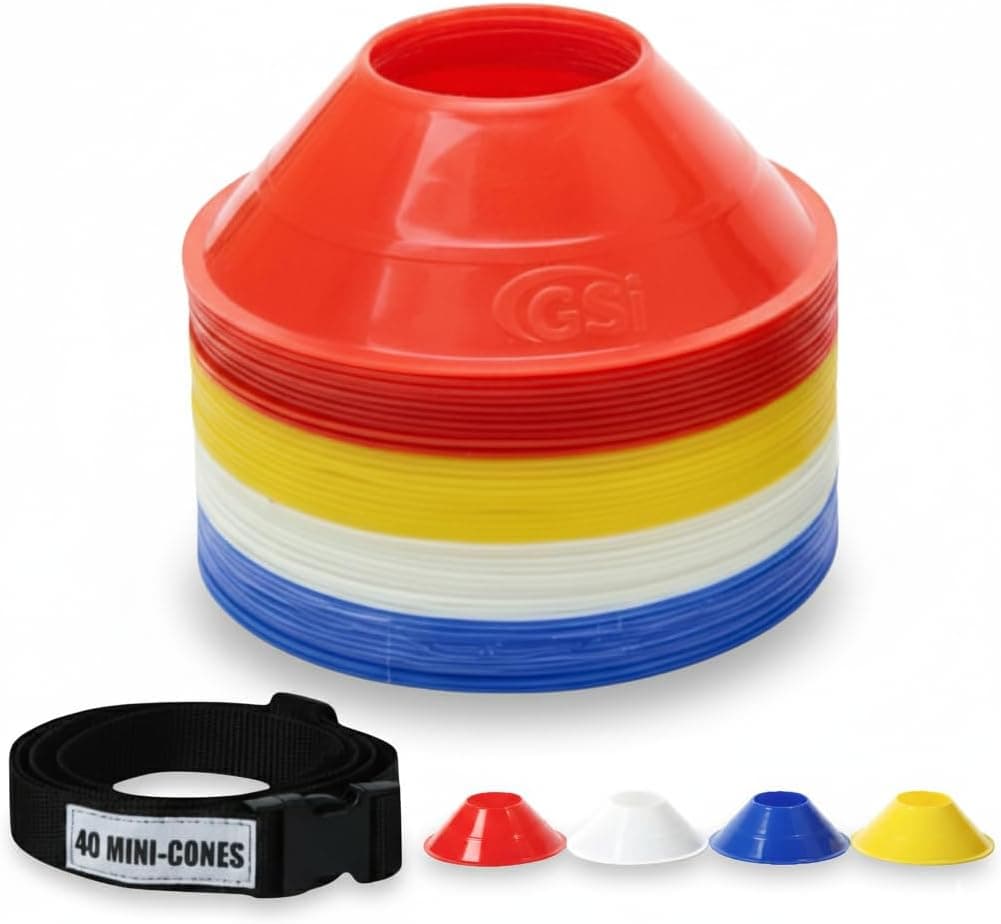
Disc Training Cones (Set of 40)
View on Amazon →As an Amazon Associate we earn from qualifying purchases, at no extra cost to you.