
Building a Home Training System That Works
December 17, 2025
From Chaos to Consistency: Creating a Training System
For the first year of my son's home training journey, we had no system. Some days he'd go outside and work on drills for 30 minutes. Other days, he'd kick the ball around aimlessly for five minutes and declare himself done. Some weeks, he'd train every day. Other weeks, we'd forget entirely. The results were predictable: sporadic, inconsistent improvement that never quite built the momentum we were hoping for.
Then we built a system. Not a rigid, military-style regimen, but a simple, flexible framework that made daily training the default rather than the exception. Within weeks, the difference was remarkable — not because the individual training sessions were dramatically better, but because they were happening consistently. And consistency, as every development expert will tell you, is the single most important factor in skill acquisition.
If you've been struggling to make home training stick — or if you're just getting started and want to set things up right from the beginning — this article will walk you through exactly how to build a home training system that your child will actually follow.
The Four Pillars of a Sustainable Training System
After two years of trial, error, and refinement, I've identified four elements that every sustainable home training system needs:
Pillar 1: A Defined Space
Your child needs a dedicated training space. It doesn't have to be large or fancy, but it needs to be consistently available and easy to access. When the space is always ready, one of the biggest barriers to training — setup and preparation — disappears.
Backyard setup: If you have a yard, designate a section as the training area. Keep cones, markers, and a ball stored right there (we use a weatherproof bin near the back door). A flat, grassy area of about 10x15 feet is more than enough for most drills. If you have a wall or fence to play against, even better.
Garage or basement: For rainy days or families without yards, a cleared garage or basement space works beautifully. Keep a soft/futsal ball in the space so your child can start training within seconds of arriving.
The key principle: Reduce friction to zero. The easier it is for your child to start training, the more likely they are to do it. If they have to find their ball, search for cones, move furniture, and set up an area every time, they'll find reasons to skip. If they can walk to a ready-made space and start immediately, training becomes effortless.
Pillar 2: A Consistent Schedule
Habits are built through consistency, and consistency requires a schedule. Work with your child to identify the best time of day for training and make it non-negotiable (within reason).
For our family, training happens right after school, before homework. My son changes clothes, grabs a snack, and heads outside. It's the first thing on his afternoon agenda, not the last — because if we leave it until "later," later often doesn't come.
Other families find different time slots work better:
- Before school: Some kids are morning people. A quick 15-minute session before breakfast can energize the whole day.
- After dinner: During longer daylight months, post-dinner training can be a nice family activity.
- Weekend mornings: If weekday schedules are too packed, weekend sessions can supplement shorter weekday work.
The specific time matters less than the consistency. Pick a time and stick with it. After two to three weeks, it stops being a decision and starts being a habit.
Pillar 3: A Clear Curriculum
"Go outside and practice" is not a plan. Kids need structure — specific drills, clear goals, and a sense of progression. Without curriculum, training becomes aimless and motivation fades quickly.
This is where many families struggle, because designing a soccer training curriculum requires expertise that most parents don't have. You might know that your child needs to work on their weak foot, but what specific drills should they do? In what order? For how long? How do you progress the difficulty?
This is exactly the problem that Anytime Soccer Training solves. The platform provides structured, progressive training programs designed by experienced coaches. Each session builds on the previous one, so your child always knows what to work on and how. It's like having a personal coach's plan without the personal coach's price tag.
If you prefer to build your own curriculum, here's a simple framework:
- Monday: Ball mastery (toe taps, sole rolls, foundation moves)
- Tuesday: First touch and receiving (wall work)
- Wednesday: Dribbling moves (Cruyff turns, step-overs, inside cuts)
- Thursday: Weak foot (repeat Monday-Wednesday drills with non-dominant foot)
- Friday: Juggling and freestyle (fun, creative day)
- Weekend: Free play, pickup games, or additional focused work
Every two weeks, introduce a new drill or increase the difficulty of existing ones. This keeps training fresh and ensures continued progression.
Pillar 4: A Tracking System
What gets measured gets improved. A simple tracking system gives your child visibility into their progress, which fuels motivation and reinforces the value of consistent effort.
We use two tracking tools:
The Training Calendar: A simple wall calendar near the back door. Every day my son trains, he puts a star sticker on that day. The visual streak of stars is surprisingly motivating — he doesn't want to break the chain. This idea comes from the "Seinfeld Strategy" (comedian Jerry Seinfeld used a similar approach to ensure he wrote jokes every day).
The Progress Log: A small notebook where he records key metrics after each session: juggling personal best, timed cone course, wall-pass count in 60 seconds, etc. Once a month, we review the log together and celebrate improvements. Seeing concrete evidence of progress — "Your juggling record was 23 last month and now it's 67!" — is incredibly powerful for a young player.
Overcoming the Most Common Obstacles
"I Don't Want To" — Motivation Dips
Even with a great system, there will be days when your child doesn't want to train. This is normal and expected. Here's how to handle it:
The Five-Minute Rule: Make a deal — start training for just five minutes. If after five minutes they still want to stop, they can. In my experience, 90% of the time, once they start, they keep going. The hardest part is always the beginning.
Choice Within Structure: Let your child choose what to work on within the session structure. "It's a ball mastery day, but you pick which drills you want to do." Autonomy increases buy-in.
Social Training: Invite a friend over to train together. Everything is more fun with a buddy. Set up challenges and competitions to spark engagement.
Mix In Fun: Some days, scrap the plan and just play. Trick shots, soccer bowling, freestyle challenges — anything that keeps the ball at their feet while keeping a smile on their face.
"We're Too Busy" — Schedule Conflicts
Modern families are stretched thin. Between school, homework, other activities, and family time, fitting in soccer training can feel impossible. Here's the reality check: you need 15-20 minutes. That's it.
If you genuinely cannot find 15 minutes in your child's day, something needs to give — and it's probably not soccer training. Look at screen time, transition time, or low-value activities that could be trimmed. Most families, when they honestly assess their schedules, find that the time is there — it's just not being used intentionally.
On truly packed days, even a five-minute ball mastery session is better than nothing. Five minutes of focused touches on the ball maintains the habit and keeps the neural pathways firing. Don't let perfect be the enemy of good.
"I Don't Know What to Do" — Curriculum Confusion
If designing your own training plan feels overwhelming, don't do it. Use a pre-built program. Anytime Soccer Training offers age-appropriate, progressive training programs that eliminate the guesswork entirely. Your child logs on, follows the session, and the platform handles everything else — progression, variety, skill targeting, the works.
There's no shame in using a guide. Even professional athletes follow programs designed by experts. Your child doesn't need a parent who's a soccer coaching genius — they need a parent who provides the right resources and supports consistent effort.
"It's Not Working" — The Patience Problem
Skill development is not linear. There will be weeks when your child seems to improve dramatically and weeks when they seem stuck or even regress. This is completely normal — it's how the brain processes and consolidates new skills.
The system works over months, not days. If your child is training consistently, using quality drills, and maintaining a positive attitude, the results will come. Trust the process. The families who see the biggest transformations are the ones who stuck with their system through the inevitable plateaus and frustrations.
Making It a Family Affair
One of the most effective ways to sustain a home training system is to make it a family activity. Here are some ways to do that:
- Train together. Parents doing ball mastery drills alongside their kids is a bonding experience and shows that you value what you're asking them to do. Plus, it's great exercise.
- Sibling involvement. If you have multiple children, have them train together. Older kids can demonstrate for younger ones. Younger ones provide competition for older ones.
- Family challenges. Weekly juggling competitions, accuracy challenges, or timed courses that the whole family participates in create a fun, competitive atmosphere.
- Celebrate together. When your child hits a milestone, celebrate it as a family. It reinforces that their effort is valued and noticed.
The Long-Term Vision
A home training system isn't just about making a team or winning a game. It's about building habits that serve your child for life. The discipline of showing up every day, the patience of working through plateaus, the satisfaction of seeing effort translate into results — these are life skills that transfer far beyond the soccer field.
My son is now 12. He's been following a home training system for two and a half years. His soccer skills have improved dramatically — he's one of the top technical players on his team. But the changes I'm most proud of have nothing to do with soccer. He's more disciplined. More self-motivated. More resilient. He understands that improvement requires daily effort, not occasional heroics.
That's the real gift of a home training system. The soccer skills are a bonus.
Start building your system today. Set up a space. Pick a time. Choose a program — Anytime Soccer Training makes this incredibly easy. Start tracking. And then just show up, day after day. The system does the rest.
Gear we use for this
The kit our own players train with at home.

Adidas MLS Training Soccer Ball
View on Amazon →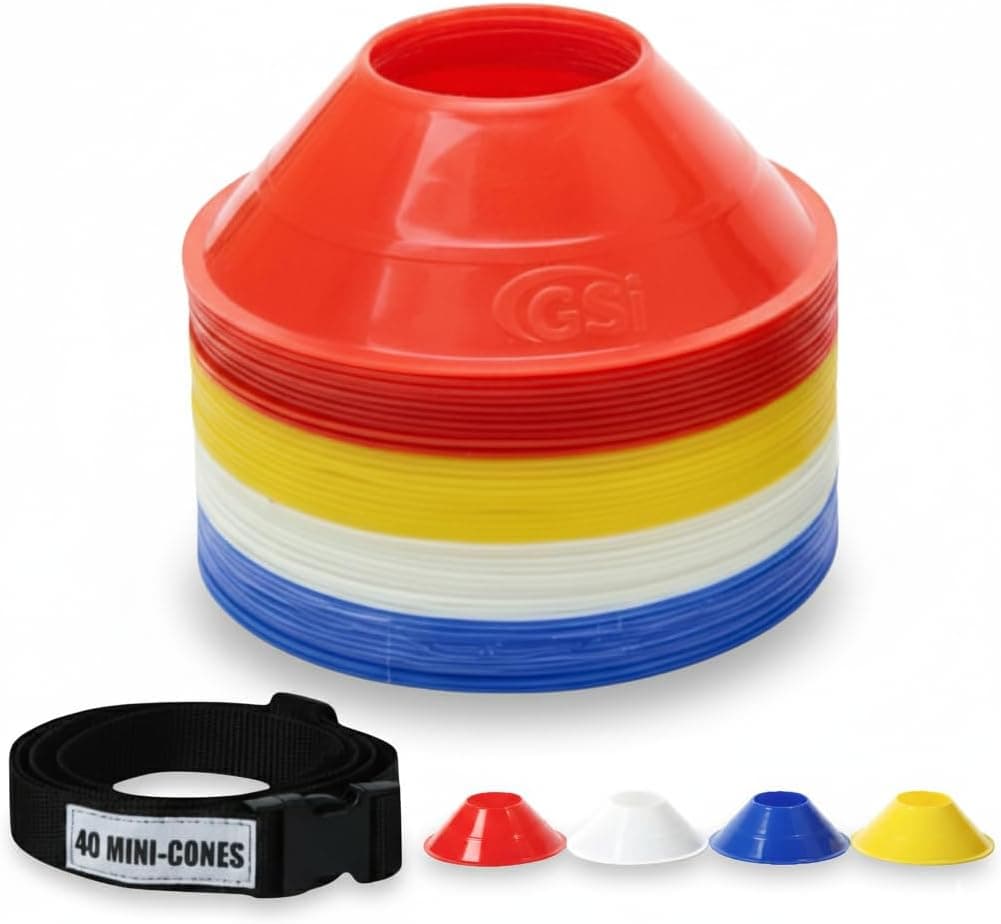
Disc Training Cones (Set of 40)
View on Amazon →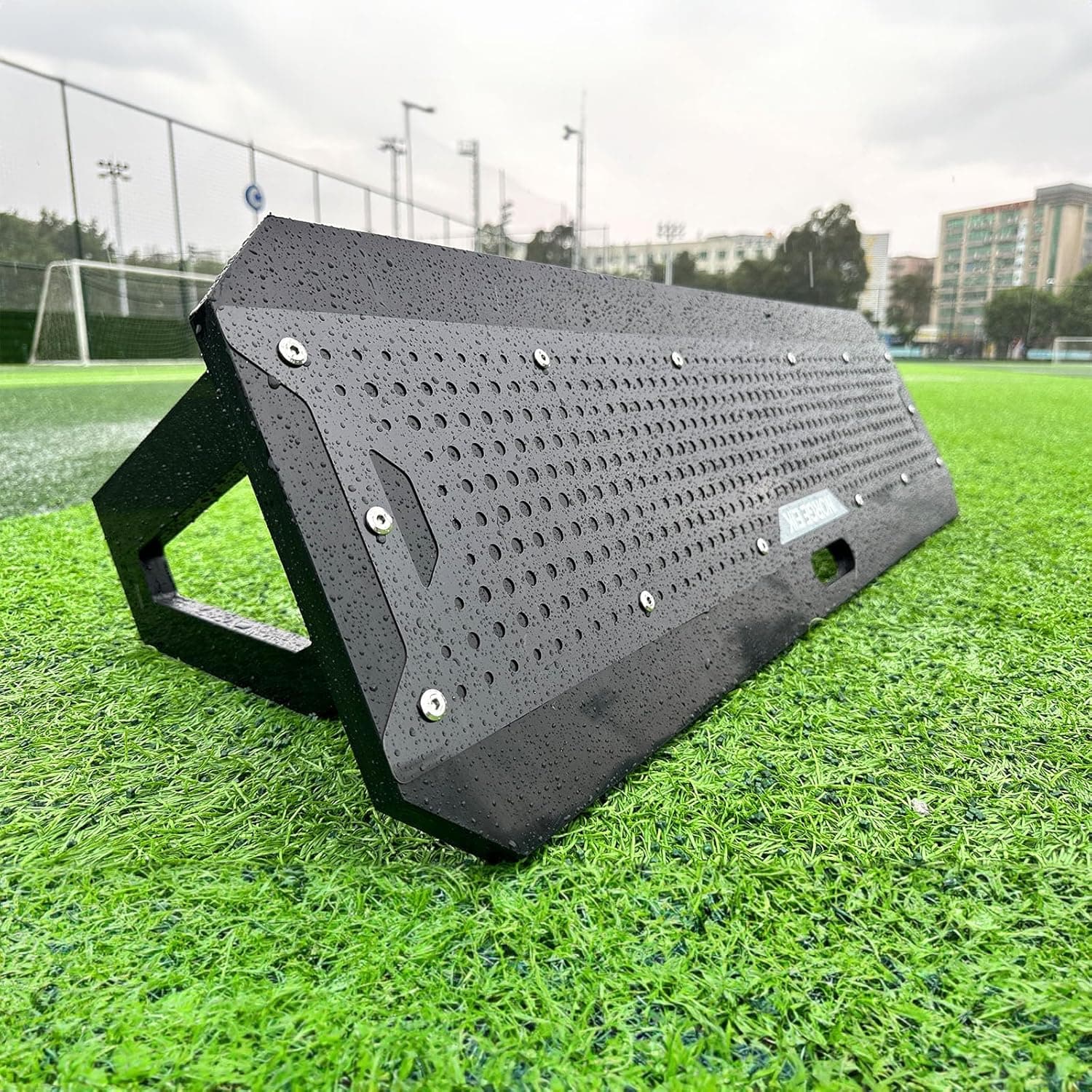
Soccer Rebounder
View on Amazon →As an Amazon Associate we earn from qualifying purchases, at no extra cost to you.