
Balancing School Life and Soccer A Parent's Blueprint
March 3, 2026
Balancing School, Life, and Soccer: A Parent's Blueprint
When back-to-school season hits, the juggling act begins. Your child has homework, soccer practice two or three times a week, games on weekends, home training, other extracurricular activities, social time with friends, and somehow they also need to eat dinner and get enough sleep. As parents, we are the ones trying to make all of this work, and it can feel absolutely overwhelming.
I have been navigating this balancing act for years with two soccer-playing sons, and I have made plenty of mistakes along the way. But I have also developed a blueprint that works for our family, and I want to share it with you because I know how stressful this can be.
Why Balance Matters More Than You Think
Before I get into the practical tips, let me explain why getting this balance right is so important. An overloaded schedule does not just stress out parents; it directly impacts your child's development in every area, including soccer.
Children who are overscheduled and sleep-deprived perform worse in school, worse in sports, and worse socially. Their bodies do not have time to recover from physical training, their brains do not have time to consolidate learning, and their emotional reserves get depleted. The irony is that parents who push their kids hardest often get the worst results because the child is running on empty.
On the flip side, a well-balanced schedule where your child has adequate time for school, training, play, and rest produces better outcomes in every area. A rested, happy child will always outperform a stressed, exhausted one.
The Non-Negotiables
The first step in creating balance is identifying your non-negotiables. These are the things that cannot be compromised regardless of how busy the schedule gets. For our family, the non-negotiables are:
- Sleep: Our kids get at least nine hours of sleep on school nights. This is not flexible. We build the rest of the schedule around ensuring adequate sleep because we know that sleep is critical for both academic performance and athletic development.
- Homework: Schoolwork comes first. If homework is not done, soccer training does not happen that day. This teaches our kids that academics are the priority and gives them motivation to manage their homework time efficiently.
- Family dinner: We eat together as a family at least five nights a week. Even if it means eating at five thirty before practice or at eight after practice, we make it happen. This time is important for connection and communication.
Everything else in the schedule is arranged around these non-negotiables. When there is a conflict, these three things always win.
Building the Weekly Schedule
Here is how a typical weekly schedule looks for our family during the school year:
Monday through Friday:
- School: seven thirty to three o'clock
- After-school snack and decompression: three to three thirty
- Homework: three thirty to four thirty (or however long it takes)
- Home soccer training: four thirty to four forty-five (fifteen minutes)
- Free time or other activities: four forty-five to five thirty
- Team practice (on practice days, usually two to three days per week): six to seven thirty
- Dinner: either before practice at five thirty or after practice at seven forty-five
- Wind down and reading: eight to eight thirty
- Lights out: eight thirty to nine
Saturday:
- Game day (typically morning)
- Afternoon: free time, family activities, or rest
Sunday:
- Complete rest from soccer or light free play
- Family time, chores, and preparation for the week
This schedule is tight but manageable. The key is the fifteen-minute home training block between homework and free time. It is short enough that it does not feel burdensome but consistent enough that it produces real results over time.
Making Home Training Work During the School Year
The school year is when many families abandon home training because the schedule feels too packed. But this is actually when home training matters most, because team practice alone is not enough to sustain development.
Here is how to make fifteen minutes of home training work even during the busiest weeks:
Anchor it to an existing habit. Our rule is simple: home training happens right after homework, every day. It is not a separate event that needs to be scheduled; it is part of the after-school routine. Homework, then training, then free time. This anchoring makes it automatic rather than something that requires a decision each day.
Use a follow-along program. During the school year, I do not have the energy to plan training sessions for my kids. That is why Anytime Soccer Training is so valuable. My son just pulls up the next session in his program, presses play, and follows along for fifteen minutes. No planning, no setup, no negotiation about what to work on. It is the path of least resistance, which is exactly what you need during busy weeks.
Have an indoor backup plan. There will be days when the weather is bad, it gets dark too early, or you simply cannot get outside. Having an indoor training option means you never have to skip a day. Most ball mastery and footwork exercises can be done in a garage, basement, or even a living room with a soft ball.
Be flexible with timing. On days when homework runs long or there is a schedule conflict, move the training to a different time. Before school in the morning, during halftime of a game you are watching together, or right before bed. The important thing is that it happens, not when it happens.
When to Say No
One of the hardest skills for a soccer parent to develop is saying no. No to the extra tournament, no to the additional team, no to the summer camp that conflicts with family vacation, no to the coach who wants your child at every optional training session.
Saying no is not a sign of being unsupportive. It is a sign of being wise about your family's priorities and your child's well-being. Here are some situations where I think it is important to say no:
- When adding another soccer commitment would compromise sleep or homework
- When your child is showing signs of burnout or fatigue
- When the soccer schedule is causing significant family stress
- When the activity is more about the parent's ambition than the child's development
- When your child has expressed that they need a break
Remember, your child's soccer career is a marathon, not a sprint. Missing one tournament or one optional practice session will have zero impact on their long-term development. But consistently sacrificing sleep, academics, or family time for soccer will have a significant negative impact on everything.
Managing Energy, Not Just Time
Time management is important, but energy management is equally critical. Your child has a limited amount of physical and mental energy each day, and how that energy is allocated matters enormously.
Consider the flow of energy throughout a typical school day:
- Morning: Energy is highest after a good night's sleep. This is when your child is most focused and productive academically.
- After school: Energy dips after a full day of mental work. A snack and a short break help restore some energy.
- Late afternoon: Physical energy is often at its peak in the late afternoon, making this an ideal time for training and practice.
- Evening: Energy declines as bedtime approaches. This is not the time for intense training or challenging homework.
Understanding this energy cycle helps you schedule activities at the right times. Homework when the mind is still fresh, physical training when the body is ready for activity, and relaxation as energy winds down.
On days when your child has team practice in the evening, I would recommend doing the home training session before practice rather than after. A quick fifteen-minute ball mastery session before heading to team training serves as a perfect warm-up and ensures the home training gets done before fatigue sets in.
The Academic-Athletic Connection
Some parents worry that soccer will negatively impact their child's academics. In my experience, the opposite is true, as long as the schedule is managed properly. Regular physical activity has been shown to improve cognitive function, attention, and academic performance in children.
My sons are actually more focused on their homework on days when they have trained because the physical activity helps them burn off energy and settle their minds. The discipline of maintaining a daily training routine also transfers to their academic habits. A child who can commit to fifteen minutes of training every day can commit to thirty minutes of homework every day.
The key is keeping the balance. If soccer starts to dominate at the expense of academics, something needs to change. But in a balanced schedule, soccer and academics actually enhance each other rather than competing.
Communication Is Everything
Maintaining balance requires ongoing communication with several people:
With your child: Check in regularly about how they are feeling. Are they tired? Stressed? Overwhelmed? Excited? Bored? Your child is the best source of information about whether the balance is working, but only if they feel safe being honest with you.
With your spouse or partner: Make sure you are aligned on priorities and schedules. Soccer logistics often fall disproportionately on one parent, which can create resentment. Share the load and make decisions together.
With the coach: Communicate with your child's coach about your family's boundaries. A good coach will respect that academics come first and will not penalize a player for occasionally prioritizing homework over an optional practice.
With teachers: If your child has a particularly busy soccer week, like a tournament, give their teacher a heads-up. Most teachers are understanding and may offer flexibility on homework deadlines.
Signs That the Balance Is Off
Watch for these warning signs that indicate the schedule is out of balance:
- Your child is consistently tired or irritable
- Grades are dropping
- Your child is getting sick more frequently than usual
- They are losing enthusiasm for soccer or other activities
- Family stress levels are consistently high
- There is no time for unstructured play or socializing
- You feel like you are constantly rushing from one activity to the next
If you see these signs, it is time to reassess and make changes. That might mean dropping one activity, reducing the soccer commitment, or simply being more intentional about rest and downtime.
The Blueprint Summary
Here is the blueprint distilled into its core principles:
- Protect sleep above all else. Everything functions better when your child is well-rested.
- Academics first. Homework before soccer, always.
- Keep home training short and consistent. Fifteen minutes daily with a follow-along program like Anytime Soccer Training.
- Build routines. Anchor training to existing habits so it becomes automatic.
- Say no when necessary. Protect your family's well-being and your child's balance.
- Manage energy, not just time. Schedule activities when your child has the right type of energy for them.
- Communicate constantly. With your child, your partner, the coach, and teachers.
- Monitor for warning signs. Adjust the schedule when the balance is off.
Balancing school, life, and soccer is not easy. There are weeks when it feels impossible. But with the right framework and a willingness to adapt, it is absolutely doable. And the payoff, a child who is thriving academically, developing athletically, and enjoying their childhood, is worth every bit of effort.
Gear we use for this
The kit our own players train with at home.

Adidas MLS Training Soccer Ball
View on Amazon →
Disc Training Cones (Set of 40)
View on Amazon →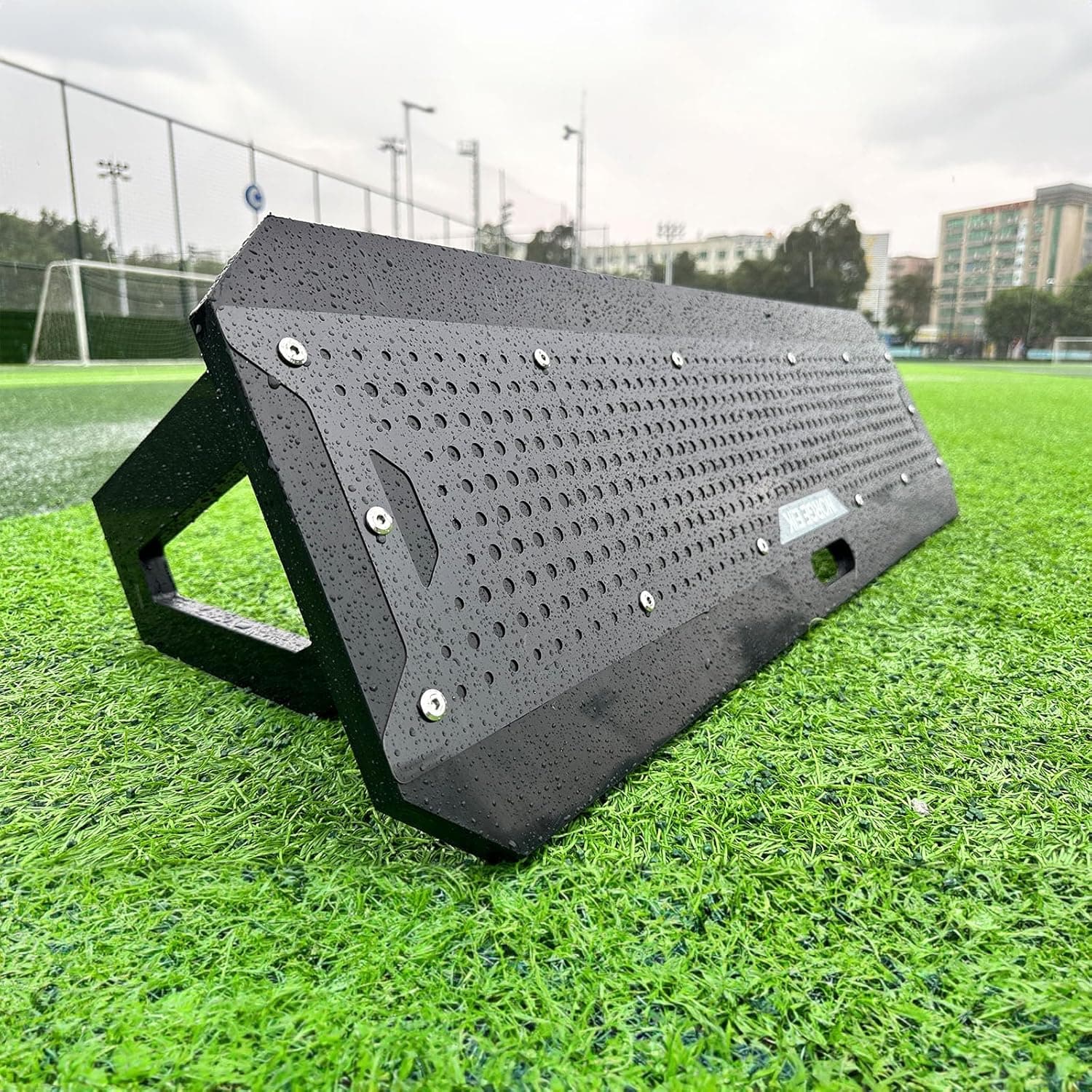
Soccer Rebounder
View on Amazon →As an Amazon Associate we earn from qualifying purchases, at no extra cost to you.