
10 In-Home Soccer Drills to Keep Your Child Active
March 21, 2026

10 In-Home Soccer Drills to Keep Your Child Active
Rainy day? Too dark outside? No backyard? No problem. One of the best things about soccer skill training is that many of the most effective exercises can be done indoors with minimal space and equipment. I have put together ten in-home drills that will keep your child active, develop real soccer skills, and can be done in your living room, garage, or basement.
These drills are designed for busy parents who want easy wins. You do not need to be a soccer expert to set these up, and your child can do most of them independently once they know what to do. Let us get into it.
Drill 1: The Sole Roll Challenge
Space needed: Three feet by three feet
Equipment: One soccer ball (or soft ball for indoor use)
Duration: Two to three minutes
Place the ball in front of your child. Using the sole of the foot, roll the ball forward and then pull it back. Alternate between the right foot and left foot. The challenge is to do as many clean forward-back sole rolls as possible in sixty seconds without losing control of the ball.
This drill develops the foundational foot-ball connection that underlies all ball mastery. It seems simple, but doing it quickly and cleanly with both feet requires genuine coordination and control.
Make it fun: Keep a record of their best score and challenge them to beat it each session. Post the record on the refrigerator.
Drill 2: Tick Tock Speed Test
Space needed: Three feet by three feet
Equipment: One soccer ball
Duration: Two to three minutes
Your child stands with the ball between their feet and taps it side to side using the inside of each foot. Start slowly to establish rhythm, then gradually increase speed. Count the number of touches in thirty seconds.
Tick tocks develop the inside-of-foot control that is essential for dribbling and passing. The speed component turns it into a fun challenge that kids love to compete against.
Make it fun: Do three rounds of thirty seconds with short breaks in between. Track the best score across all three rounds.
Drill 3: Around the World
Space needed: Four feet by four feet
Equipment: One soccer ball
Duration: Three to four minutes
Place the ball stationary on the ground. Your child moves their feet around the ball in a circle, alternating between tapping the top of the ball with the sole and stepping around it. Go clockwise for thirty seconds, then counterclockwise for thirty seconds.
Once comfortable, increase the speed and add variations: touch the ball with the inside of the foot on each step, or use only the right foot going one direction and only the left foot going the other.
This drill develops balance, coordination, and comfort working around the ball from all angles.
Make it fun: See how many complete circles they can do in sixty seconds. Challenge them to keep the ball from moving out of its spot.
Drill 4: Toe Tap Countdown
Space needed: Three feet by three feet
Equipment: One soccer ball
Duration: Two to three minutes
Your child places one foot on top of the ball and then quickly alternates feet, tapping the top of the ball with the sole of each foot. It should look like a quick running motion on top of the ball. Start with a countdown from twenty: twenty taps, then rest five seconds, then fifteen taps, then rest, then ten, then five.
Toe taps develop quick feet, balance, and the ability to keep the ball under control while moving quickly. They are also a fantastic little cardio workout.
Make it fun: Race against a parent or sibling. The first one to complete the full countdown wins.
Drill 5: The Hallway Dribble
Space needed: A hallway or long room (at least fifteen feet of length)
Equipment: One soft ball or futsal ball
Duration: Three to four minutes
Your child dribbles the ball down the hallway using small, controlled touches, turns at the end, and dribbles back. Each trip uses a different technique: right foot only, left foot only, inside of the foot only, outside of the foot only, and alternating feet.
The narrow width of a hallway naturally forces close control because the ball will hit the wall if the touches are too wide. This is actually a perfect training environment for developing tight dribbling skills.
Make it fun: Time each trip down and back. Challenge your child to complete five round trips using all five techniques and track the total time.
Drill 6: Wall Pass and Receive
Space needed: Eight to ten feet from a flat wall
Equipment: One soccer ball or soft ball
Duration: Four to five minutes
Standing about eight feet from a wall, your child passes the ball against the wall and receives it when it comes back. Focus on passing with the inside of the foot and receiving with a clean first touch that sets the ball up for the next pass. Alternate between right and left foot.
This is one of the most effective home training exercises because it develops both passing accuracy and first touch simultaneously. The wall never gets tired and always returns the ball, making it the perfect training partner.
Make it fun: Count consecutive passes without losing control. Set a goal of twenty, then thirty, then fifty consecutive clean passes.
Indoor tip: Use a softer ball to reduce noise and prevent damage. A futsal ball or even a tennis ball works well for this drill indoors.
Drill 7: The Living Room Obstacle Course
Space needed: Roughly ten feet by ten feet
Equipment: Soft ball, plus household items as obstacles (water bottles, books, shoes, cushions)
Duration: Four to five minutes
Set up a mini obstacle course using household items. Create a path that requires your child to dribble around, through, and between the obstacles. Include at least two sharp turns and one narrow gate (two objects close together to dribble between).
This drill develops dribbling, close control, and spatial awareness. Using household items makes it creative and different from typical cone work.
Make it fun: Let your child help design the obstacle course. Rearrange it every session so it always feels fresh. Time each run through and try to set personal records.
Drill 8: Juggling Progress
Space needed: Six feet by six feet with adequate ceiling height
Equipment: One soccer ball (use a smaller ball or soft ball for beginners)
Duration: Three to five minutes
Juggling is the classic at-home soccer exercise, and for good reason. It develops touch, coordination, balance, and comfort with the ball in the air, all in a very small space.
For beginners, start with self-catch juggling: kick the ball up once, catch it, kick it up twice, catch it, and so on. For more advanced players, work toward consecutive touches without catching. Track the personal best and celebrate every new record.
Juggling is one of the most satisfying skills to develop because progress is easily measurable. Going from five consecutive juggles to ten feels like a real achievement, and it motivates continued practice.
Make it fun: Create a juggling ladder challenge. Level one: three consecutive touches. Level two: five touches. Level three: ten touches. And so on. Celebrate each level achieved.
Drill 9: The V-Pull Series
Space needed: Four feet by four feet
Equipment: One soccer ball
Duration: Three to four minutes
The V-pull is a fundamental ball mastery move where you pull the ball back with the sole of the foot and then push it forward at a diagonal with the inside of the foot, creating a V-shaped movement path.
Your child performs the V-pull with the right foot ten times, then the left foot ten times. Then alternate feet for twenty repetitions. As they improve, increase the speed and smoothness of the movement.
Add variations: V-pull to the outside (pull back with sole, push forward with outside of foot), reverse V-pull (push forward first, then pull back at an angle), and double V-pull (two quick V-pulls in succession).
Make it fun: Create a V-pull combo challenge where they chain together four different V-pull variations in a flowing sequence without stopping.
Drill 10: Soccer Freeze Dance
Space needed: Eight feet by eight feet
Equipment: One soccer ball, music
Duration: Four to five minutes
Play music while your child dribbles around the room (or does ball mastery exercises in place). When the music stops, they must freeze with the ball under their foot (sole on top of the ball). If the ball rolls away, they do five toe taps before the music starts again.
This drill combines ball control with listening skills and reaction time. It is inherently fun because of the music element, and it works great for younger children who respond well to game-based training.
Make it fun: Take turns being the DJ. Add different rules for when the music stops: freeze with the right foot on the ball, freeze while doing a specific skill, or freeze in a balance position.
Putting It All Together: A Sample Indoor Session
Here is how to combine these drills into a complete fifteen-minute indoor training session:
- Sole Roll Challenge warm-up: two minutes
- Tick Tock Speed Test: two minutes
- Hallway Dribble: three minutes
- Wall Pass and Receive: four minutes
- Juggling Progress: three minutes
- Cool down and stretch: one minute
This session covers ball mastery, dribbling, passing, first touch, and coordination in just fifteen minutes, all indoors. Your child gets a fantastic workout, develops real skills, and does not need to step outside.
For an even easier approach, programs like Anytime Soccer Training offer complete indoor-friendly sessions that your child can follow along with. No planning needed, just press play and train. It is the simplest way to keep your child active and developing their skills regardless of the weather, time of day, or available space.
The bottom line is this: there is always a way to train at home, even when conditions are not ideal. These ten drills prove that you do not need a big field, perfect weather, or fancy equipment to develop real soccer skills. All you need is a ball, a small space, and the willingness to start.
Gear we use for this
The kit our own players train with at home.
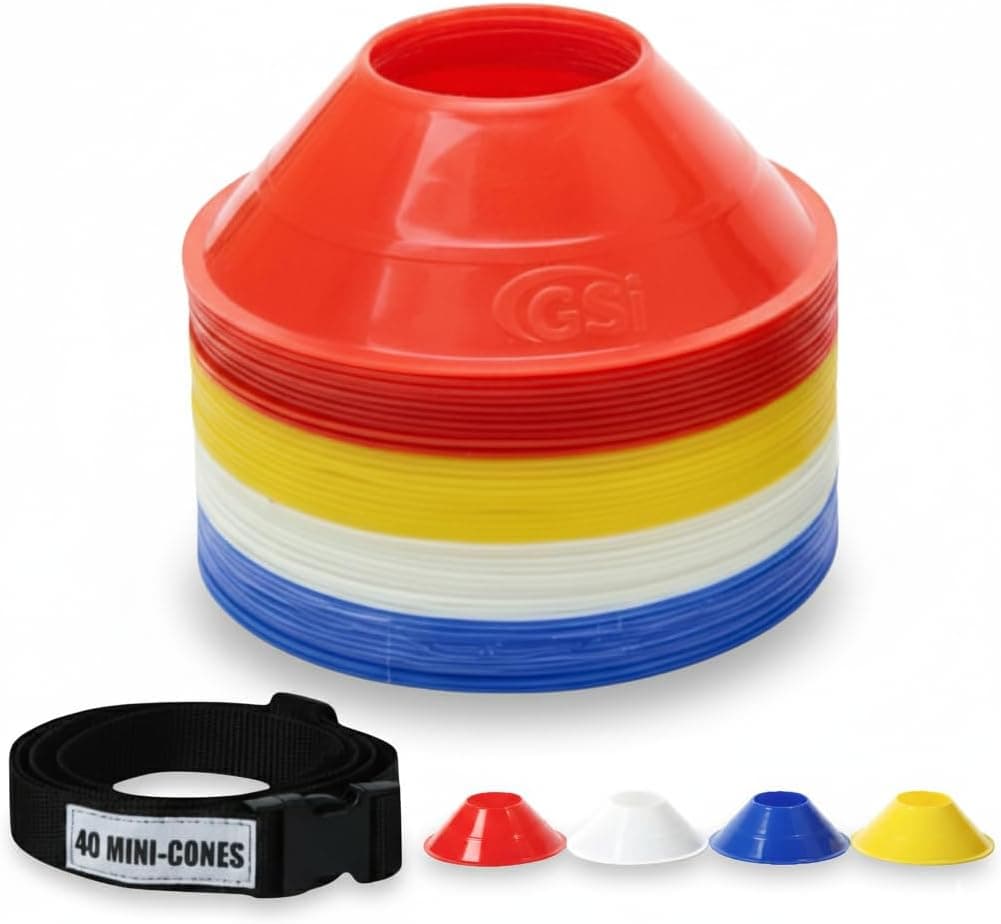
Disc Training Cones (Set of 40)
View on Amazon →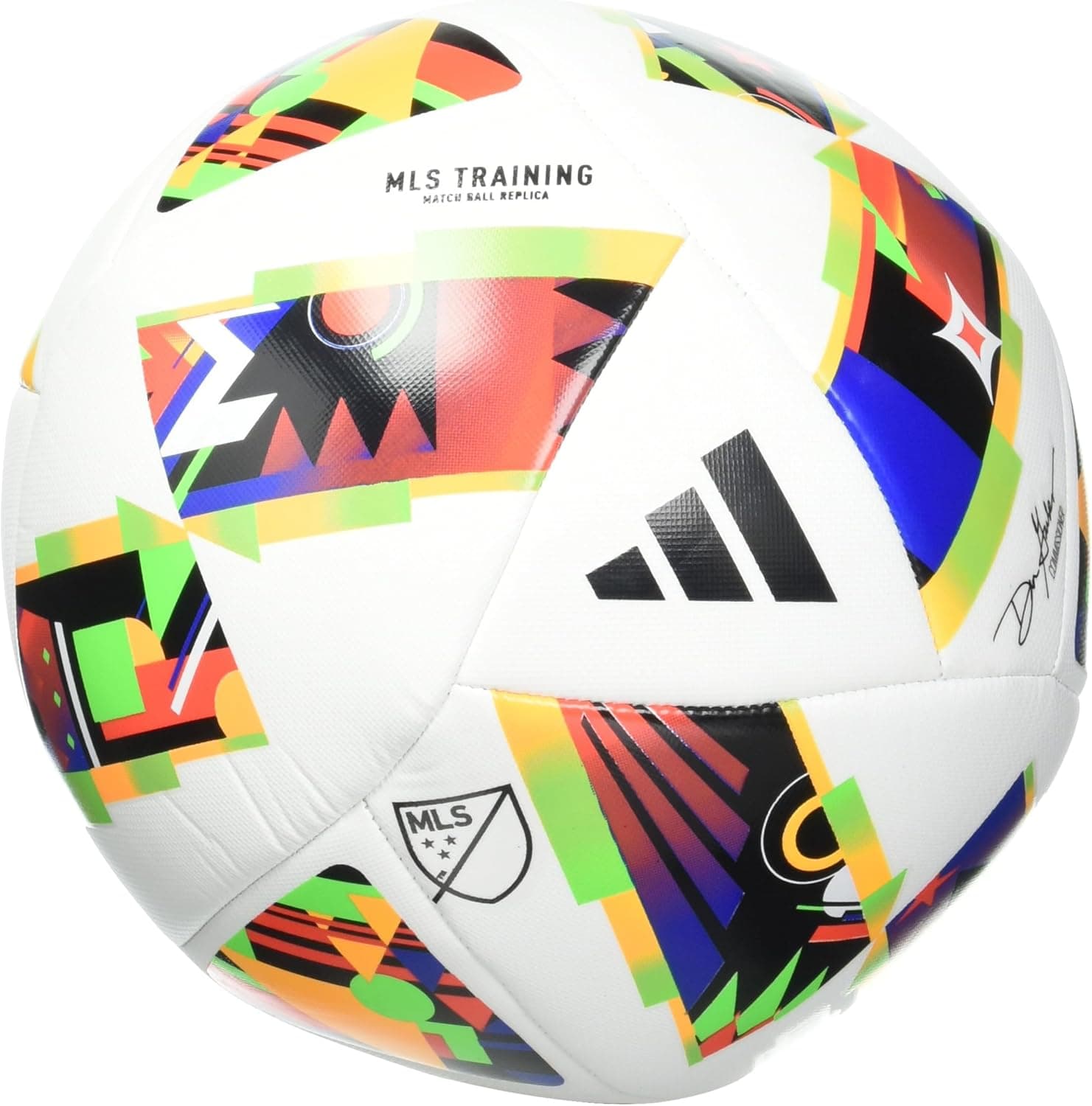
Adidas MLS Training Soccer Ball
View on Amazon →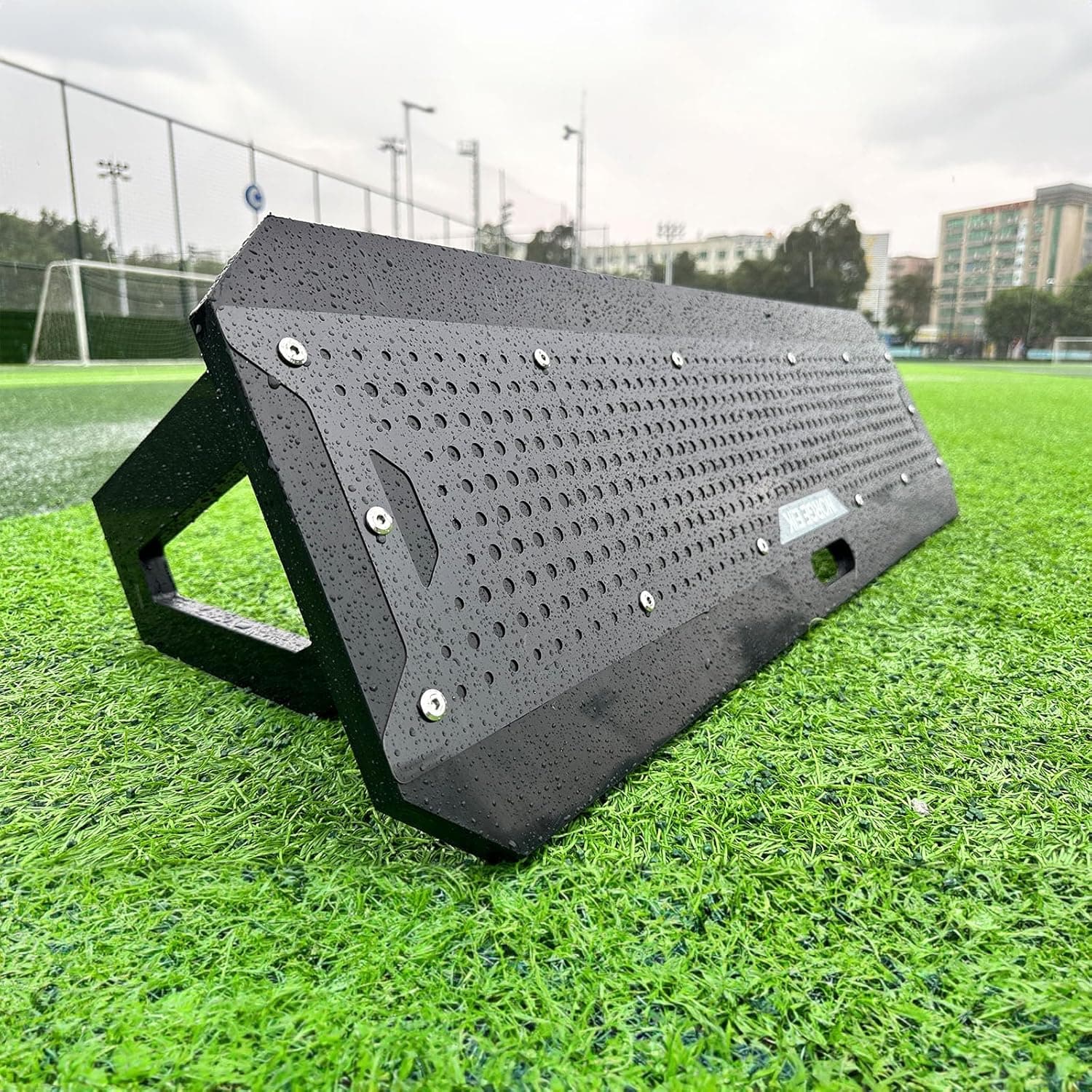
Soccer Rebounder
View on Amazon →As an Amazon Associate we earn from qualifying purchases, at no extra cost to you.