
The 98% Principle: Why Almost Every Player Needs the Same Individual Training
March 16, 2026
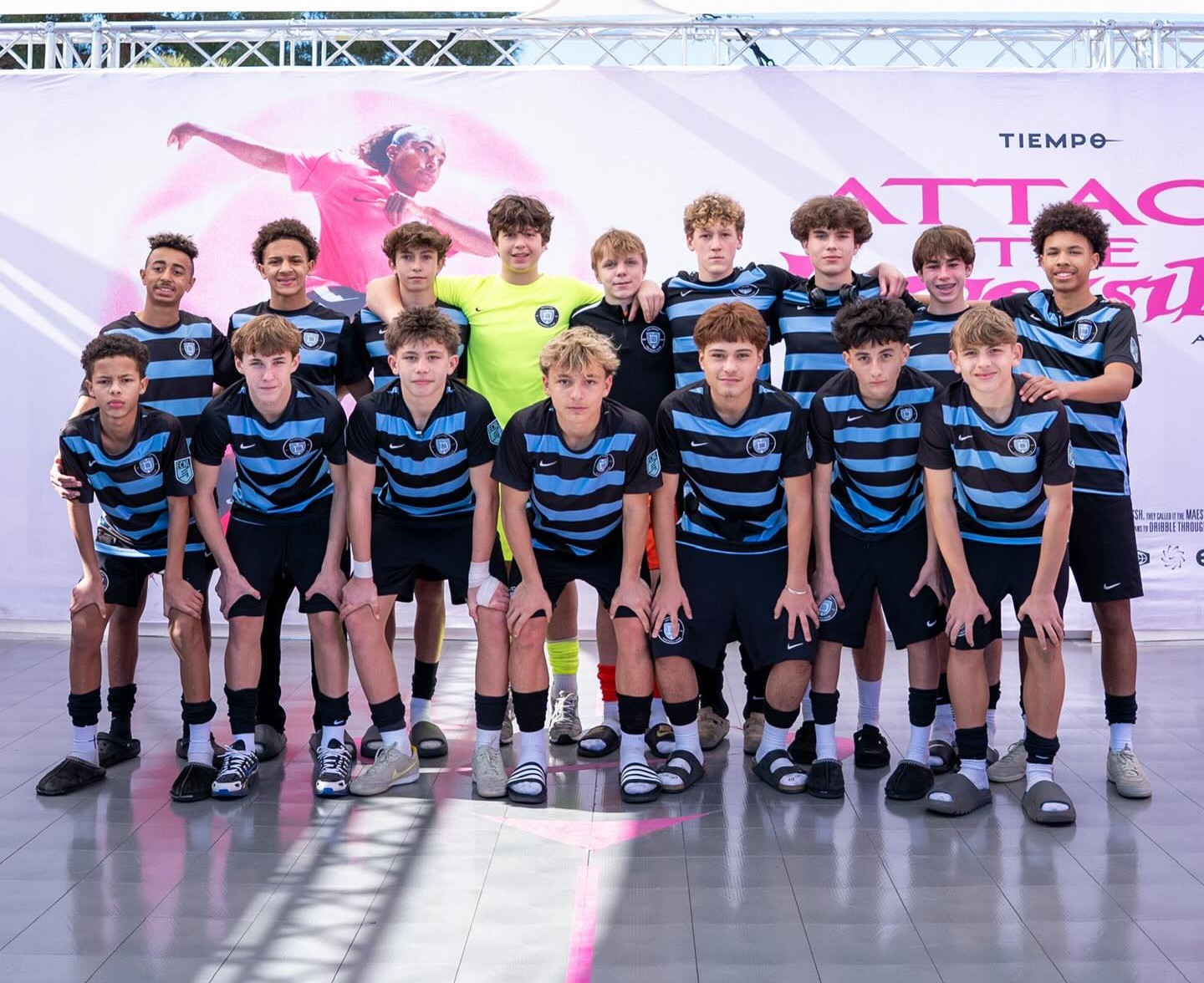
🎧 From The Inside Scoop Podcast with Neil Crawford
This article is adapted from Episode “The 98% Principle” of The Inside Scoop podcast. Below you’ll find the full breakdown of the ideas discussed, including the TIER framework for player development. The full podcast script follows the article.
I got some thoughtful feedback from a listener recently — and I want to address it directly because it represents what a lot of people in the soccer world believe. And honestly, it’s what I used to believe too before I went deep on this.
The listener made three specific points. First: not every player is the same — you can’t treat a beginner the same as an advanced player. Second: game-like training is superior to individual training. And third: you can make individual training better by making drills more dynamic.
I respect all three of those points. And I’m going to disagree with all three of them today — with specifics.
Here’s my central claim: 98% of players need to do 98% of the same things, 98% of the time when it comes to solo training.
The TIER Framework
Before I get into the strategy, I want to introduce a framework that anchors everything else. I call it TIER.
T.I.E.R. — The Four Inputs of Player Development
Time — The total hours invested in the craft over months and years.
Instruction — The quality of coaching, guidance, and feedback a player receives.
Effort — The intensity and intentionality a player brings to every session.
Reps — The raw number of quality touches accumulated over time.
These are the four inputs that determine how good a player gets. There’s no secret fifth ingredient. There’s no shortcut that bypasses these four things.
Now here’s where I’m going to say something that goes against almost everything you hear in youth soccer circles:
I do not believe that lack of proper instruction is the primary problem for most youth soccer players.
Most youth players have access to decent coaching. They have YouTube. They have apps. They have club coaches and school coaches. Instruction is everywhere. Instruction is not the bottleneck.
The issue — by a massive margin — is lack of time and lack of reps. Players simply are not putting in enough total hours. They are not accumulating enough total touches. Everything else is secondary to this simple, unglamorous reality.
When you look at it through the TIER lens, you realize that Time and Reps are the variables most within a committed family’s control — and they are the variables most neglected.
The Strategy: Volume, Variation, and Variety
My in-home training strategy is built on three pillars:
1. Max Reps in the Shortest Amount of Time
Reps are the currency of skill development. Period. The player who accumulates more quality touches over time wins. Most training environments burn too much time on setup, explanation, and standing around. Every minute of a session should have a ball at someone’s feet.
This goes directly back to TIER. If Time and Reps are the biggest levers — then the job of a training session is to maximize both. Not to look impressive. Not to be complicated. To get as many quality reps as possible in the time available.
2. High Variation Within a Skill Area
If we’re working on receiving, I’m not going to do one receiving drill ten times. I’m going to attack receiving from ten different angles, surfaces, speeds, and distances. The brain needs novelty to encode a skill deeply. Pure repetition of the exact same motion builds habit. Variation within a skill builds mastery. There’s a difference — and it matters.
3. High Variety Across Skill Areas
After receiving, we rotate. Passing. Dribbling. Finishing. Not because we’re scattered — but because cross-skill variety keeps engagement high and mirrors the actual demands of the game.
The reason I can execute this strategy consistently is because the technology sequences it. The app decides what comes next. The app tracks the time. The app keeps the volume up. Technology plus human is better than either one alone. The technology brings structure, volume, and consistency. The human brings presence, encouragement, and the ability to adjust in the moment.
What This Strategy Solves
It Eliminates Bias
Left to their own devices, players train what they’re comfortable with. Every single time. The kid who loves to shoot will shoot. The kid who’s strong with his right foot will use his right foot. Parents do the same thing — designing sessions around whatever their kid already does well.
What you end up with is a player who gets really good at their strengths and quietly falls further behind on their weaknesses. And then you wonder why they struggle in certain game situations. My system eliminates that. The variation is built in. The rotation is built in. The bias gets crowded out by the structure.
It Preserves the Parent-Child Relationship
I’ve seen training destroy relationships. Parent gets frustrated, kid shuts down, and the car ride home is silent and miserable. I’ve been in that car. A lot of soccer parents have.
Technology creates autonomy. And autonomy changes everything. When the app is running the session, I’m not the bad guy. I’m not the one pushing. The structure is external — and the child can engage with it on their own terms.
The interval format specifically — short bursts of focused work with clear breaks — means the child never reaches the point of overwhelm. There’s always a reset coming. That keeps them emotionally in the game, which keeps them physically in the game.
My goal as a parent-trainer is to still be my kid’s favorite person at the end of the training session. The technology helps me do that.
No Beginner, Intermediate, or Advanced Buckets
I don’t use beginner, intermediate, or advanced classifications. Not in my app, not in my training design, not in my thinking.
When most people say “treat them differently,” they mean: give advanced players harder drills, more complex patterns, fancier sequences. What ends up happening is the advanced player spends their individual training time doing things that look impressive but are really just complicated versions of the same fundamentals.
Here’s the truth: the beginner and the advanced player both need max reps of receiving, passing, dribbling, and finishing. What differs is the intensity, the speed, the degree of variation, and the standard held during the session.
The Messi Example: If I were designing an individual training session for Lionel Messi, it would not be fundamentally different in structure than the session I design for my 12-year-old. Same skill areas. Same principles. Same framework. What changes is what I expect during that session — the precision, the speed, the complexity of variation. The blueprint is the same. The standard is different.
When you look at a beginner versus an advanced player through the TIER lens — the advanced player got there through more Time and more Reps. Not through fundamentally different Instruction. Not through some secret category of advanced drills. They put in more hours. They accumulated more touches. The way to close the gap is not to find fancier drills — it’s to close the gap in Time and Reps.
Parents get skill classifications wrong almost every time — almost always overestimating. But the deeper reason I don’t use labels is that the classification itself sends you looking for different drills when what you actually need is a higher standard within the same drills and more total time doing them.
What Individual Training Is Actually For
Individual training is best suited — and I would argue almost limited — to strengthening fundamentals.
There is no such thing as truly advanced individual training. What is a fundamental? It’s a skill that has to become automatic. Receiving. Passing. First touch. Dribbling under pressure. These need to be so deeply wired that a player doesn’t have to think about them in a game. The moment a player has to think about their first touch, they’ve already lost a half second. In a high-level game, that half second is everything.
The goal of individual training is to radically strengthen neuroplasticity in a way that makes game-like training more effective. You’re not training soccer in your driveway. You’re training the nervous system. You’re building the wiring. When a coach puts that player in a game-like scenario, the wiring fires, and the player performs.
Dynamic vs. Game-Like — A Critical Difference: Dynamic means attacking the skill from more angles, speeds, and surfaces. Game-like means introducing decision-making, pressure, and unpredictability. These are not the same thing. You can absolutely make individual training dynamic. But the moment you try to make it truly game-like, you’ve left the domain of individual training and entered coach-assisted training wearing individual training clothes.
The strength of individual training is that you can go deeper and be more streamlined than any other environment allows. In a team practice, a coach has 15 kids. In individual training, you have one player, one skill area, and as much time as you want. That extraordinary advantage gets squandered when people try to replicate team training in a driveway.
Through the TIER framework — individual training is the most efficient environment for maximizing Time and Reps. You control the schedule. You control the pace. There’s no waiting for teammates. There’s no coach splitting attention 15 ways. It’s just the player and the ball and the clock.
The Role of Coaches and Game-Like Training
If individual training builds the wiring — coaches activate it. I want coaches to execute game-like scenarios that improve decision-making and on-field performance. That is their superpower. That is what they can do that a driveway cannot replicate.
The sequence matters. Individual training loads the neurological foundation. Game-like training activates it. Skip the individual work, and game-like training has less to work with. Skip the game-like training, and the individual work never gets tested under real conditions. These are not competing approaches. They are sequential and complementary. Trying to collapse them into one thing robs both of their power.
The Oil Change Analogy: Changing your oil is simple — any parent can do it at home with basic tools. Replacing a transmission requires specialized knowledge and equipment. Does that make the transmission more important? Of course not. A car with a perfect transmission and no oil is destroyed in minutes.
Game-like training is the transmission work. It’s complex. It requires a skilled coach. Done poorly, it can confuse players and ingrain poor decision-making. Individual training is the oil change — foundational, essential, and something a committed parent can absolutely do at home with the right tools.
The difference isn’t importance. The difference is execution risk. And execution risk is not the same as value. Through the TIER lens — coaches are where Instruction lives. That’s their domain. But Instruction without sufficient Time and Reps underneath it is like trying to build a house on sand.
Stop ranking training methods. You need both. They serve different purposes. Honor both for what they actually are.
Why My Kids Got More Touches Per Minute
The reason my kids got dramatically more touches per minute than most players their age wasn’t because they were gifted or had special access to elite coaching. It was because we understood that Time and Reps were the variables we could control — and we controlled them obsessively.
Volume plus streamlining equals more reps. That’s the math. And over months and years, those extra reps compound in ways that are genuinely hard to explain until you see it happen.
Three things we did:
Max volume. Every session was designed around reps first. Not around looking good. Not around performing for an audience. Not around doing impressive things. Just reps. How many quality touches can we get in this window of time? That was always the question.
Using idle time wisely. My kids were getting touches before practice while other kids were standing around talking. They were getting touches in the parking lot before games while other players were sitting in the car on their phones. That idle time adds up to thousands of extra touches over a season. Nobody gave us extra time. We just used the time that everyone else was wasting. This is pure TIER. We didn’t have better instruction than anyone else. We just had more Time and more Reps.
Building autonomy. This is the one I’m most proud of. My kids got to the point where they could run their own sessions. They had the structure internalized. They didn’t need me standing there directing every single rep. That autonomy changed their relationship with training. It wasn’t something done to them. It was something they owned.
When a player owns their training, they train more. They train better. They show up differently. That’s the real outcome I was chasing.
The Bottom Line
The TIER framework — Time, Instruction, Effort, Reps — is how players get better. All four matter. But the variable most neglected and most within a family’s control is Time and Reps.
Most players don’t have an instruction problem. They have a time problem. They have a reps problem. And until we’re honest about that, all the sophisticated coaching in the world is building on a foundation that isn’t there.
The 98% principle isn’t about ignoring differences between players. It’s about recognizing that the differences that matter in individual training are about standard and intensity — not fundamentally different blueprints.
Beginners and advanced players both need max volume, high variation, and broad variety across skills. The advanced player just does it faster, with more precision, at a higher standard. The blueprint is the same. The standard is different.
If you’re the parent grinding with your kid in the driveway wondering if it’s enough — it is enough. If you’re doing volume, variation, and variety, you are doing the work. Don’t let anyone tell you otherwise.
Ready to put the 98% Principle into action?
Try our free 7-day training plan. Seven follow-along sessions your kid can do completely on their own.
Start Your Free Trial →Full Podcast Script: The Inside Scoop with Neil Crawford
Below is the complete script from the podcast episode. Read or listen — either way, the message is the same.
INTRO
“Welcome back to The Inside Scoop. I’m your host Neil Crawford, founder of Anytime Soccer Training — and today’s episode is a follow-up to something I said a few episodes back that got some real reaction.”
“I got some thoughtful feedback from a listener — and I want to address it directly because it represents what a lot of people in the soccer world believe. And honestly, it’s what I used to believe too before I went deep on this.”
“The listener made three specific points. First: not every player is the same — you can’t treat a beginner the same as an advanced player. Second: game-like training is superior to individual training. And third: you can make individual training better by making drills like cone lines more dynamic.”
“I respect all three of those points. And I’m going to disagree with all three of them today — with specifics.”
“Here’s my central claim: 98% of players need to do 98% of the same things, 98% of the time when it comes to solo training.”
“And today I’m also going to introduce a framework I call TIER — T-I-E-R. Time. Instruction. Effort. Reps. That’s the framework for how players actually get better. And once I walk you through it, I think you’re going to see the entire youth soccer development conversation very differently.”
“By the end of this episode I think you’re going to have a lot of clarity. And if you’re a parent who has been grinding with your kid in the driveway wondering if what you’re doing is actually working — I think this is going to be one of the most useful episodes I’ve ever put out.”
“Let’s get into it.”
PART 1: The TIER Framework
“Before I get into the strategy, I want to introduce a framework — because it’s going to anchor everything else I say today.”
“I call it TIER. T-I-E-R. Time. Instruction. Effort. Reps.”
“These are the four inputs that determine how good a player gets. That’s it. There’s no secret fifth ingredient. There’s no shortcut that bypasses these four things. Every player who has ever developed a high level of skill did it through some combination of these four elements.”
“Time — the total hours invested in the craft over months and years.”
“Instruction — the quality of coaching, guidance, and feedback a player receives.”
“Effort — the intensity and intentionality a player brings to every session.”
“Reps — the raw number of quality touches accumulated over time.”
“Now here’s where I’m going to say something that goes against almost everything you hear in youth soccer circles.”
“I do not believe that lack of proper instruction is the primary problem for most youth soccer players.”
“Read that again. Most youth players in this country have access to decent coaching. They have YouTube. They have apps. They have club coaches and school coaches and training programs. Instruction is everywhere. Instruction is not the bottleneck.”
“I also do not believe that lack of quality reps is the core issue — meaning I don’t think players are doing the wrong drills. Most drills, done consistently and at volume, will produce results.”
“And I don’t believe that practicing wrong is the issue for most players. Yes, bad technique exists. Yes, it should be corrected. But the idea that players are being fundamentally ruined by imperfect individual training? I don’t buy it.”
“Here is what I believe with everything I have: the issue — by a massive margin — is lack of time and lack of reps.”
“Players simply are not putting in enough total hours. They are not accumulating enough total touches. Everything else — the quality of the coaching, the sophistication of the drills, the game-like nature of the training — all of that is secondary to the simple, unglamorous reality that most players are not putting in the time.”
“This is why the TIER framework matters. When you look at it clearly, you realize that Time and Reps are the variables that are most within a committed family’s control — and they are the variables that are most neglected.”
“Instruction and Effort matter. But if you have decent instruction and genuine effort — the game changer is time and reps. That’s what separates players over the long arc of development.”
“Everything I’m going to talk about today is built on that foundation. Keep TIER in mind as we go.”
PART 2: The Strategy
“Now let me walk you through what I actually do — because this isn’t theory. I built this with my own kids, refined it over years of watching what works, and built an entire platform around it with over 5,000 follow-along training videos.”
“My in-home training strategy is built on three things. Max reps in the shortest amount of time. A high degree of variation within a skill area. And a high degree of variety across skill areas.”
“Let me break those down one at a time.”
“First — volume. Reps are the currency of skill development. Period. The player who accumulates more quality touches over time wins. It’s not complicated — but most training environments burn too much time on setup, explanation, and standing around. I obsess over eliminating that dead time. Every minute of a session should have a ball at someone’s feet.”
“This goes directly back to TIER. If Time and Reps are the biggest levers — then the job of a training session is to maximize both. Not to look impressive. Not to be complicated. To get as many quality reps as possible in the time available.”
“Second — variation within a skill. Let’s say we’re working on receiving. I’m not going to do one receiving drill ten times in a row. I’m going to attack receiving from ten different angles, surfaces, speeds, and distances. Why? Because the brain needs novelty to encode a skill deeply. Pure repetition of the exact same motion builds habit. Variation within a skill builds mastery. There’s a difference — and it matters.”
“Third — variety across skills. After receiving, we rotate. Passing. Dribbling. Finishing. Not because we’re scattered — but because cross-skill variety keeps engagement high and mirrors the actual demands of the game.”
“Now here’s where technology comes in. The reason I can execute this strategy consistently — and the reason my kids could do it without me standing over them — is because the technology sequences it for them. The app decides what comes next. The app tracks the time. The app keeps the volume up.”
“I believe technology plus human is better than either one alone. The technology brings structure, volume, and consistency. The human brings presence, encouragement, and the ability to adjust in the moment. You need both.”
PART 3: What This Strategy Solves
“This strategy does two things that most people don’t even realize they need.”
“The first thing it solves is bias.”
“Left to their own devices, players train what they’re comfortable with. Every single time. The kid who loves to shoot will shoot. The kid who’s strong with his right foot will use his right foot. Parents do the same thing — they design sessions around what they’ve seen work, which is usually whatever their kid already does well.”
“What you end up with is a player who gets really, really good at their strengths — and quietly falls further and further behind on their weaknesses. And then you wonder why they struggle in certain game situations.”
“My system eliminates that. The variation is built in. The rotation is built in. The bias gets crowded out by the structure.”
“The second thing this strategy solves — and this one is personal to me — is preserving the relationship between parent and child.”
“I’ve seen training destroy relationships. Parent gets frustrated, kid shuts down, and the car ride home is silent and miserable. I’ve been in that car. A lot of soccer parents have.”
“Technology creates autonomy. And autonomy changes everything. When the app is running the session, I’m not the bad guy. I’m not the one pushing. The structure is external — and the child can engage with it on their own terms.”
“The interval format specifically — short bursts of focused work with clear breaks — means the child never reaches the point of overwhelm. There’s always a reset coming. That keeps them emotionally in the game, which keeps them physically in the game.”
“My goal as a parent-trainer is to still be my kid’s favorite person at the end of the training session. The technology helps me do that.”
PART 4: No Beginner, Intermediate, or Advanced Buckets
“Okay — here’s where I’m going to lose some people. And I want you to stay with me because this is the heart of today’s episode.”
“I don’t use beginner, intermediate, or advanced classifications. Not in my app, not in my training design, not in my thinking.”
“Let me address the listener’s pushback directly: you can’t treat a beginner the same as an advanced player.”
“I understand why that sounds right. It feels right. The problem is it’s using the wrong unit of measurement.”
“When most people say treat them differently, they mean: give advanced players harder drills, more complex patterns, fancier sequences. And what ends up happening is the advanced player spends their individual training time doing things that look impressive but are really just complicated versions of the same fundamentals.”
“Here’s the truth: the beginner and the advanced player both need max reps of receiving, passing, dribbling, and finishing. What differs is the intensity, the speed, the degree of variation I introduce, and the standard I hold them to during the session.”
“And here’s my favorite way to illustrate this — the Messi example. I mean this literally. If I were designing an individual training session for Lionel Messi, it would not be fundamentally different in structure than the session I design for my 12-year-old. Same skill areas. Same principles. Same framework.”
“What changes is what I expect from Messi during that session. The precision. The speed. The complexity of variation I introduce. The standard is completely different. But the blueprint? The same.”
“The blueprint is the same. The standard is different. That is the 98% principle in action.”
“And here’s how TIER connects to this. When you look at a beginner versus an advanced player through the TIER lens — the advanced player got there through more Time and more Reps. Not through fundamentally different Instruction. Not through some secret category of advanced drills that beginners don’t have access to.”
“They put in more hours. They accumulated more touches. Over time, that gap in Time and Reps produced a gap in ability. And the way to close that gap is not to find fancier drills — it’s to close the gap in Time and Reps.”
“First reason I don’t use those labels: parents get these classifications wrong almost every time. Almost always overestimating. But the deeper reason is that the classification itself sends you looking for different drills when what you actually need is a higher standard within the same drills and more total time doing them.”
PART 5: What Individual Training Is Actually For
“This might be the most important thing I say in this entire episode — so I want you to really hear it.”
“Individual training is best suited — and I would argue almost limited — to strengthening fundamentals.”
“There is no such thing as truly advanced individual training. I know that sounds wrong. Stay with me.”
“What is a fundamental? It’s a skill that has to become automatic. Receiving. Passing. First touch. Dribbling under pressure. These are things that need to be so deeply wired that a player doesn’t have to think about them in a game. The moment a player has to think about their first touch, they’ve already lost a half second. And in a high level game, that half second is everything.”
“The goal of individual training — in my mind — is to radically strengthen neuroplasticity in a way that makes game-like training more effective.”
“Think about what that means. You’re not training soccer in your driveway. You’re training the nervous system. You’re building the wiring. And then when a coach puts that player in a game-like scenario, the wiring fires, and the player performs.”
“Now let me take on the second and third pieces of listener feedback together — because they’re connected.”
“The argument was: game-like training is better than individual training. And: you can improve cone line drills by making them more dynamic.”
“On making drills more dynamic — I actually agree with the instinct. Static, repetitive cone lines with no variation are a waste of time. But here’s where I diverge: the solution isn’t to make them game-like. The solution is to make them higher volume with more variation within the skill.”
“There’s a critical difference between dynamic and game-like. Dynamic means you’re attacking the skill from more angles, more speeds, more surfaces. Game-like means you’re introducing decision-making, pressure, and unpredictability. Those are not the same thing — and conflating them is where a lot of individual training goes off the rails.”
“You can absolutely make individual training dynamic. That’s exactly what my variation principle is about. But the moment you try to make it truly game-like — you’ve left the domain of individual training and entered the domain of small group or coach-assisted training. And that’s fine. But call it what it is.”
“Here’s something I want to say clearly: the strength of individual training is that you can go deeper and be more streamlined than any other training environment allows.”
“In a team practice, a coach has 15 kids. In a small group session, maybe 4 to 6. In individual training, you have one player, one skill area, and as much time as you want to go deep on it. That is an extraordinary advantage — and it gets completely squandered when people try to replicate team training in a driveway.”
“Individual training lets you isolate. It lets you repeat. It lets you build neurological depth that is simply not possible when there are other players, coaches, and game dynamics involved.”
“And here’s what follows from all of this: I don’t believe you can form game-like habits — good or bad — through solo training. The game is too complex, too dynamic, too unpredictable to be genuinely replicated alone. Which means the fear that individual training will ingrain bad habits? In my view, that fear is largely misplaced.”
“And when you run this through the TIER framework — individual training is the most efficient environment for maximizing Time and Reps. You control the schedule. You control the pace. There’s no waiting for teammates. There’s no coach splitting attention 15 ways. It’s just the player and the ball and the clock. That’s the most direct path to accumulating the Time and Reps that actually drive development.”
PART 6: The Role of Coaches and Game-Like Training
“So if individual training builds the wiring — what do coaches do?”
“I’ve said this before and I’ll keep saying it: I want coaches to execute game-like scenarios that improve decision-making and on-field performance. That is their superpower. That is what they can do that a driveway cannot replicate.”
“The sequence matters. Individual training loads the neurological foundation. Game-like training activates it. If you skip the individual work, the game-like training has less to work with. If you skip the game-like training, the individual work never gets tested under real conditions.”
“These are not competing approaches. They are sequential. They are complementary. And trying to collapse them into one thing robs both of their power.”
“Now I want to address the idea that game-like training is more valuable than individual training — because I hear this constantly and I reject the framing entirely.”
“Here’s my analogy. Changing your oil is simple. You can learn it in an afternoon. Almost any parent can do it at home with basic tools. Replacing a transmission is complex. It requires specialized knowledge, specialized equipment, and real experience. Most people cannot do it.”
“Does that make the transmission more important than the oil? Of course not. A car with a perfect transmission and no oil is destroyed in minutes.”
“Game-like training is the transmission work. It’s complex. It requires a skilled coach to execute well. Done poorly, it can actually confuse players and ingrain poor decision-making. Individual training is the oil change — foundational, essential, and something a committed parent can absolutely do at home with the right tools.”
“The difference isn’t importance. The difference is execution risk. And execution risk is not the same as value.”
“And through the TIER lens — coaches are where Instruction lives. That’s their domain. That’s what they do better than anyone. But Instruction without sufficient Time and Reps underneath it is like trying to build a house on sand. The foundation has to be there first.”
“So stop ranking training methods. You need both. They serve different purposes. Honor both for what they actually are.”
PART 7: Why My Kids Got More Touches Per Minute
“Let me get practical for a minute — because this is where the philosophy becomes real and tangible.”
“The reason my kids got dramatically more touches per minute than most players their age wasn’t because they were gifted or had special access to elite coaching. It was because we understood — before I even had the language for it — that Time and Reps were the variables we could control. And we controlled them obsessively.”
“Volume plus streamlining equals more reps. That’s the math. And over months and years, those extra reps compound in ways that are genuinely hard to explain until you see it happen.”
“Three specific things we did.”
“First — max volume. Every session was designed around reps first. Not around looking good. Not around performing for an audience. Not around doing impressive things. Just reps. How many quality touches can we get in this window of time? That was always the question.”
“Second — using idle time wisely. This one people underestimate. My kids were getting touches before practice while other kids were standing around talking. They were getting touches in the parking lot before games while other players were sitting in the car on their phones. That idle time adds up to thousands of extra touches over a season. Nobody gave us extra time. We just used the time that everyone else was wasting.”
“This is pure TIER. We didn’t have better instruction than anyone else at that point. We didn’t have access to fancier drills. We just had more Time and more Reps. That was it.”
“Third — building autonomy. This is the one I’m most proud of. My kids got to the point where they could run their own sessions. They had the structure internalized. They didn’t need me standing there directing every single rep.”
“That autonomy changed their relationship with training. It wasn’t something done to them. It was something they owned. And that sense of ownership — that internal motivation — is worth more than any specific drill or training method I could ever give them.”
“When a player owns their training, they train more. They train better. They show up differently. That’s the real outcome I was chasing.”
OUTRO
“Let me bring this all together.”
“The TIER framework — Time, Instruction, Effort, Reps — is how players get better. All four matter. But the variable that is most neglected, most underestimated, and most within a committed family’s control is Time and Reps.”
“Most players don’t have an instruction problem. They have a time problem. They have a reps problem. And until we’re honest about that, all the sophisticated coaching in the world is building on a foundation that isn’t there.”
“The 98% principle isn’t about ignoring differences between players. It’s about recognizing that the differences that matter in individual training are about standard and intensity — not fundamentally different blueprints.”
“Beginners and advanced players both need max volume, high variation, and broad variety across skills. The advanced player just does it faster, with more precision, at a higher standard. The blueprint is the same. The standard is different.”
“Individual training is not inferior to game-like training. It’s not superior either. It has a specific job — building neurological depth — and it does that job better than any other environment when it’s executed well. And the way to execute it well is to go deep, go streamlined, eliminate bias, protect the relationship, and build autonomy over time.”
“Look — I know some of you are still going to push back on this. That’s okay. I’m not here to convince everyone. I’m here to give you a framework that actually holds up when you pressure test it.”
“But if you’re the parent who has been grinding with your kid in the driveway wondering if it’s enough — I want you to hear this clearly: it is enough. If you are doing volume, variation, and variety — you are doing the work. Don’t let anyone tell you otherwise.”
“And if you want the system that executes all of this for you — the technology that sequences it, tracks it, keeps your kid engaged, and keeps your relationship intact — that’s exactly what Anytime Soccer Training is built to do.”
“Try the 7-day training plan. It’s completely free. Drop your email in the Facebook group or go to anytime-soccer.com. Seven sessions, follow-along videos, your kid can do it completely on their own.”
“If this episode resonated with you, share it with a soccer parent who needs to hear it. Leave a review if you’ve been getting value from the show — it genuinely helps more families find this content.”
“I’m Neil Crawford. This is The Inside Scoop. I’ll see you next time.”
Gear we use for this
The kit our own players train with at home.

Adidas MLS Training Soccer Ball
View on Amazon →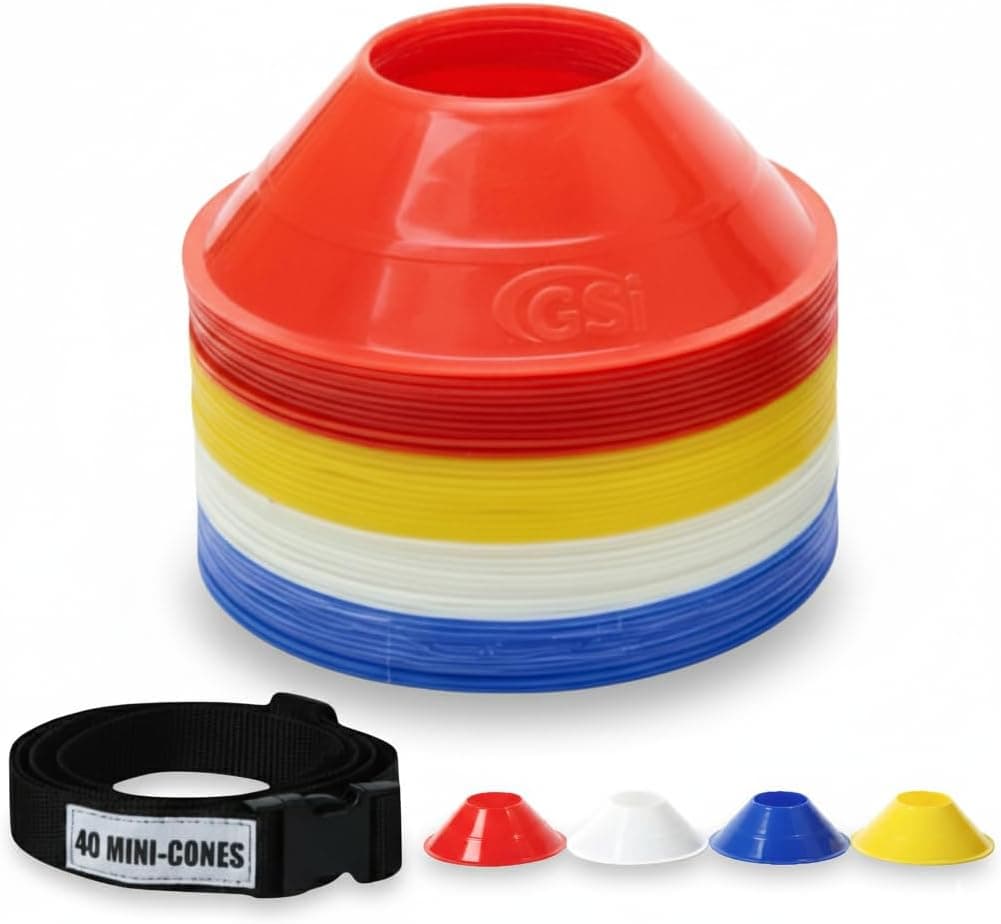
Disc Training Cones (Set of 40)
View on Amazon →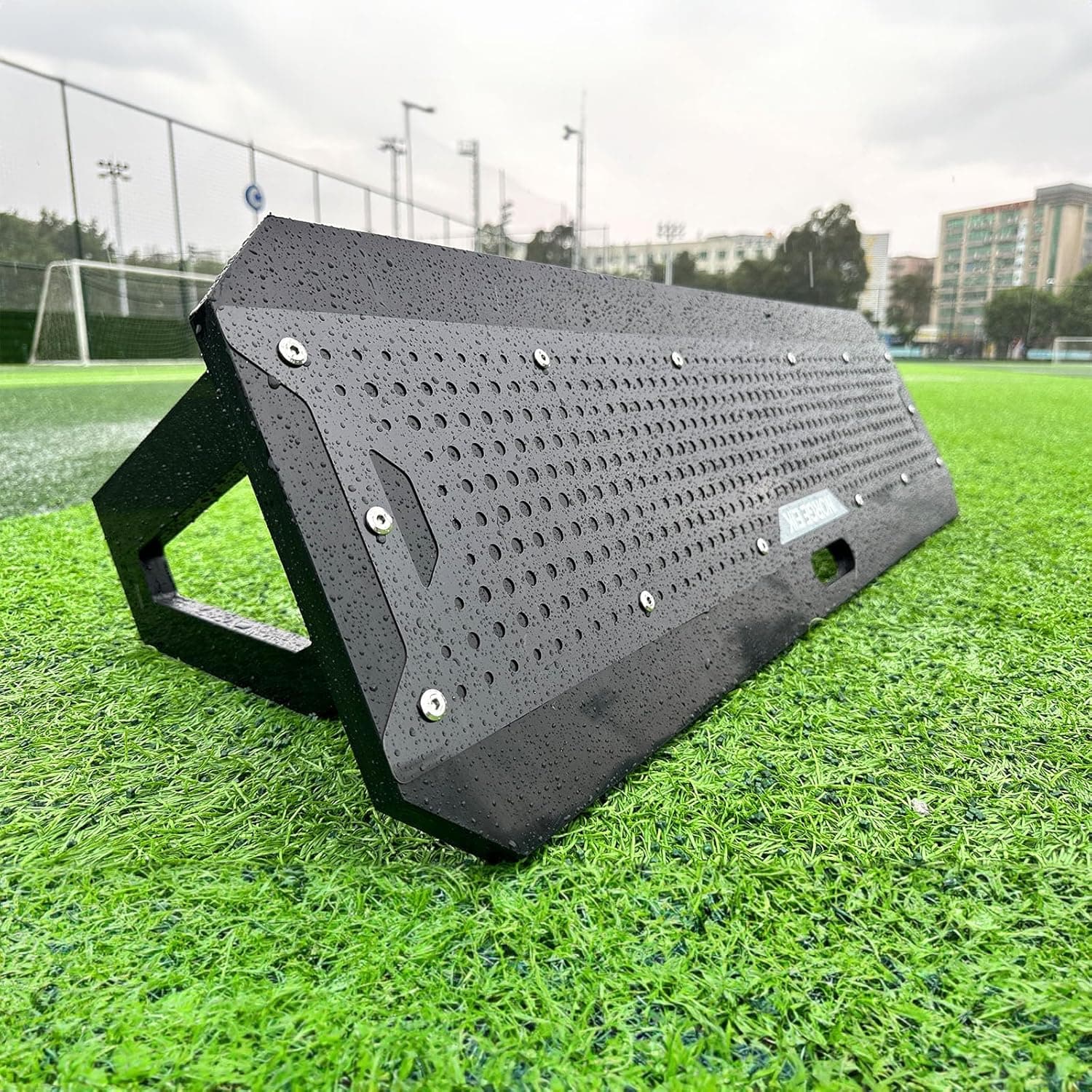
Soccer Rebounder
View on Amazon →As an Amazon Associate we earn from qualifying purchases, at no extra cost to you.