"Soccer is a game that demands players read and understand situations, scan constantly, and make countless rapid decisions based on what they perceive around them. Decision-making is not a small part of the game — it is the game."
— Tim Bradbury, Director of Coaching, Eastern New York Youth Soccer
This insight has been at the heart of good coaching education for decades, yet walk the sidelines of any youth soccer match on any weekend and you will witness the same scene: well-meaning parents and coaches shouting a continuous stream of instructions at players who are trying — desperately — to figure out the game for themselves.
We are going to explore why this matters, what the science says about player development and autonomous decision-making, and what you can do — as a parent, a coach, or simply someone who cares about youth players — to create the conditions where real growth actually happens.
Free Resource
Train Smarter at Home
5,000+ follow-along training videos that build independent decision-making — your player solves the problems, they just follow the coach on screen.
What Makes Soccer Uniquely Demanding
Most team sports have built-in pauses. Baseball has at-bats. American football has huddles. Basketball has timeouts and set plays. But soccer flows. There is almost no dead time in the game, and even the "pauses" — throw-ins, goal kicks — are brief and contested.
This means soccer players must make more real-time decisions per minute than athletes in almost any other team sport. Researchers at the Swedish Football Association found that elite players make a decision approximately every 1–2 seconds during active play. Over the course of a 90-minute match, that adds up to thousands of individual decisions.
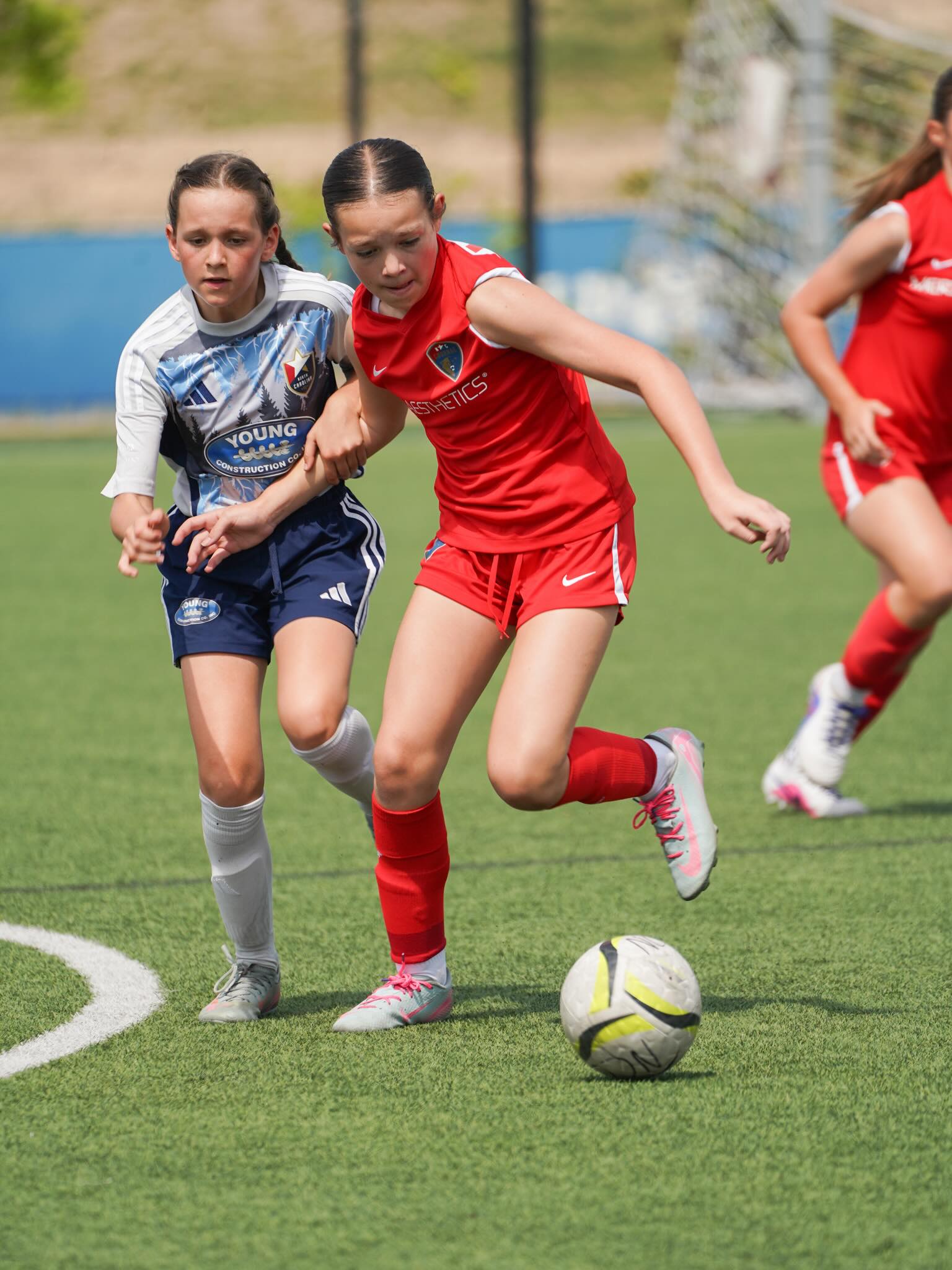
Those decisions range from the micro — which foot to use, where to position your body — to the macro — whether to play forward or switch the ball, whether to press or hold shape. What unites them is that they must all be made by the player, in the moment, with incomplete information, under physical and psychological pressure.
No coach, no parent, no tactical board can make those decisions. Only the player can.
The "Screaming Answer" Problem
Tim Bradbury poses a brilliant analogy. Imagine your child is sitting in a math class, staring at a problem on the board. They are working through it — reaching for what they know, making connections, constructing a solution. Now imagine an adult standing beside them screaming the answer.
What happens to the learning? It stops. The child never had to think. They never had to retrieve the process. They never built the neural pathway that would make solving the next problem easier. They just received an answer — and retained nothing.
Sideline coaching during games is the sporting equivalent of screaming the answer. The player who gets "SHOOT!" shouted at them never learned to read the cues that tell a player when to shoot. They just heard a noise and reacted to it. In the next game, they will need the noise again.
The Questions Every Soccer Parent Should Ask Themselves
- Do you value your child's ability to reason and think independently?
- Do you recognize that soccer is a game in which every player makes hundreds of decisions each match?
- How would you feel if your child went to school and, while trying to solve a math problem, adults stood beside them screaming answers?
- What matters more to you: your child's long-term growth and enjoyment, or the scoreline at the end of the game?
- By what process do you place yourself inside the player's body — seeing, feeling, and understanding everything they do — so that you can decide the "correct" solution?
Why Players Enjoy Solving Problems
Here is something that often surprises the adults in the room: players want to solve problems. It is not just that they can tolerate the difficulty — they actually find it rewarding.
Psychologist Mihaly Csikszentmihalyi's research on flow states — that feeling of being completely absorbed in a task — shows that humans enter flow when the challenge of a situation is closely matched to their ability to meet it. Soccer, at its best, is a flow-generating machine. The game constantly adjusts its difficulty to the player: harder problems against better opponents, more solvable problems against weaker ones.
When we strip problem-solving away from players by shouting instructions, we are not making soccer easier — we are making it less meaningful. We are turning what should be a rich cognitive challenge into a game of Simon Says. And children, even young children, know the difference. They disengage. They stop caring. They quit.
Bradbury says it plainly: "Players enjoy making decisions for themselves. They enjoy solving problems." The data on early dropout from youth sports — which research consistently puts at over 70% by age 13 — suggests we are not making the environment very enjoyable.
Players Know Things Coaches Don't
There is a deeper epistemological point here that coaches and parents rarely acknowledge: the player has access to information that no one else has.
At any given moment on the field, a player knows:
- Exactly how tired their legs are and how much burst they have left
- Whether their first touch in the last five minutes has felt reliable or shaky
- The emotional state they are in — confident, anxious, frustrated, sharp
- The exact angle and speed of the ball coming toward them
- What they perceive in their peripheral vision — including the defender they can feel but not yet see
A parent on the sideline has none of this. They see a two-dimensional version of a three-dimensional game, from a fixed angle, with no access to the proprioceptive, emotional, or perceptual data that makes a decision correct or incorrect for that specific player in that specific moment.
Coaching should be about expanding what a player is capable of perceiving and processing — not overriding the perception and processing they are already doing.
Find Great Coaches Near You
Soccer Near Me — Discover Youth Soccer Resources in Your Area
Looking for a coach who understands player-centered development? Soccer Near Me connects families with clubs, trainers, and programs that prioritize the right things — long-term growth over short-term results.
Find Soccer Near You →The Research on Autonomy-Supportive Coaching
Sports science has been building a clear picture for decades. Research on Self-Determination Theory (SDT), developed by Deci and Ryan at the University of Rochester, identifies three universal psychological needs that drive motivation:
| Psychological Need | What It Means in Soccer | How Sideline Shouting Damages It |
|---|---|---|
| Autonomy | The feeling that choices are yours | Eliminates it completely |
| Competence | The experience of getting better through effort | Never tested — the "answer" is always given |
| Relatedness | Feeling connected to teammates and coaches | Eroded by anxiety and fear of making mistakes |
Autonomy-supportive coaching — which provides structure and guidance without controlling behavior — has been consistently linked to higher intrinsic motivation, better technical development, lower dropout rates, and better long-term performance outcomes.
A 2019 study published in the Journal of Sport Sciences found that youth players coached by autonomy-supportive coaches showed significantly higher decision-making quality in match conditions after just one season, compared to players trained under directive coaching styles.
What This Looks Like in Practice
None of this means coaches should say nothing. Structure matters. Guidance matters. The difference lies in when and how coaching happens.
During Training — This Is Coach Time
Practice is where the learning happens. A good training session creates problems for players to solve, and creates space for coaches to ask questions, observe patterns, and guide understanding — after the player has had a chance to think and attempt.
Questions that develop decision-making:
- "What options did you have there?"
- "What were you looking at when you made that decision?"
- "What would you do differently, and why?"
- "Where was the danger coming from? What did that change for you?"
Notice these questions don't tell players what to do. They help players build the mental models they need to make better decisions on their own — in the next training session, and eventually in games.
During Games — This Is Player Time
The match is where players apply everything they have been building. Bradbury's call to "let the players think" applies most powerfully here. Unless there is a genuine safety concern, the best thing a parent can do during a game is cheer effort, celebrate good play, and trust the process.
Practical sideline behaviors that actually help:
- Cheer effort and attitude, not just outcomes ("Great pressure!" "Good tracking run!")
- Celebrate risk-taking, even when it doesn't work out
- Stay quiet when your player has the ball — that is the hardest, most important thing
- Ask "Did you enjoy the game?" before "Did you win?"
The Long Game: What You're Actually Building
Youth soccer is not an end in itself. It is a vehicle. The player who learns to read a game, stay calm under pressure, problem-solve in real time, and trust their own judgment is building a cognitive toolkit that will serve them far beyond the pitch.
These are the same skills that make someone a good leader, a good collaborator, a good employee, a good parent. The ability to assess a situation, weigh options quickly, commit to a decision, learn from the outcome, and adjust — this is what effective human beings do. And youth soccer, played in the right environment, is one of the best training grounds there is for developing exactly these capacities.
When we rob players of the chance to develop these skills by constantly telling them what to do, we are not just affecting their soccer. We are affecting their development as people.
Home Training
Build Independent Players at Home
Anytime Soccer Training's follow-along sessions are designed to let players lead their own development. Press play, follow the coach on screen, build real skills — no screaming required.
Tim Bradbury's Pledge — and Ours
Bradbury ends his article with a simple, powerful ask:
Make a pledge this season:
- ✅ Let the players think.
- ✅ Let them solve problems.
- ✅ Let them grow.
This is not a passive ask. It requires real discipline — especially in those tense moments late in a close game when every fiber of your being wants to shout a direction. But the payoff is a player who can handle those moments themselves. Who scans the field, assesses the situation, picks a solution, and executes it — all in under two seconds, all on their own.
That is a remarkable thing to build. And the only way to build it is to give players the space to fail, figure it out, and try again.
Finding the Right Environment
The principles in this article are only as good as the environment in which your child trains and plays. Not every club, not every coach, and not every team culture prioritizes player autonomy and long-term development.
When evaluating a program, ask coaches these questions:
- How do you handle player mistakes during games?
- Do you encourage players to try new skills even if they might fail?
- How do you use questions rather than instructions in training?
- What does success look like for you at this age group?
Their answers will tell you everything you need to know. If success is defined entirely by wins and standings, look elsewhere. If it includes things like enjoyment, decision-making development, and technical growth — you may have found the right fit.
You can also use resources like Soccer Near Me's trainer directory to find individual coaches in your area who specialize in youth development and player-centered approaches. Reading their profiles, watching their training philosophy in action, and asking the questions above will help you make a great choice.
A Note on At-Home Training
One of the underappreciated benefits of at-home training is that it is inherently player-driven. There is no coach standing over a child's shoulder telling them what to do. There is no parent nervously hovering. There is just a player, a ball, and a problem to solve.
Done well, at-home ball mastery training is one of the most autonomy-rich forms of soccer development available. The player decides when to speed up, when to back off, when to try the drill again. They experience the direct feedback of the ball — it goes where they send it, and it doesn't lie. Failure is immediate, private, and instructive.
Anytime Soccer Training was built on exactly this philosophy. The platform's 5,000+ follow-along sessions are designed to be led by the player, not the parent. The on-screen coach demonstrates, the player follows, makes choices about pace and effort, and develops genuine competence — the kind that shows up on game day as confident, independent decision-making.
The Bottom Line
Tim Bradbury has been making this argument for years through coaching education in Eastern New York. The fact that he still needs to make it — that it remains the theme of course after course, season after season — tells us something important: this is hard. Watching your child struggle on a soccer field is emotionally difficult. The urge to help is human and understandable.
But the help that actually helps is the kind that builds capacity — not the kind that substitutes for it. Every time you resist shouting an instruction, you give your player a fraction of a second more to think for themselves. Over hundreds of games and thousands of moments, that adds up to a player who has learned to read the game, trust their instincts, and handle pressure.
Let them think. It is the most important thing you can do.
Ready to build a thinking player?
5,000+ Follow-Along Training Sessions — Free to Start
Structured ball mastery, dribbling, and technical programs your child can follow independently — at home, at their own pace, building real decision-making skills one touch at a time.
This post was inspired by Tim Bradbury's article "Let Them Think," originally published through Eastern New York Youth Soccer. Tim Bradbury serves as Director of Coaching for Eastern New York Youth Soccer Association and is a long-time contributor to coaching education in the United States.