
Figure 8 Dribbling: Big Results From Two Cones and a Driveway
January 2, 2023
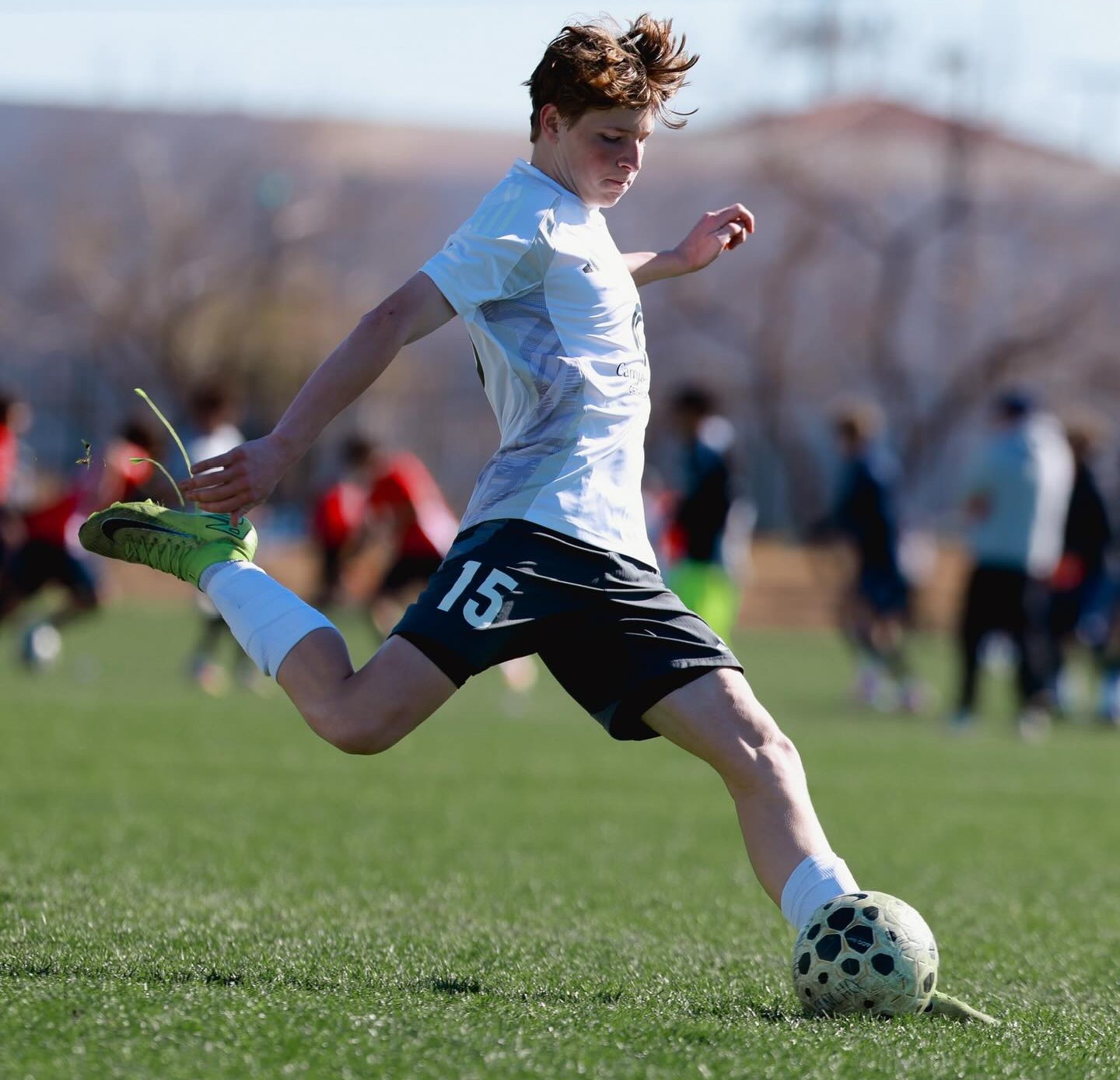
You do not need a field. You need two cones, about five yards of flat ground, and fifteen minutes. That is the whole argument for figure 8 dribbling, and it is why it is the first thing we hand a player who says they have nowhere to train.
A figure 8 forces the two things a young player avoids on an open pitch: constant direction change, and touches with the inside and outside of both feet. On a big space a player can run in a straight line and look competent. Around two cones there is nowhere to hide.
Why two cones beats an open field
Give a nine-year-old a full pitch and they will take five touches in thirty yards. Give them a figure 8 and they will take thirty touches in the same time, every one of them a decision. Repetition is what builds a dribbler, and small spaces manufacture repetition.
It also mirrors the game more honestly than most drills. Players almost never receive the ball with space in front of them. They receive it with a defender close, in a tight channel, and have to turn out of it.
Two cones, five yards apart, is the entire setup. Shoes, water bottles and cereal boxes all work. Nobody has ever improved less because their cones were not orange.
The core pattern
Set two cones five yards apart. Dribble around the first cone, cut back across the middle, go around the second cone, and return. That loop is the figure 8. Everything else is a variation of it.
1. Inside-foot figure 8
The foundation. Only the inside of each foot touches the ball, which forces the player to open their hips and use both feet rather than dragging everything onto their strong side.
- How to set it up: Two cones, five yards apart. Walk it first, then jog it.
- How long: 2 minutes, rest 30 seconds, repeat twice.
- What good looks like: Small touches, ball never more than a foot away, head lifting between touches.
- The usual mistake: Big touches and a straight sprint between the cones. If they are running more than dribbling, move the cones closer.
2. Outside-foot figure 8
Harder, and the one that transfers most directly to beating a defender. The outside of the foot is what carries the ball away from pressure.
- How to set it up: Same two cones. Outside of the right foot going one way, outside of the left coming back.
- How long: 2 minutes each direction.
- What good looks like: The ball stays glued to the outside of the boot through the whole turn.
- The usual mistake: Switching to the inside foot halfway round because it is easier. Slow it down instead.
3. Sole roll figure 8
Uses the bottom of the foot to drag the ball across the body. It builds the close control that lets a player keep the ball under a defender's nose.
- How to set it up: Same cones, sole of the foot only, at walking pace to start.
- How long: 90 seconds, three times.
- What good looks like: The ball moves smoothly under the body rather than being stabbed forward.
- The usual mistake: Standing upright. Knees bent, weight forward.
4. Speed figure 8
The same loop, timed. This is where control gets tested, because pace exposes every sloppy touch.
- How to set it up: Same cones. Count how many complete figure 8s in 60 seconds.
- How long: Three rounds, one minute each, note the best score.
- What good looks like: The count goes up week to week without the ball getting further from the feet.
- The usual mistake: Chasing the number at the cost of control. A fast loop with three bad touches is worse than a slow clean one.
A four-week progression
Do not do all four variations on day one. Layer them, one a week, so each becomes automatic before the next is added.
| Week | Focus | Time per session |
|---|---|---|
| 1 | Inside foot only, walking then jogging | 10 minutes, 4 days |
| 2 | Add outside foot | 12 minutes, 4 days |
| 3 | Add sole rolls, mix all three | 15 minutes, 4 days |
| 4 | Timed speed rounds, track the score | 15 minutes, 4 days |
What to watch for as a parent
You do not need to know how to coach the technique. You need to notice those five things and say what you see. "Your head was up that time" is worth more than any instruction.
- Head coming up between touches, not glued to the ball
- Both feet involved, not one foot doing 90% of the work
- Knees bent and weight low through the turns
- Touches getting smaller as the weeks go on, not bigger
- The ball staying within a stride at all times
Train it, do not just read about it.
Every drill on this page is a follow-along video inside Anytime Soccer Training. Your player presses play, copies what they see, and the app keeps track of what they have done.
Gear we use for this
The kit our own players train with at home.
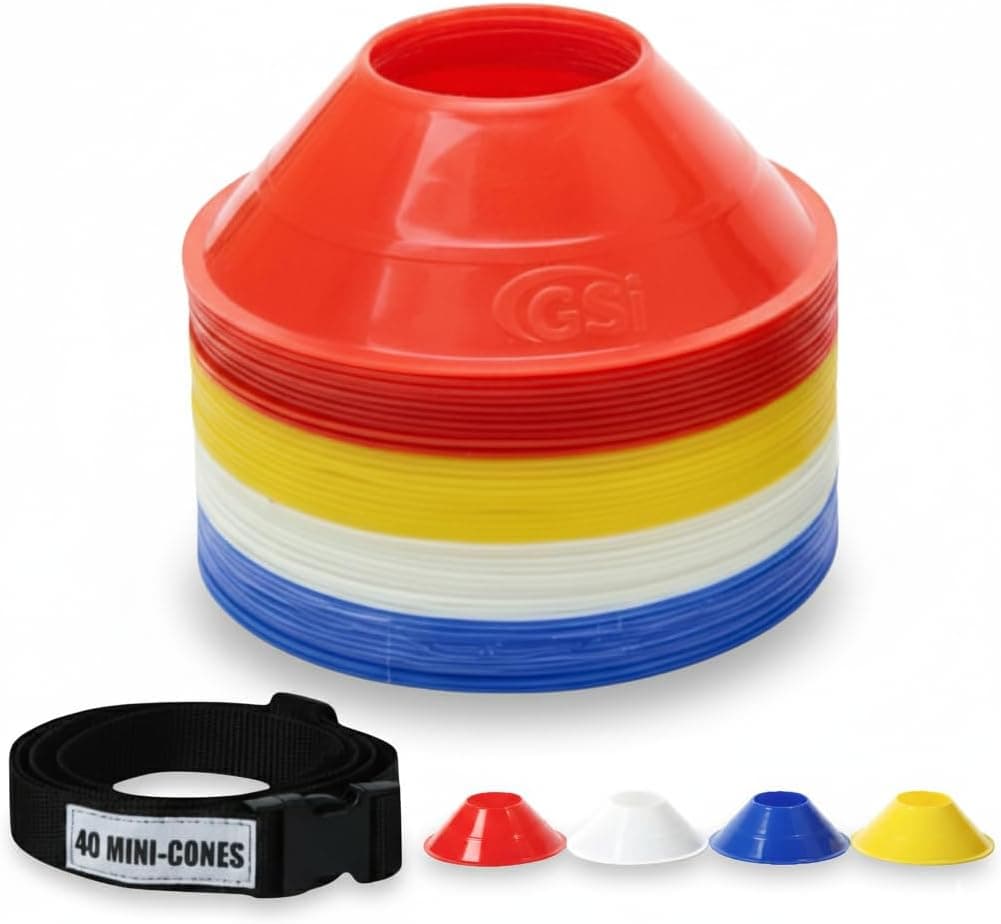
Disc Training Cones (Set of 40)
View on Amazon →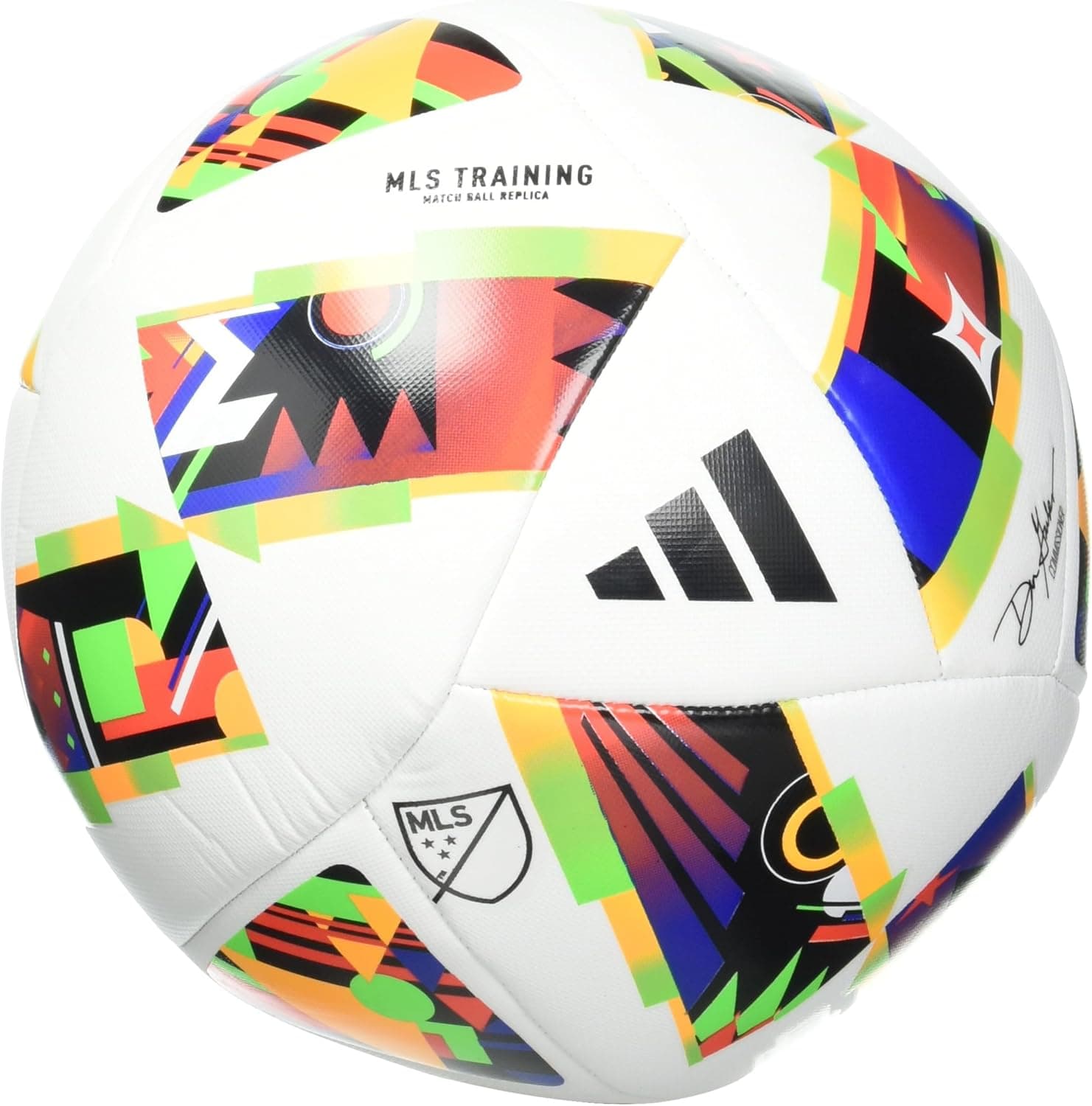
Adidas MLS Training Soccer Ball
View on Amazon →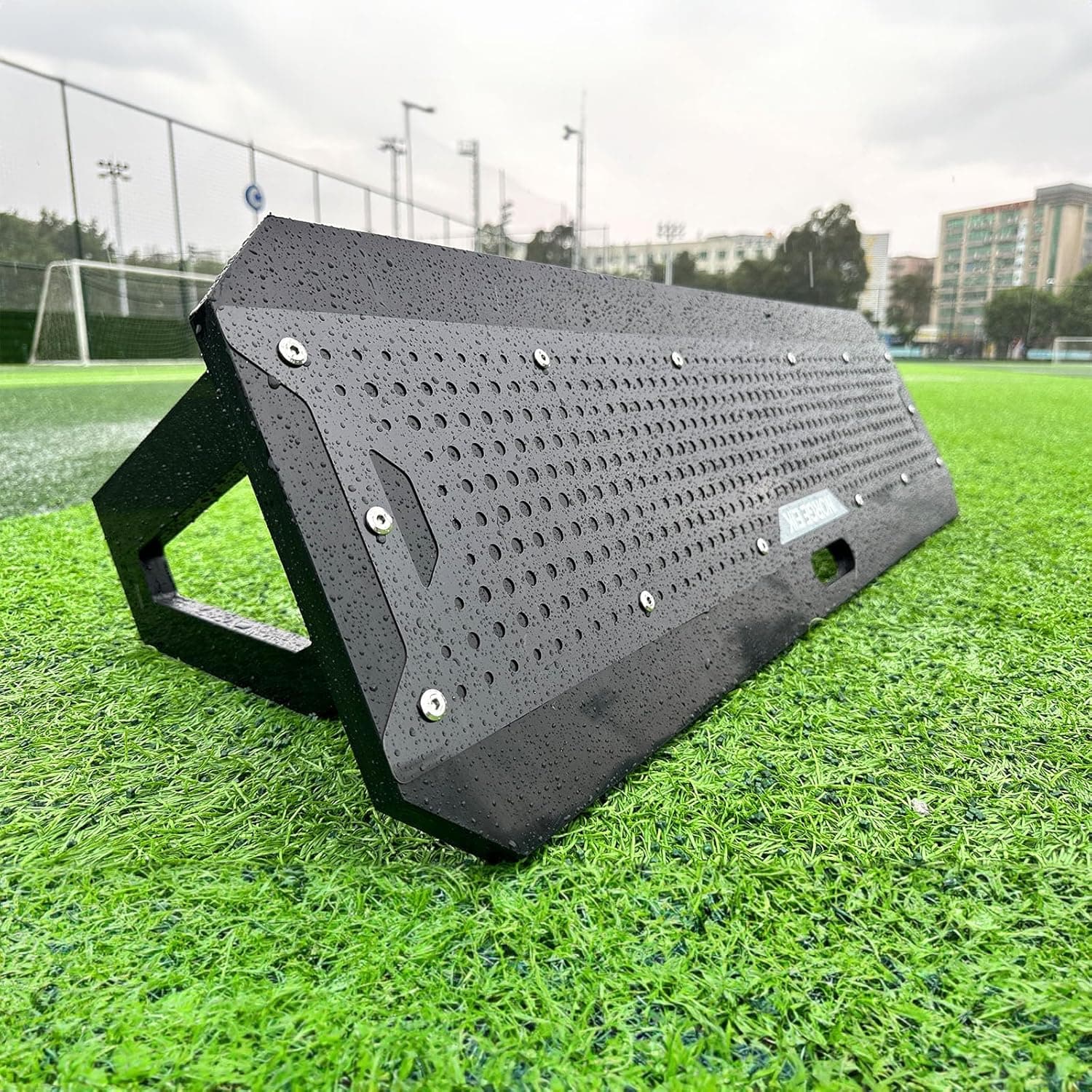
Soccer Rebounder
View on Amazon →As an Amazon Associate we earn from qualifying purchases, at no extra cost to you.