Your child doesn't need an expensive training facility, a private coach, or hours of free time to develop world-class ball control. They need 10 minutes, a ball, and the right drills.
Ball mastery is the foundation of everything in soccer — dribbling under pressure, quick passing, first touches, even shooting accuracy. Players who are truly comfortable on the ball make faster decisions, recover from mistakes more quickly, and simply enjoy the game more.
The best part? Every drill in this guide can be done in your living room, garage, basement, or backyard. No cones, no goals, no team required.
Free Download
The Parent Trainer's Playbook
Everything a soccer parent needs to run effective at-home sessions
Why Ball Mastery Is the Most Important Skill to Train at Home
Research from the Dutch FA (KNVB) and top European academies consistently shows that technical proficiency — specifically comfort with the ball at foot — is the single biggest differentiator between players who advance and those who plateau.
Here's why ball mastery works so well as a home training focus:
- It requires zero space. A 6×6 foot area is enough for every drill in this guide.
- It transfers directly to games. Every touch in a match uses the same surfaces trained here — sole, inside, outside.
- Muscle memory builds fast. The brain consolidates motor skills during sleep, so even 10 minutes before bed produces measurable gains within 2–3 weeks.
- It builds confidence. When a player trusts their feet, they play without hesitation — and that's when the game becomes fun.
Think of ball mastery like learning to type. At first, you hunt and peck for each key. With enough repetition, your fingers move automatically. That's exactly what we're building — automatic footwork that frees up your child's mind to focus on reading the game.
What Age Should You Start Ball Mastery Training?
| Age Group | Focus | Session Length |
|---|---|---|
| U6–U8 | Toe taps and rolls — keep it playful | 5 minutes |
| U9–U11 | All 10 drills, build speed gradually | 10 minutes |
| U12–U14 | Full routine plus speed challenges | 10–15 minutes |
| U15+ | Add movement, pressure, and creativity | 15–20 minutes |
Short answer: the earlier the better. But players of any age benefit — even high school players who never did structured ball mastery see rapid improvement within weeks of consistent practice.
The 10-Minute Ball Mastery Routine
Here's the structure: 10 drills, 60 seconds each. No rest between drills. Do this 4–5 times per week and you will see real, noticeable improvement within 2–3 weeks.
| # | Drill | Primary Skill | Time |
|---|---|---|---|
| 1 | Toe Taps | Coordination and rhythm | 60 sec |
| 2 | Side-to-Side Rolls | Sole of foot control | 60 sec |
| 3 | Forward-Back Rolls | Ball manipulation | 60 sec |
| 4 | Inside-Inside Touches | Inside foot control | 60 sec |
| 5 | Outside-Outside Touches | Outside foot control | 60 sec |
| 6 | Inside-Outside Combo | Transition between surfaces | 60 sec |
| 7 | V-Pulls | Change of direction | 60 sec |
| 8 | L-Turns | Turning under pressure | 60 sec |
| 9 | Triangles | Multi-surface flow | 60 sec |
| 10 | Foundation (Free Flow) | Creativity and combination | 60 sec |
Drill 1: Toe Taps
This is the single most important ball mastery drill in existence. If your child only does one drill, make it this one. Toe taps build the coordination, rhythm, and foot-eye connection that underlies every other skill.
Why it matters: Top academy players can do 120+ toe taps per minute without losing control. That level of comfort with the ball translates directly to first-touch situations in games.
How to do it:
- Stand with the ball in front of you
- Lightly tap the top of the ball with the sole of your right foot
- As that foot comes down, tap with your left foot
- Alternate feet in a rhythmic pattern
- Stay on the balls of your feet, knees slightly bent, arms out for balance
Common mistakes to avoid:
- Stomping hard on the ball — touches should be light and quick
- Looking down the entire time — practice glancing up occasionally
- Flat-footed stance — stay springy and athletic
⚡ Challenge: Count toe taps in 30 seconds. Write it down and try to beat the record each session. This single number is one of the best proxies for ball mastery progress.
Drill 2: Side-to-Side Rolls
This drill builds feel and control using the sole of the foot — the most important surface for controlling a rolling ball. Players who master this are far more comfortable receiving passes under pressure.
How to do it:
- Place your right foot on top of the ball
- Roll the ball to the left using the sole of your foot
- Stop it with the inside of your left foot
- Place your left foot on top and roll it back to the right
- Repeat in a smooth, continuous motion
Key cue: Keep the ball in a tight area. The goal isn't to cover ground — it's to develop touch. Stay relaxed, not tense.
Drill 3: Forward-Back Rolls
This trains the sole-of-foot pull-back — one of the most used movements in tight spaces. Almost every advanced ball mastery move starts with a pull-back.
How to do it:
- Place your right foot on top of the ball
- Roll the ball forward with the sole, letting it come off your toes
- Pull it back with the sole in a smooth rolling motion
- Repeat: forward and back, forward and back
- Switch to left foot after 30 seconds
Progression: Once comfortable, try doing these while slowly moving sideways — this simulates protecting the ball from a sliding defender.
Drill 4: Inside-Inside Touches
The inside of the foot is used more than any other surface in soccer — for passing, receiving, and close control. This drill makes that touch automatic.
How to do it:
- Push the ball left with the inside of your right foot
- Immediately push it right with the inside of your left foot
- Alternate feet in a steady rhythm
- Keep the ball in a tight area directly in front of you
⚡ Challenge: 50 consecutive touches without stopping. Then 75. Then 100.
Drill 5: Outside-Outside Touches
The outside of the foot is the secret weapon of creative players. This is how players cut inside, change direction at speed, and keep the ball away from defenders reaching from behind.
How to do it:
- Push the ball to the right with the outside of your right foot
- Push it back to the left with the outside of your left foot
- Keep touches small and controlled
- Stay balanced — this is harder than inside touches for most players
Why it's underrated: Most youth players only use the inside of their foot. Players who can use the outside comfortably have twice as many options in game situations — defenders simply can't predict which way they'll go.
Drill 6: Inside-Outside Combo
Now we combine inside and outside touches on the same foot. This is the exact movement pattern that underlies the step-over, the scissor, and the Ronaldo chop.
How to do it:
- Touch the ball with the inside of your right foot (ball moves left)
- Immediately touch it with the outside of the same foot (ball moves right)
- Repeat: inside-outside, inside-outside for 30 seconds
- Switch to left foot
Game application: The inside-then-outside motion on one foot is the foundation of the fake inside, go outside — the most common 1v1 move at every level of the game.
Drill 7: V-Pulls
The V-pull is one of the most effective change-of-direction moves in soccer. It teaches players to shift weight, change angles, and accelerate — all in one fluid motion.
How to do it:
- Start with the ball in front of you
- Pull the ball back with the sole of your right foot
- As you pull back, push it diagonally forward with the inside of the same foot
- The ball traces a "V" shape on the ground
- Alternate sides
Key coaching point: The pull-back and redirect happen as one fluid motion, not two separate steps. Practice slowly at first, then build speed once the pattern is clean.
⚡ Challenge: 10 perfect V-pulls in a row with both feet — no stopping, no losing control.
Drill 8: L-Turns
The L-turn is the most practical move for tight spaces — receiving a pass and turning away from pressure in a single action. Every midfielder at any level needs this.
How to do it:
- Pull the ball back with the sole of your right foot
- Push it 90 degrees to the side with the inside of the same foot
- The ball makes an "L" shape on the ground
- Practice in both directions
Game scenario: A defender presses from behind. You pull back to create space, then push sideways to turn. You've just beaten the press without dribbling past anyone — pure ball mastery in action.
Drill 9: Triangles
Triangles combine three different foot surfaces in one flowing pattern. This is a coordination and rhythm drill that also builds ambidexterity — critical for players who want to be genuinely two-footed.
How to do it:
- Touch with the inside of your right foot (ball moves left)
- Touch with the inside of your left foot (ball moves right-forward)
- Pull back with the sole of your right foot (ball returns to start)
- Repeat — the ball traces a triangle on the ground
- Practice in both directions
Key cue: Find the rhythm: inside... inside... sole. Inside... inside... sole. Once the pattern clicks, it becomes almost meditative — and that's when the real skill transfer happens.
Drill 10: Foundation (Free Flow)
The final drill is pure creativity. No set pattern — just your child, the ball, and everything they've learned in the previous nine minutes.
How to do it:
- Move around your space with the ball
- Mix toe taps, rolls, inside-outside touches, V-pulls, and L-turns freely
- Try combinations: toe taps into a V-pull, L-turn into an inside-outside combo
- Change direction, speed up, slow down
- Keep the ball moving for the full 60 seconds
This drill matters because it forces the brain to recall and combine movements — not just repeat a single pattern. This is the step that turns practiced drills into instinctive game skills.
⚡ Challenge: 60 seconds without stopping or losing control. Then try 90 seconds.
🎁 Free Resource
Get 100+ Free Ball Mastery Training Videos
Our free library includes structured follow-along sessions your child can do at home — no coaching experience required. Just press play.
Browse Free Training Library →The 4 Most Common Mistakes (And How to Fix Them)
❌ Mistake 1: Going too fast too soon.
Speed without control creates bad habits that take months to undo. Start at 50% speed and only increase when the pattern is clean and consistent.
❌ Mistake 2: Only training the dominant foot.
Always train both feet. The weak foot doesn't need to match the strong one — but it needs to exist. Even 20% of touches on the weak foot makes a measurable difference over a full season.
❌ Mistake 3: Looking down the entire session.
Occasionally force your child to glance up during drills. This builds the game habit of keeping their head up to scan — arguably the most valuable habit in soccer.
❌ Mistake 4: Skipping sessions when they don't feel like it.
10 minutes is a low bar on purpose. Even a mediocre session produces better results than skipping. Make it non-negotiable — like brushing teeth.
How to Keep Your Child Motivated
Motivation is the hidden variable in home training. The drills are simple — the hard part is showing up every single day.
- Use music. Put on your child's favorite playlist. Music improves rhythm, makes the time go faster, and makes the session feel less like work.
- Track progress visibly. A whiteboard with weekly toe-tap counts creates healthy self-competition.
- Celebrate streaks. "This is day 14 in a row" is more motivating to a kid than any conversation about long-term development.
- Train together. Parents who join for even 5 minutes have children who train more consistently. You don't need to be good — just present.
- Use follow-along videos. Having a coach on screen to follow is significantly more engaging than training alone with a printed drill list.
Free Training Plan
Start the 7-Day Ball Mastery Challenge
A structured week of follow-along sessions — completely free. One video per day, 10 minutes each.
What to Expect: A 30-Day Progress Roadmap
| Timeframe | What You Will Notice |
|---|---|
| Week 1 | Awkward. Ball goes out of control often. This is completely normal. |
| Week 2 | Patterns start clicking. Toe tap count increases noticeably. |
| Week 3 | Movement feels more natural. Less thinking, more flow. |
| Week 4 | Real game transfer: first touches improve, confidence under pressure increases. |
Your Action Plan
| When | Action | Done? |
|---|---|---|
| Today | Do Drills 1–3: Toe Taps, Side-to-Side Rolls, Forward-Back Rolls | ☐ |
| Set a specific daily training time (before school, after dinner, etc.) | ☐ | |
| Grab a free training plan from the resource hub | ☐ | |
| This Week | Complete the full 10-drill routine at least 4 times | ☐ |
| Record baseline: how many toe taps in 30 seconds? | ☐ | |
| This Month | Complete at least 20 sessions | ☐ |
| Compare toe-tap count to Week 1 baseline | ☐ |
Equipment (Optional but Helpful)
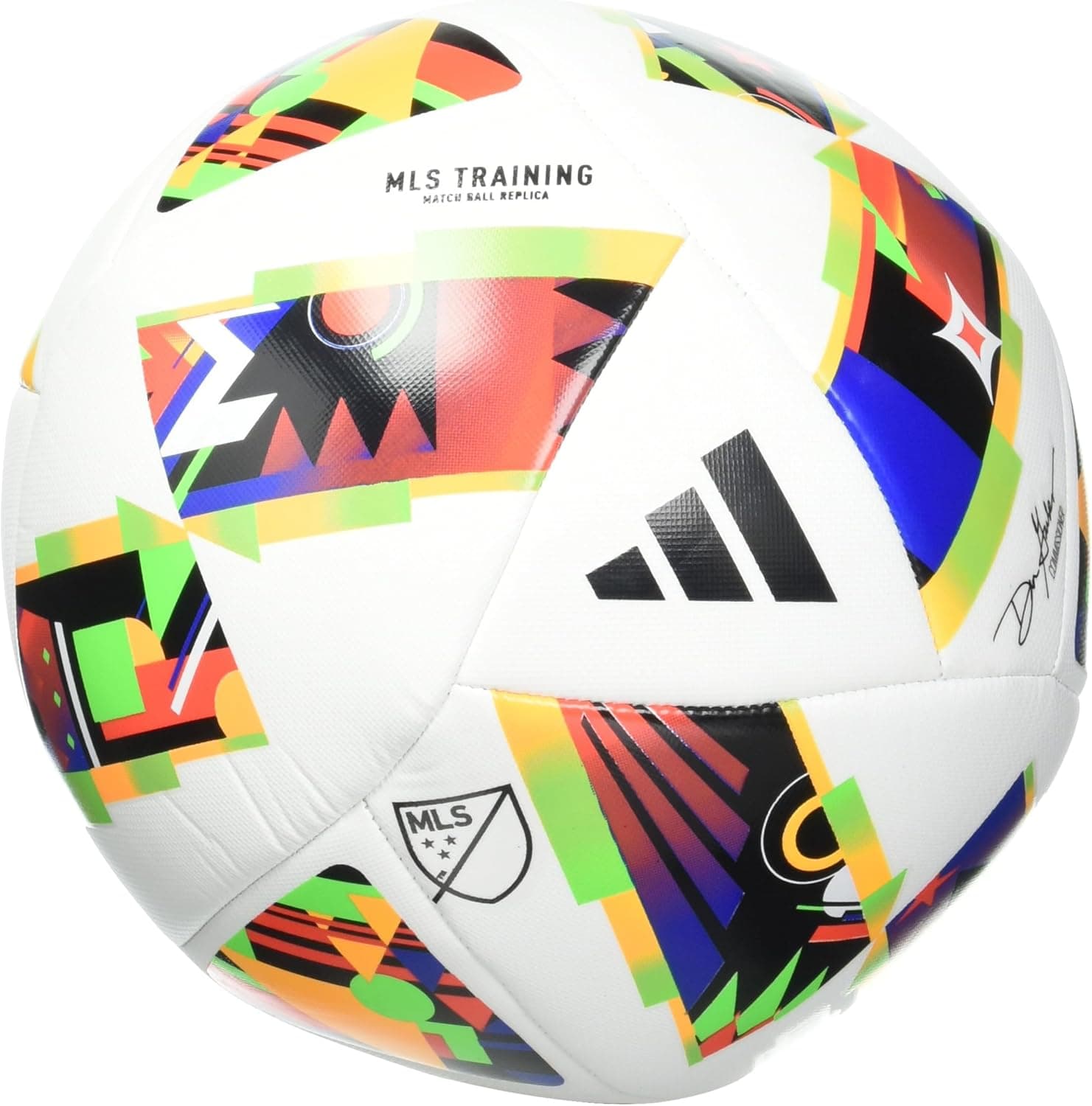
- Soccer Ball — Size 4 for ages 8–12, Size 5 for 13+. Train with the right size for your child's age group.
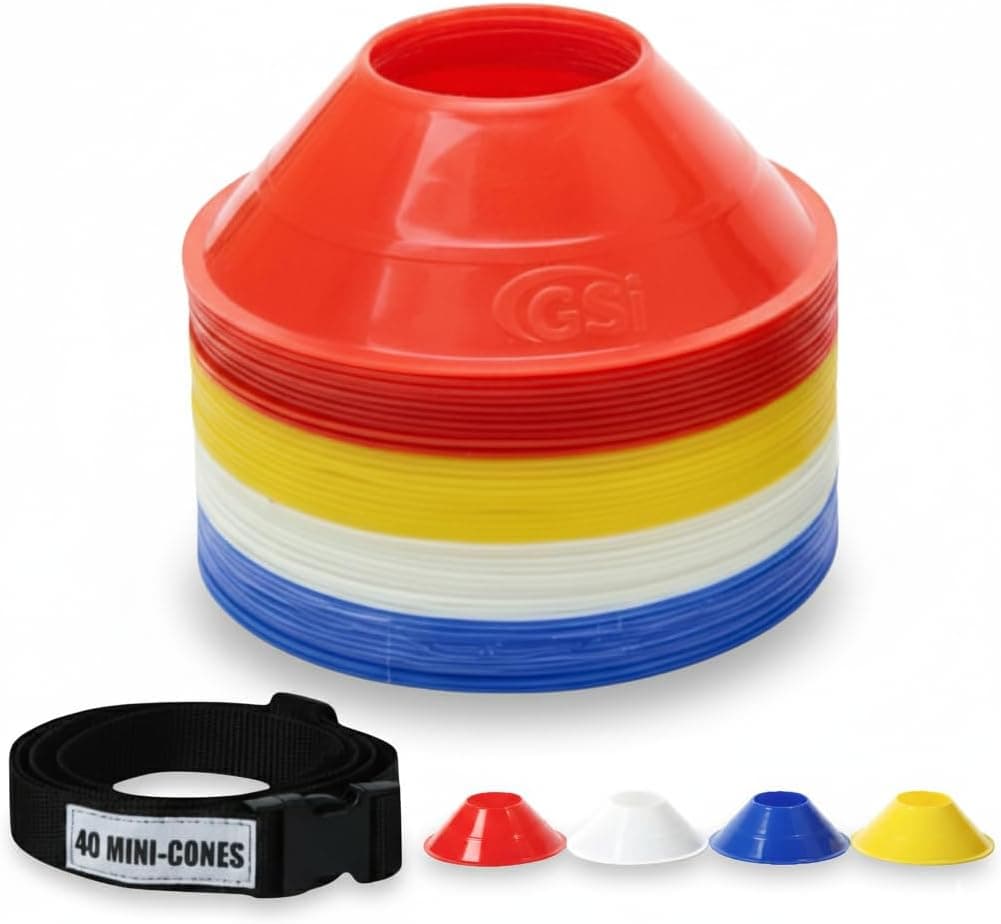
- Flat Cones — Mark off a 6×6 foot training space. Boundaries help kids focus and prevent wandering.
- Bluetooth Speaker — For follow-along videos and background music. Makes a significant difference in engagement.
All 10 drills can be done with nothing but a ball and a small space. The equipment above just makes sessions more enjoyable.
Final Thought
Ball mastery isn't glamorous. It won't make your child's highlight reel. But it's the quiet foundation that makes every other skill possible.
Messi, Neymar, Pedri, Iniesta — they all have one thing in common: the ball feels like an extension of their body. That didn't happen by accident. It happened through thousands of repetitions of exactly these kinds of drills, done consistently over years.
Your child doesn't need to be naturally gifted. They don't need an expensive academy or a private coach. They need 10 minutes a day and the commitment to show up.
Start today. Start small. Stay consistent.
Ready to go further?
Access 5,000+ Follow-Along Training Videos
Structured ball mastery programs, a daily training calendar, and new videos added every week. Your child just presses play and follows the coach on screen.
Neil Crawford is a soccer dad and founder of Anytime Soccer Training — a platform with 5,000+ follow-along training videos for players ages 5–18. His son trained at home consistently and now plays at a top MLS Academy, proof that structured home training works.